Idaho policymakers must make necessary investments and attract talent to succeed, according to a new report.


A new report prepared by a professor from the Affairs and Planning Program, Virginia Tech finds that "Idaho's state and local policymakers have to understand and recognize the importance of the knowledge economy. They need to support entrepreneurship, industry-university connections, workforce and skill development, talent creation, and the region's quality of life. Knowledge-based industries are critical for future growth for any region, and Boise needs to recognize that it already has the right prerequisites to succeed in a knowledge economy. To take the region to the next level, policymakers need to make strategic investments in their universities, connect to and leverage industry R&D, and they need to develop, attract, and retain talent.
Boise, Idaho, is part of a growing community of so-called emerging high-technology regions. Even though Boise's high-tech economy is small when compared to places like Silicon Valley or Seattle, the technology community in the Treasure Valley is highly specialized and very entrepreneurial. The region is home to leading high-technology employers such as Hewlett-Packard and Micron Technology. These firms contributed to the creation of a skilled labor pool and the formation of many dynamic and entrepreneurial startups. This white paper presents the result of an online survey of 135 high-tech firms in Boise."
Thanks to Jon Cecil, AICP
Read the full story: Boise’s evolution as high-tech region continues

New Idaho Laws Block Three Boise Complete Streets Projects
State law now bars highway districts from reducing road widths or and limits where they can eliminate traffic lanes in favor of multimodal infrastructure.
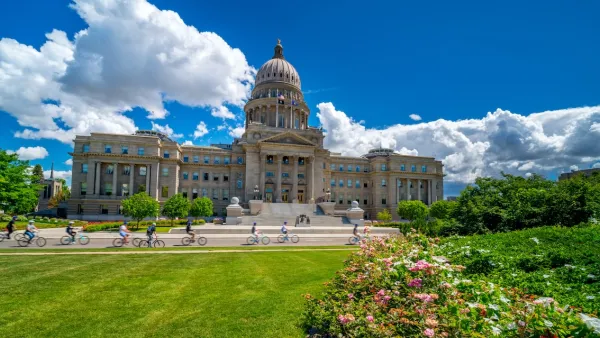
Idaho Bills Limit New Bike Lanes, Sidewalks
Cities in the county surrounding Boise will have to prove a “secondary benefit” before adding bike lanes or sidewalks to road projects.
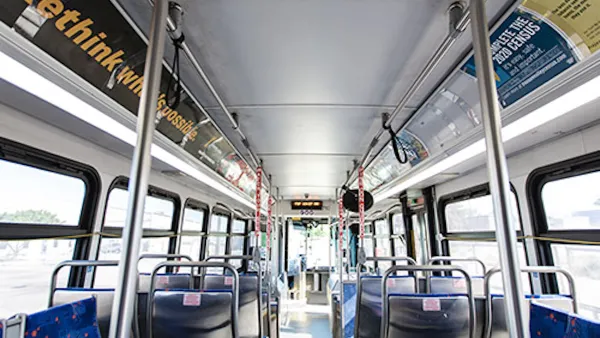
Boise-Area Bus Service to Increase by 14 Percent
A system redesign proposed in August would have cut service. Now, Valley Regional Transit plans to increase service on its most popular routes.

Planetizen Federal Action Tracker
A weekly monitor of how Trump’s orders and actions are impacting planners and planning in America.

California plans to bury El Niño’s downpour
If the state plays its cards right, it may be able to store a billion acre-feet of El Niño’s water in aquifers.

Desperate measures: Advocates weigh draining Lake Powell to fill Colorado River
Draining the reservoir could reduce evaporation losses by a couple hundred thousand acre-feet.

Mamdani’s pied-à-terre tax survives legal challenge
A panel of judges found that the plaintiffs failed to demonstrate injury as a result of New York City's implementation of the tax.

Eastern Nebraska is running out of electricity
Data centers and electrification are straining eastern Nebraska’s grid, throttling economic development.

Seattle passes record-breaking transit services expansion
Proposition 1 will double the city’s transit tax to add 95,000 more bus trips and preserve 180,000 bus trips annually.

FREE Course: Walkable City 1: Why Walkability?
After describing his path towards focusing on walkability as the essence of good planning, Jeff Speck marches through his five principal reasons for making more walkable places.
Reinventing Malls: Planning Alchemy—Turning Gray Fields Into Gold
The course focuses on the opportunities and imperatives that shape reinvention of mall sites.

City of Rosemead
Rutgers University, Edward J. Bloustein School of Planning and Public Policy
One Hundred Miles
University of Michigan School for Environment and Sustainability (SEAS)
Hunter College, City University of New York (CUNY)
The Architects Foundation
City of Cambridge
Montrose County
The Pocatello Development Authority