The New Jersey city eliminated traffic deaths for the last nine years in a row.


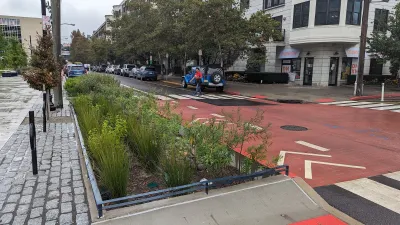
In a feat unheard of in the rest of the United States, Hoboken, New Jersey achieved nine years without a traffic death — a rare Vision Zero victory, reports Stephen Rivers in Car Scoops.
Rivers points out that the city turned to inexpensive fixes to start its Vision Zero initiative. "Its signature fix was almost comically cheap: two plastic bollard posts per corner, placed to stop cars from parking too close to intersections, at roughly $20 a corner." This simple daylighting project cut pedestrian injuries by 30% in its first few years.
Hoboken added to its efforts with more visible crosswalks, adjusted traffic signal timing, reduced speed limits and curb extensions to make crossings safer. "None of these ideas is new, but what makes them work is that they don’t depend on a person making the right choice. In fact, they layer in protection for when humans make mistakes."
Rivers concludes, "At a time when traffic fatalities continue claiming tens of thousands of lives across America each year, Hoboken’s record suggests the problem isn’t a lack of knowledge." Rather, "What seems to be missing is an actual commitment to safety rather than a token one that makes for a good sound bite or press statement."
Read the full story: A $20 Fix Helped This City Cut Traffic Deaths To Zero
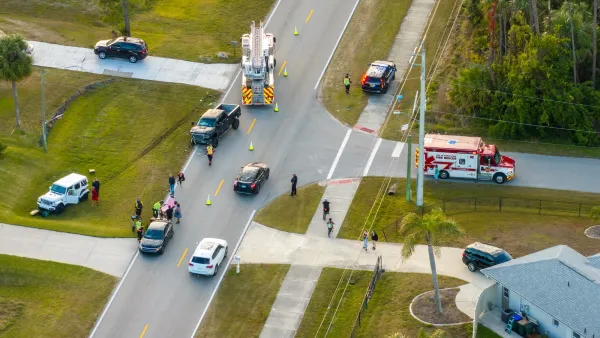
Pedestrian Deaths Fell by Largest Percentage in 15 Years, but Remain Above Pre-Pandemic Levels
After a spike in deaths during the Covid-19 years, road deaths fell to 3,024 in the first half of 2025.
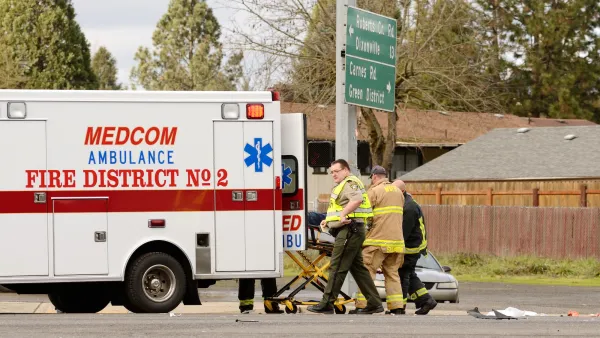
'Dangerous by Design' 2026 report highlights 72% increase in pedestrian deaths since 2009
Although US traffic deaths dropped in the last two years, the number of people killed on US roads remains much higher than two decades ago.
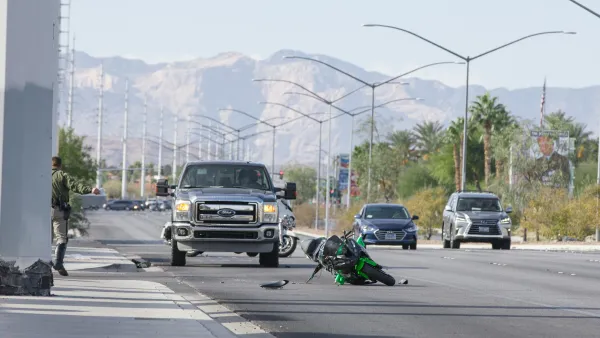
Nevada’s Highway Safety Plan Targets 35% Drop in Traffic Deaths by 2035
The 2026-2030 plan aims to reduce deaths and serious injuries with a long-term goal of eliminating traffic deaths by 2050.

Washington state to charge fee to drivers with fuel-efficient cars
Revenue from the fee will go towards supporting the state’s highways.

Illinois considers spending $1 billion in taxpayer money on data center
A quantum computing campus and data center are currently under construction in Chicago.

Trump to blast ‘hydrocarbon highway’ through ‘world’s longest art gallery’
Environmental and historic preservation groups are suing to stop the project.

NYC, state sue feds over mixed-immigration-status housing assistance rule
The state’s lawsuit argues that the rule change violates the Administrative Procedure Act.

Michigan to turn neighborhood into virtual power plant
Residents will soon be able to divert their excess energy to the grid in exchange for compensation.

Data center, mining project swarm to long-awaited Alaska railroad line
The state-owned railroad approved final plans for the spur line this week; the project is expected to cost $311 million, mostly funded by the federal government

FREE Course: Walkable City 1: Why Walkability?
After describing his path towards focusing on walkability as the essence of good planning, Jeff Speck marches through his five principal reasons for making more walkable places.
Reinventing Malls: Planning Alchemy—Turning Gray Fields Into Gold
The course focuses on the opportunities and imperatives that shape reinvention of mall sites.

City of Charlotte
City of Rosemead
Rutgers University, Edward J. Bloustein School of Planning and Public Policy
University of Michigan School for Environment and Sustainability (SEAS)
Hunter College, City University of New York (CUNY)
The Architects Foundation
University District Partnership