Residents will soon be able to divert their excess energy to the grid in exchange for compensation.


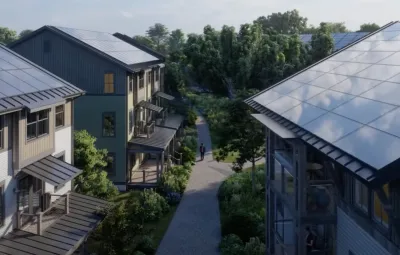
One of “the most sustainable communities in the U.S." is preparing to contribute their clean energy to Michigan’s electrical grid, Alison F. Takemura writes for Canary Media. Residents of Veridian at Country Farm, a net-zero-energy, fossil-fuel-free development in Ann Arbor Michigan, will soon be able to enroll in a program that diverts excess solar energy from their homes to the grid when the system is strained.
Homes in the County Farm community make about as much solar energy as they use, with excess power stored in batteries for evening use. Diverting some energy to the grid will hopefully provide a low-cost way to meet Michigan’s growing energy needs, Joi Harris, president and chief executive officer of DTE Energy, told Canary Media in a statement.
Canary Media reports:
The initiative “should work well for the residents, too,” [Resident Mitch Hall] said. “DTE will pay us a little bit to be part of this project.” Because the utility will pull battery power automatically when the grid is strained and electricity prices are likely to be highest, “a neat part about the virtual power plant is you don’t have to spend a lot of time learning and trying to optimize,” he noted. “DTE will manage that battery for you.” (DTE did not respond to Canary Media’s request for exact figures on how much it would compensate customers in time for publication.)
Read the full story: New net-zero community will become Michigan’s first virtual power plant

Senate passes bill overhauling permitting
The bill still needs to pass the House.
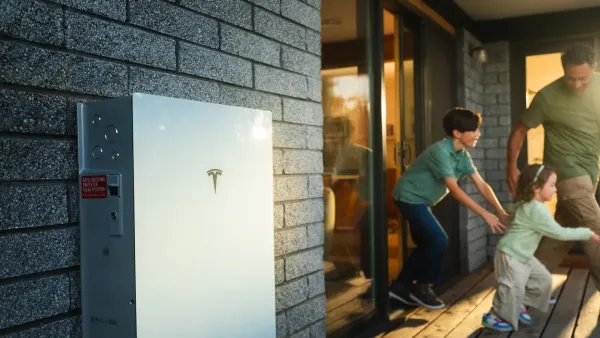
Home batteries are ushering in an energy revolution
Batteries capable of storing solar energy can stabilize the grid during peaks and keep homes running on cloudy days.
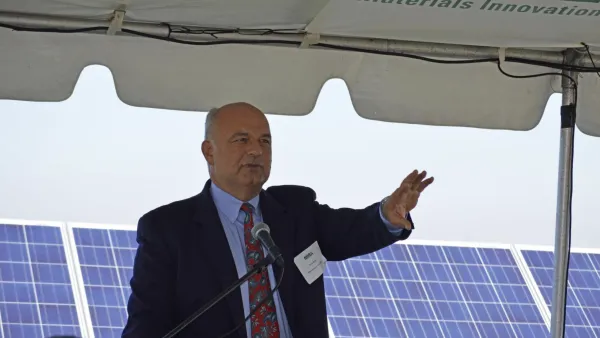
Connecticut is turning landfills into green infrastructure
Twenty-nine solar arrays have been built, or approved to be built, on top of Connecticut landfills.

Washington state to charge fee to drivers with fuel-efficient cars
Revenue from the fee will go towards supporting the state’s highways.

Illinois considers spending $1 billion in taxpayer money on data center
A quantum computing campus and data center are currently under construction in Chicago.

Trump to blast ‘hydrocarbon highway’ through ‘world’s longest art gallery’
Environmental and historic preservation groups are suing to stop the project.

NYC, state sue feds over mixed-immigration-status housing assistance rule
The state’s lawsuit argues that the rule change violates the Administrative Procedure Act.

Michigan to turn neighborhood into virtual power plant
Residents will soon be able to divert their excess energy to the grid in exchange for compensation.

Data center, mining project swarm to long-awaited Alaska railroad line
The state-owned railroad approved final plans for the spur line this week; the project is expected to cost $311 million, mostly funded by the federal government

FREE Course: Walkable City 1: Why Walkability?
After describing his path towards focusing on walkability as the essence of good planning, Jeff Speck marches through his five principal reasons for making more walkable places.
Reinventing Malls: Planning Alchemy—Turning Gray Fields Into Gold
The course focuses on the opportunities and imperatives that shape reinvention of mall sites.

City of Charlotte
City of Rosemead
Rutgers University, Edward J. Bloustein School of Planning and Public Policy
University of Michigan School for Environment and Sustainability (SEAS)
Hunter College, City University of New York (CUNY)
The Architects Foundation
University District Partnership