The bill still needs to pass the House.



The Senate has approved the Bipartisan American Affordability and Jobs Act of 2026, a permitting overhaul bill that supporters say will make it easier to build fossil fuel and renewable energy projects, along with the high-tension power lines that support them.
“Fifteen members of the Democratic caucus voted yes, along with virtually all Republicans. Thirty-one Democrats voted no, largely raising concerns that the bill would weaken environmental protections and lead to more fossil fuel projects. Republican Sens. Mike Rounds of South Dakota and Josh Hawley of Missouri also voted no,” Kaia Hubbard writes for CBS News.
Whether the bill will pass the House remains in question. Some House Democrats have voiced concerns that President Trump will use the bill to fast-track fossil fuel projects while continuing to stall renewable energy projects. Some have also suggested that Democrats should use their incoming majority in the House and Senate to negotiate a more favorable bill next year.
Read the full story: Senate passes bipartisan permitting reform bill designed to boost energy projects
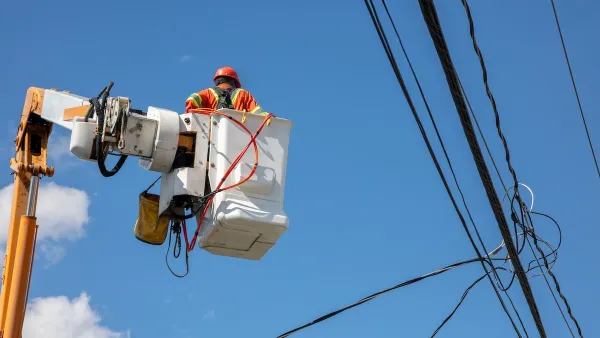
Bill to overhaul energy permitting advances through Senate
The Bipartisan American Affordability and Jobs Act of 2026 still needs to pass the House of Representatives.
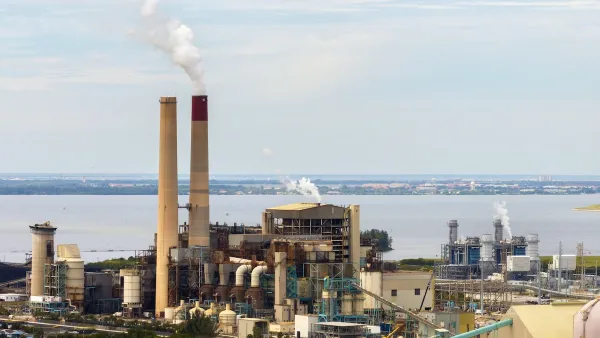
Final vote on BAAJA may happen this week — what happens if it passes?
The bill makes it very difficult to revoke permits, amplifying the power of whoever is issuing them.
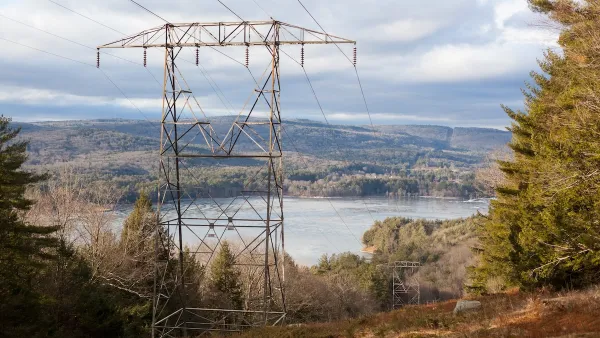
‘Demolition of our heritage:’ Some US tribes speak out against BAAJA
A coalition of indigenous groups in the United States are concerned about provisions in the bill that may weaken their ability to halt large energy projects.

Planetizen Federal Action Tracker
A weekly monitor of how Trump’s orders and actions are impacting planners and planning in America.

Washington state to charge fee to drivers with fuel-efficient cars
Revenue from the fee will go towards supporting the state’s highways.

Illinois considers spending $1 billion in taxpayer money on data center
A quantum computing campus and data center are currently under construction in Chicago.

Did data centers change how voters cast their ballots?
Texas, Ohio, and Georgia all flipped party control. But in rural counties, the effect of local data centers was mixed.

Amtrak invests in eight new Airo trainsets
The new trainsets will begin serving passengers in 2031.

HUD to end aid for mixed-immigration-status households
The new rule is projected to impact 80,000 people, nearly half of whom are children.

FREE Course: Walkable City 1: Why Walkability?
After describing his path towards focusing on walkability as the essence of good planning, Jeff Speck marches through his five principal reasons for making more walkable places.
Reinventing Malls: Planning Alchemy—Turning Gray Fields Into Gold
The course focuses on the opportunities and imperatives that shape reinvention of mall sites.

City of Charlotte
City of Rosemead
Rutgers University, Edward J. Bloustein School of Planning and Public Policy
University of Michigan School for Environment and Sustainability (SEAS)
Hunter College, City University of New York (CUNY)
The Architects Foundation
University District Partnership