Democrats may decide to vote against the Bipartisan American Affordability and Jobs Act, and negotiate a more favorable bill once the 120th Congress begins.


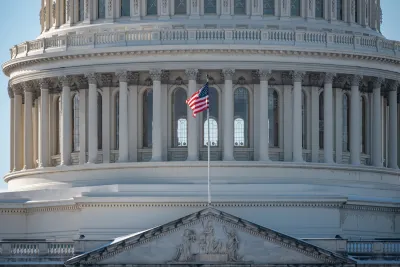
The Senate will vote on an act to speed up clean energy projects on Monday — and with Democrats’ recent electoral victory, it may not pass. In a statement to POLITICO, House Minority Leader Hakeem Jeffries said he opposed the bill, joining some fellow Democrats. As Democrats will have a comfortable majority come January, they may decide to vote against the bill and negotiate a more favorable one when the 120th Congress begins.
“The legislation, called the Bipartisan American Affordability and Jobs Act, or BAAJA, has support from business groups tied to renewable energy and fossil fuels. They tout its potential to reduce consumer energy costs by bringing new supplies online. The measure would ease regulatory barriers to build energy projects of just about every type—clean and dirty—and it would weaken the Clean Water Act, the Endangered Species Act, the National Environmental Policy Act and the National Historic Preservation Act,” Dan Gearino and Marianne Lavelle write for Inside Climate News.
Lobbyist Chris Moyer, founder of Echo Communications Advisors, said he no longer hoped that BAAJA would pass on Monday. Instead, he told Inside Climate News that he wished for Democrats to preserve the parts of the bill that address clean energy roadblocks, but address the environmental concerns the bill raises in its current form.
Read the full story: Election Shakeup Threatens Bipartisan Deal to Speed Energy Projects

Senate bill would ‘overhaul’ environmental permitting laws
Under the proposed act, government agencies would also not be able to suspend or rescind permits after granting them.
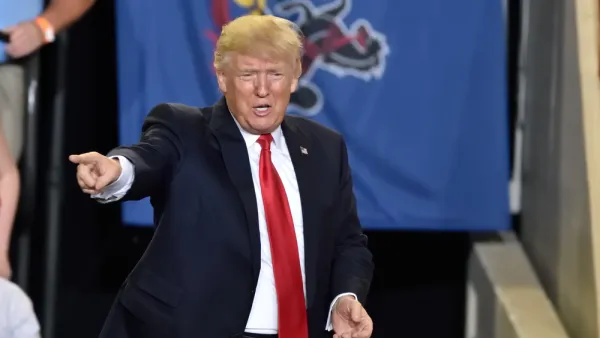
Trump Signs Two Executive Orders Limiting States' Authority Over Energy Pipelines
The Trump administration's "energy dominance" agenda depends, in part, on growing the energy distribution network, namely pipelines, rail facilities, and ports. However, states can use the Clean Water Act to block pipelines and coal terminals.

Iowa taxpayers are paying thousands to clean manure out of their water
While the Clean Water Act makes states responsible for regulating factory farms that discharge pollutants, Iowa has turned a blind eye to the polluting farms.

Planetizen Federal Action Tracker
A weekly monitor of how Trump’s orders and actions are impacting planners and planning in America.

California plans to bury El Niño’s downpour
If the state plays its cards right, it may be able to store a billion acre-feet of El Niño’s water in aquifers.

Desperate measures: Advocates weigh draining Lake Powell to fill Colorado River
Draining the reservoir could reduce evaporation losses by a couple hundred thousand acre-feet.

Voters choose public transit, approve $31 billion in funding
Approved projects include $101,000 for reduced-cost transit in a Michigan town and $14 billion for regional transit in the San Francisco Bay Area.

Study reveals best places in the U.S. for cycling, walking
New research from Streetlight Data examines bicycle and pedestrian miles per capita in the 100 largest U.S. cities by population.

Los Angeles just elected an urban planner as its mayor
Transportation analysts are optimistic that Raman will be more aggressive in addressing transit issues than Bass.

FREE Course: Walkable City 1: Why Walkability?
After describing his path towards focusing on walkability as the essence of good planning, Jeff Speck marches through his five principal reasons for making more walkable places.
Reinventing Malls: Planning Alchemy—Turning Gray Fields Into Gold
The course focuses on the opportunities and imperatives that shape reinvention of mall sites.

City of Rosemead
Rutgers University, Edward J. Bloustein School of Planning and Public Policy
One Hundred Miles
University of Michigan School for Environment and Sustainability (SEAS)
Hunter College, City University of New York (CUNY)
The Architects Foundation
City of Cambridge
Montrose County
The Pocatello Development Authority