Under the proposed act, government agencies would also not be able to suspend or rescind permits after granting them.



Four U.S. Senators introduced the Bipartisan American Affordability and Jobs Act of 2026 on Sept. 30, which would “overhaul provisions of the National Environmental Policy Act, Clean Water Act, Endangered Species Act and other permitting laws to accelerate energy and infrastructure projects and limit federal interference with approved projects,” Robyn Griggs Lawrence writes for Smart Cities Dive.
The 417-page act would make projects with no federal funding, or that replace lifeline infrastructure, exempt from NEPA reviews — including the repair and replacement of county bridges, roads and small sewer systems. The act would also place a one-year deadline on environmental assessment and a two-year deadline on environmental impact statements, as well as ensure that local governments are part of the NEPA review process.
If signed, the act would also allow for faster permitting for energy projects on federal land, and restrict government agencies' ability to suspend, materially change or rescind permits after granting them. The act also includes new requirements for data centers to pay their transmission costs.
Read the full story: What the Senate permitting bill means for local infrastructure projects


Trump Signs Two Executive Orders Limiting States' Authority Over Energy Pipelines
The Trump administration's "energy dominance" agenda depends, in part, on growing the energy distribution network, namely pipelines, rail facilities, and ports. However, states can use the Clean Water Act to block pipelines and coal terminals.
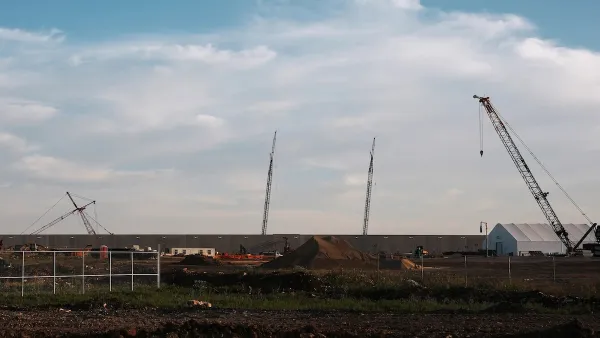
Data centers pump $340M into rural Texas projects as they try to improve their reputations
The companies have faced waves of public backlash in Texas. To battle that negative public perception, they’ve donated millions to community causes and needs.
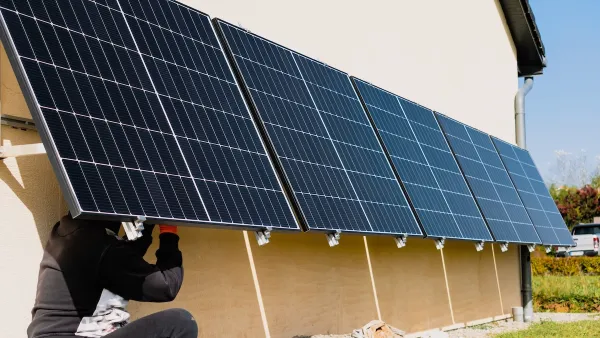
Californians can now transform balconies into power generators
Gov. Gavin Newsom has legalized plug-in solar technology, which allows residents to plug solar panels directly into their outlets

Planetizen Federal Action Tracker
A weekly monitor of how Trump’s orders and actions are impacting planners and planning in America.

‘Going backwards:’ Baltimore mayor, students rally against state's transit funding plan
Maryland's proposed six-year plan provides no funding for Baltimore’s BMORE bus program and reduces its road maintenance funding.

Detroit to transform waterfront with $2.2 billion investment
Developers will convert about 18 acres of unused parking lot space into civic spaces.

Senate bill would ‘overhaul’ environmental permitting laws
Under the proposed act, government agencies would also not be able to suspend or rescind permits after granting them.

Exemption applications for NYC’s pied-à-terre tax see 55% success rate
The city sent nearly 40% of its initial pied-à-terre tax warnings erroneously.

MTA invests $1.1 billion in ‘nearly-impossible’-to-evade fare gates
The new technology marks the Metropolitan Transit Authority's first turnstile redesign in decades.

FREE Course: Walkable City 1: Why Walkability?
After describing his path towards focusing on walkability as the essence of good planning, Jeff Speck marches through his five principal reasons for making more walkable places.
Reinventing Malls: Planning Alchemy—Turning Gray Fields Into Gold
The course focuses on the opportunities and imperatives that shape reinvention of mall sites.

One Hundred Miles
County of Mendocino
planning NEXT
The Architects Foundation
University of Cincinnati Online
Montrose County
Northern Illinois Transit Authority (NITA)
The Pocatello Development Authority