The Bipartisan American Affordability and Jobs Act of 2026 still needs to pass the House of Representatives.


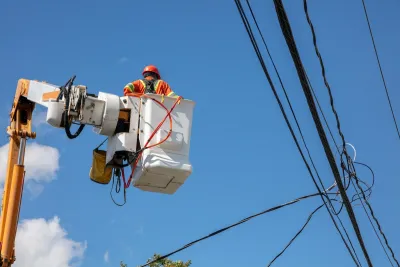
The Senate voted Monday to advance the Bipartisan American Affordability and Jobs Act of 2026, legislation that aims to expedite permitting for large energy projects. The act passed 73-25, propelled primarily by Republicans. Some Democratic senators who voted for the cloture emphasized that they would fight for amendments protecting the rights of Native American tribal nations.
“The legislation is an attempt to streamline the rules and regulations that have increased over the past 70 years, hindering the nation’s ability to build infrastructure rapidly. High-voltage transmission lines, crucial for delivery of clean energy, take 10 years on average to build. The issue has become more urgent as electricity demand surges, in part due to the proliferation of artificial intelligence data centers,” Marianne Lavelle and Dan Gearino write for Inside Climate News.
While the bill should make it easier for clean energy projects to get permits, opponents fear the bill will make it harder for states and tribal nations to stop oil and gas pipeline projects. The act still has to pass the House, where Republicans have a slimmer majority.
Editor's note: this story was changed on Nov. 12 to clarify that BAAJA passed a procedural vote in the Senate.
Read the full story: Senate Advances Permitting Overhaul But Roadblocks Loom
Democrats’ victory may threaten act to expedite energy projects
Democrats may decide to vote against the Bipartisan American Affordability and Jobs Act, and negotiate a more favorable bill once the 120th Congress begins.
Pennsylvania Democrats have 15 affordability, clean energy bills for flipped state Senate
Bills in consideration include a bill supporting geothermal energy and a bill supporting solar on warehouses.
Arizona, Wisconsin, Pennsylvania hope to finally advance climate goals post-midterms
The three states have spent years under Republican or divided control.

Planetizen Federal Action Tracker
A weekly monitor of how Trump’s orders and actions are impacting planners and planning in America.

Eastern Nebraska is running out of electricity
Data centers and electrification are straining eastern Nebraska’s grid, throttling economic development.

Study reveals best places in the U.S. for cycling, walking
New research from Streetlight Data examines bicycle and pedestrian miles per capita in the 100 largest U.S. cities by population.

Next-generation nuclear reactors are coming to Texas
The reactors will not require towering containment structures thanks to new safety features.

California distributes $1.3 billion to prevent transit service cuts, bolster projects
Twenty-eight projects across California received a portion of the funding.

Pennsylvania Democrats have 15 affordability, clean energy bills for flipped state Senate
Bills in consideration include a bill supporting geothermal energy and a bill supporting solar on warehouses.

FREE Course: Walkable City 1: Why Walkability?
After describing his path towards focusing on walkability as the essence of good planning, Jeff Speck marches through his five principal reasons for making more walkable places.
Reinventing Malls: Planning Alchemy—Turning Gray Fields Into Gold
The course focuses on the opportunities and imperatives that shape reinvention of mall sites.

City of Charlotte
City of Rosemead
Rutgers University, Edward J. Bloustein School of Planning and Public Policy
University of Michigan School for Environment and Sustainability (SEAS)
Hunter College, City University of New York (CUNY)
The Architects Foundation
City of Cambridge
The Pocatello Development Authority
The Urban Renewal Agency of the City of Pocatello