Batteries capable of storing solar energy can stabilize the grid during peaks and keep homes running on cloudy days.


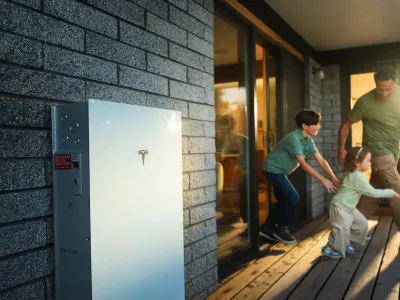
Home batteries in California are revolutionizing the energy grid. The technology allows homes with solar panels to save energy throughout sunny summer days, and then send any unused energy back into the grid. “According to the energy-focused nonprofit Common Charge, as the mercury climbed on October 6, home batteries from Tesla and Sunrun provided enough to power every home in San Francisco and San Jose, whose combined population is about 1.8 million, during peak hours,” Matt Simon writes for Grist.
Home batteries are beneficial to all ratepayers in an area, not just the home they’re attached to: if demand outpaces a state’s supply of energy, it is cheaper to draw on home batteries than to bring in power from other states.
The batteries also solve solar energy's unreliability problem: gone are the days when solar-powered buildings only had energy on sunny days. Some companies are also investing in vehicle-to-grid technology, which allows electric vehicles, “basically giant batteries on wheels,” to return unused energy to the grid, Grist reports.
Read the full story: California just showed how home batteries will radically remake the grid

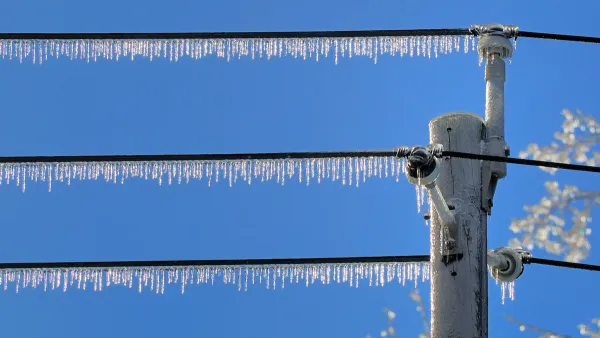
Texas Grid Holds Up to Freezing Temperatures
Efforts made to prepare the state’s infrastructure for winter storms after 2021’s disastrous freeze are paying off.
Connecticut is turning landfills into green infrastructure
Twenty-nine solar arrays have been built, or approved to be built, on top of Connecticut landfills.
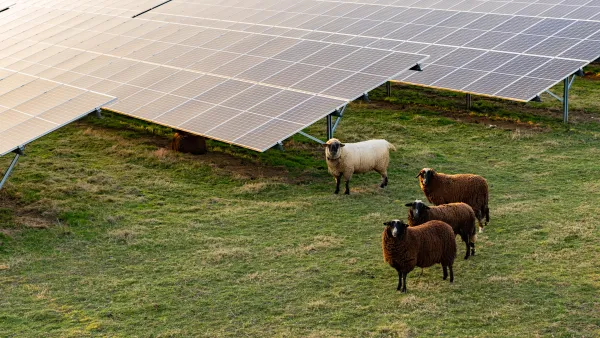
Trump guts ‘win-win’ solar energy program for rural farmers
The U.S. Department of Agriculture’s changes have made virtually all solar power ineligible for funding through the Rural Energy for America Program.

Planetizen Federal Action Tracker
A weekly monitor of how Trump’s orders and actions are impacting planners and planning in America.

Chicago breaks ground on $3 billion megadevelopment
The new neighborhood, titled Foundry Park, will one day host 3,700 residences.

This MA town is drowning in its own sewage — and residents like it that way
Susan Murcott, a waste water expert, said if Carlisle didn't address their leaking sewage, the problem could turn “deadly.”

Home batteries are ushering in an energy revolution
Batteries capable of storing solar energy can stabilize the grid during peaks and keep homes running on cloudy days.

A sneak peek at NYC’s Midtown Bus Terminal rebuild
The city will turn a deck used for storage during the construction process into a park once construction is complete.

Air taxis to connect Texas airports to business hubs
Archer Aviation says its taxis will turn 90 minute drives into 20 minute flights.

FREE Course: Walkable City 1: Why Walkability?
After describing his path towards focusing on walkability as the essence of good planning, Jeff Speck marches through his five principal reasons for making more walkable places.
Reinventing Malls: Planning Alchemy—Turning Gray Fields Into Gold
The course focuses on the opportunities and imperatives that shape reinvention of mall sites.

City of Rosemead
Rutgers University, Edward J. Bloustein School of Planning and Public Policy
One Hundred Miles
The Architects Foundation
University of Cincinnati Online
Montrose County
Northern Illinois Transit Authority (NITA)
The Pocatello Development Authority