Twenty-nine solar arrays have been built, or approved to be built, on top of Connecticut landfills.


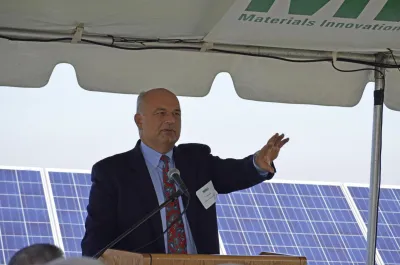
Connecticut is embracing an innovative way of turning landfills into green infrastructure: covering them in solar panels. The state has approved or built 29 solar arrays on top of capped landfills, and intends to keep building.
Ryan Linares, the vice president of land acquisition at Greenskies, a solar energy company that builds solar arrays on Connecticut landfills, said any landfill with five acres of flat land and in close proximity to electrical infrastructure was a viable location for a solar array. Because the state usually prohibits shady trees from growing over landfills due to contamination risks, they often have ample access to sunlight for solar panels.
“One of the benefits that solar developers see in landfills is that they are usually town-owned and have limited opportunities to be sold or put to other productive uses. Companies can also make use of state incentives for the redevelopment of brownfield sites,” Sasha Allen and John Moritz write for CT Mirror.
Read the full story: More CT landfills are being topped with solar panels


Former Landfill Doubles as Public Park, Energy Producer
Once the world’s largest dump, Freshkills Park now offers new city park space and powers local households with biofuel.

New Tax Credit Could Boost Solar Energy Production on Landfills
Incentives aimed at brownfield development of renewable energy projects could give momentum to building solar farms on an underutilized property: closed municipal landfills.

Trump guts ‘win-win’ solar energy program for rural farmers
The U.S. Department of Agriculture’s changes have made virtually all solar power ineligible for funding through the Rural Energy for America Program.

Planetizen Federal Action Tracker
A weekly monitor of how Trump’s orders and actions are impacting planners and planning in America.

Data reveals that NYC’s bet on congestion pricing has paid off
After almost two years of the program, reports show positive impacts on traffic and air quality and no disruptions to parking.

HUD modernizes 50-year-old manufactured housing framework
The Next Generation Manufactured Housing Action Plan establishes new energy-efficiency standards for manufactured homes, and new guidelines for anchoring them.

Connecticut is turning landfills into green infrastructure
Twenty-nine solar arrays have been built, or approved to be built, on top of Connecticut landfills.

Trump guts ‘win-win’ solar energy program for rural farmers
The U.S. Department of Agriculture’s changes have made virtually all solar power ineligible for funding through the Rural Energy for America Program.

Texas’ $1 billion ‘live-work-play destination’ sees progress
When complete, the project’s plaza will house up to 14 restaurants and lifestyle brands in six buildings.

FREE Course: Walkable City 1: Why Walkability?
After describing his path towards focusing on walkability as the essence of good planning, Jeff Speck marches through his five principal reasons for making more walkable places.
Reinventing Malls: Planning Alchemy—Turning Gray Fields Into Gold
The course focuses on the opportunities and imperatives that shape reinvention of mall sites.

One Hundred Miles
County of Mendocino
planning NEXT
The Architects Foundation
University of Cincinnati Online
Montrose County
Northern Illinois Transit Authority (NITA)
The Pocatello Development Authority