Most road safety efforts are based on data about crashes that have already occurred. But important information can be gleaned from incidents when something almost went wrong, but didn’t.


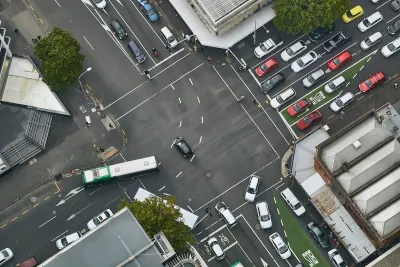
Are we neglecting key data about near-misses at intersections in urban mobility and road safety? An article in Cities Today argues that, while many cities are redesigning intersections to improve safety using crash reports, “one critical layer of data is often missing: insight into what almost went wrong.”
The article posits that paying closer attention to near-misses can offer “a transformative addition to traditional urban traffic planning” and help planners understand dangerous intersections before fatal crashes occur.
According to Cities Today, “To fill this gap, Flow Analytics by AGC applies high-resolution LiDAR and AI-based trajectory analysis to monitor the movement of all road users, including vehicles, cyclists, and pedestrians. The system observes these interactions in real time, identifying conflict points as they happen.”
Several European cities are already testing the technology to detect and act on near misses. “New technologies are enabling cities to understand not just where people travel, but how those journeys unfold—and where conflicts occur. By capturing these dynamics, near-miss detection helps uncover risks that conventional systems might miss entirely.”
FULL STORY: What cities miss at intersections, and why it’s costing us more than we think

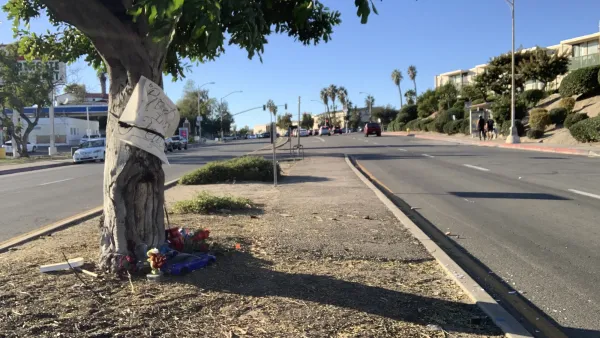
San Diego’s Car-centered Planning is Killing Children
Like most American cities, San Diego’s planning choices hold a gruesome legacy. Why are we okay with that?
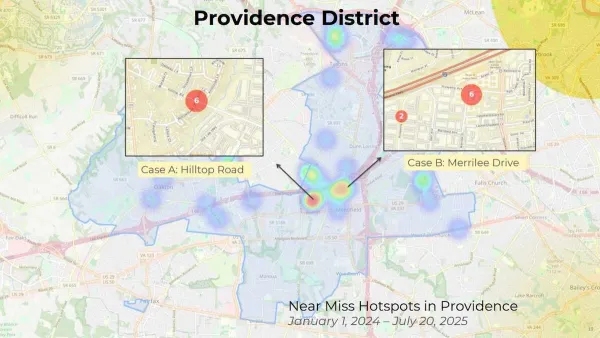
Virginia Study Catches Near-Miss Hotspots Before Pedestrians Die
Analyzing reported ‘near-misses’ can reveal road safety gaps and prevent more serious crashes and injuries.

Pittsburgh Agencies Collaborate on Vision Zero Projects
The city reduced pedestrian deaths to seven in 2023.

Planetizen Federal Action Tracker
A weekly monitor of how Trump’s orders and actions are impacting planners and planning in America.

The state-sanctioned urbicide of Austin
People don’t kill cities. Freeways do.

US to reduce Colorado River water deliveries to Mexico
A new Colorado Treaty amendment reduces Mexico’s Colorado River water allocation by 250,000 acre feet.

5 New England states march closer to 800 megawatt wind energy project
Securing federal approval for the project may be complicated under the Trump administration, which has historically been hostile towards domestic wind power.

Baltimore to break ground on $50 million Transit Priority Project
The project will bring faster bus trips, safer streets and better bike connections to Baltimore.

Airbnb launches $250 million 'last-dollar financing' housing accelerator, makes first investment in Austin
The company will put $6.4 million towards affordable housing development in Texas’ capital.

FREE Course: Walkable City 1: Why Walkability?
After describing his path towards focusing on walkability as the essence of good planning, Jeff Speck marches through his five principal reasons for making more walkable places.
Reinventing Malls: Planning Alchemy—Turning Gray Fields Into Gold
The course focuses on the opportunities and imperatives that shape reinvention of mall sites.

Eagle County Government
Harvard University Graduate School of Design
Nashville Planning Department
The Architects Foundation
University of Cincinnati Online
The Pocatello Development Authority
The Urban Renewal Agency of the City of Pocatello
Journal of the American Planning Association