The park is part of a global movement to build public spaces that connect neighbors and work with local elements to serve as key parts of a city’s green infrastructure.


A new park in Montreal sits atop a disused railway track and features ‘mini-forests’ planted to encourage the quick growth of native plants, reports Kelsey Rolfe in The Globe and Mail.
“The park’s design hearkens back to its previous life: after the tracks were abandoned in the 1990s, trees and vegetation grew wild on the site. It became an unofficial but beloved local park and community space for the part-industrial neighbourhood until a developer cut down the trees without permission in 2013.” Now, thanks to a decade of community advocacy, the city spent $10 million to acquire and redevelop the site.
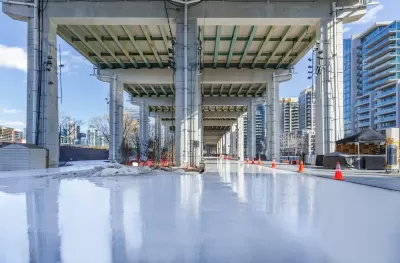
Gorilla Park, as it’s known, hosts over 1,500 trees and shrubs and seeks to mimic the spontaneous forest that grew on the site previously. According to Rolfe, “It’s just one example of the transformation under way across Canada to make public spaces more sustainable and community focused.” In Toronto, a 1.75-kilometer linear park dubbed The Bentway nestled under the Gardiner Expressway doubles as a recreational space and stormwater infrastructure. “ It now draws hundreds of thousands of Torontonians every year for skating in the winter, free public events and art installations in the other seasons and cycling and walking on its trail network year-round.”
FULL STORY: Turning railway lands into parkland: How cities are reinventing public space

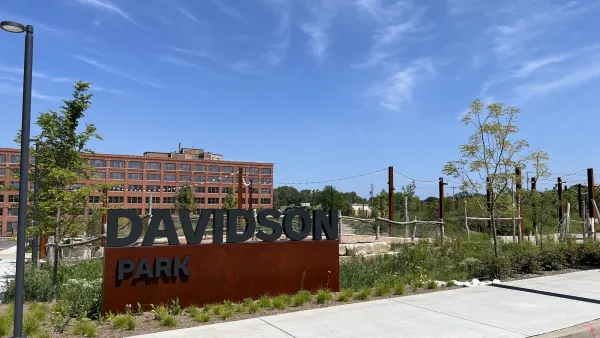
Harley-Davidson turned a Milwaukee parking lot into a green oasis
The park, adjacent to Harley-Davidson headquarters, doubles as stormwater retention infrastructure.

‘Grätzloasen’: The Urban Oases Vienna Pays its Citizens to Build
The Austrian capital offers grants of up to 5,000 Euros to residents who want to build their own parklets in curbside parking spaces.
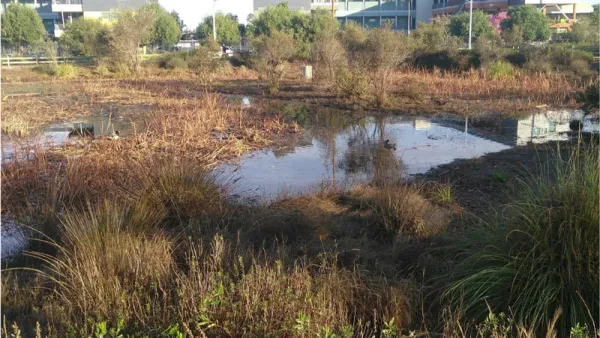
How South LA Green Spaces Power Community Health and Hope
Green spaces like South L.A. Wetlands Park are helping South Los Angeles residents promote healthy lifestyles, build community, and advocate for improvements that reflect local needs in historically underserved neighborhoods.

Planetizen Federal Action Tracker
A weekly monitor of how Trump’s orders and actions are impacting planners and planning in America.

The state-sanctioned urbicide of Austin
People don’t kill cities. Freeways do.

US to reduce Colorado River water deliveries to Mexico
A new Colorado Treaty amendment reduces Mexico’s Colorado River water allocation by 250,000 acre feet.

Mamdani overhauls NYC's Vision Zero plan with 100 new policy goals
The overhaul aims to reduce traffic deaths and make streets safer for pedestrians, cyclists and drivers through lower speed limits, new safety infrastructure and more.

Amtrak not solely to blame for New Jersey commuter rail's unreliability, report finds
A new study from the Garden State Initiative found that NJ Transit’s budget grew 20% across a 4 year period, but reliability declined significantly over the same period.

EPA erases limits on planet-warming pollution from power plants
Under Monday’s plan, power plants would still have some limits on how much mercury, arsenic and other contaminants they can emit.

FREE Course: Walkable City 1: Why Walkability?
After describing his path towards focusing on walkability as the essence of good planning, Jeff Speck marches through his five principal reasons for making more walkable places.
Reinventing Malls: Planning Alchemy—Turning Gray Fields Into Gold
The course focuses on the opportunities and imperatives that shape reinvention of mall sites.

Eagle County Government
Harvard University Graduate School of Design
Nashville Planning Department
The Architects Foundation
University of Cincinnati Online
The Pocatello Development Authority
The Urban Renewal Agency of the City of Pocatello
Journal of the American Planning Association