The University of Southern California Urban Trees Initiative is planting 250 trees in South L.A. neighborhoods to improve shade, combat climate change, and enhance community well-being through collaboration and data-driven approaches.


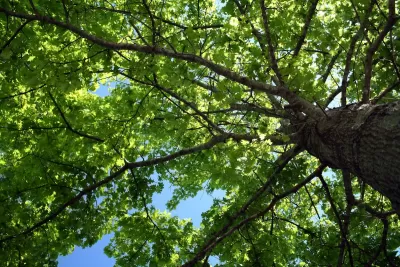
The University of Southern California (USC) Urban Trees Initiative recently planted the first 27 of 250 planned trees in South Los Angeles neighborhoods, starting in the West Adams area during a community block party. This collaboration between USC, the Koreatown Youth and Community Center, and L.A. Sanitation and Environment brought together university faculty, students, community organizers, and residents to improve local green spaces. The project aims to enhance livability by addressing the need for shade and combating the effects of rising temperatures in underserved communities such as Adams-Normandie, University Park, and Exposition Park.
The initiative, led by the USC Dornsife Public Exchange, emphasizes equitable access to green spaces through data-driven approaches. Experts in geospatial sciences, landscape architecture, air quality, and community engagement work together to ensure a sustainable and inclusive effort. Professor Esther Margulies of the USC School of Architecture highlighted the importance of educating residents about the benefits of trees in mitigating climate change and fostering healthier neighborhoods. These efforts align with USC’s broader “Assignment: Earth” initiative, promoting environmental research and community-driven sustainability.
The event marked a significant milestone for the Urban Trees Initiative and USC’s sustainability “moonshot” spearheaded by President Carol Folt in 2022. This initiative integrates green research, education, and policymaking to address environmental challenges and improve quality of life in Los Angeles. By planting trees in historically underserved areas, the project fosters a collaborative approach to building resilience against climate change while creating greener, healthier communities.
Read the full story: Initiative expands green spaces in South Los Angeles neighborhoods


Growing ‘Climate Ready’ Urban Trees
A New Mexico research program will assess the health of seedlings to understand which trees will be most resilient to climate risks.
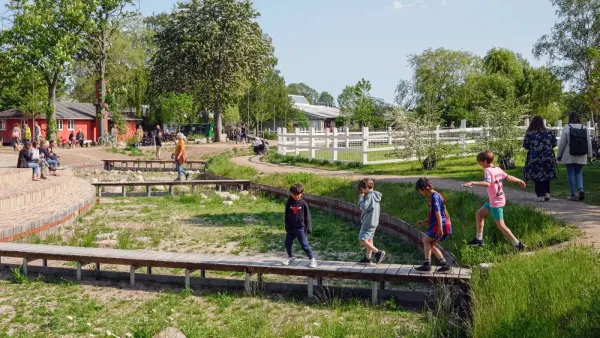
Copenhagen is losing its cool
In a city long designed to maximize light during dark Scandinavian winters, climate change is forcing the Danish capital to rethink its relationship with the sun.
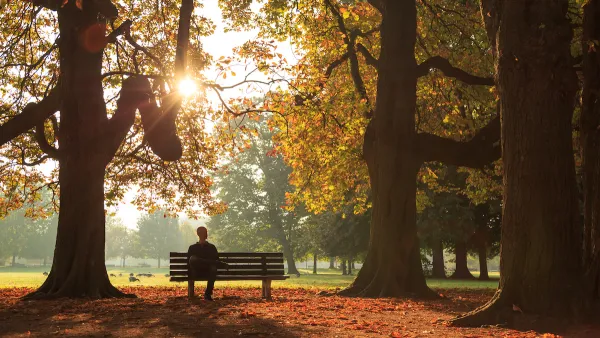
‘Smart Surfaces’ Policy Guide Offers Advice for Building and Maintaining Urban Tree Canopies
Healthy, robust tree canopies can reduce the impacts of extreme heat and improve air quality.

Planetizen Federal Action Tracker
A weekly monitor of how Trump’s orders and actions are impacting planners and planning in America.

California plans to bury El Niño’s downpour
If the state plays its cards right, it may be able to store a billion acre-feet of El Niño’s water in aquifers.

Chicago breaks ground on $3 billion megadevelopment
The new neighborhood, titled Foundry Park, will one day host 3,700 residences.

California High-Speed Rail Authority CEO resigns after $600,000 scandal
Under Ian Choudri, the authority used taxpayer dollars to fund first class flights and trips to nightclubs.

Want to study the Missouri River? Soon, you may need unanimous approval from 10 states
Legislation would require 10 governors’ permission to study or build projects moving water outside the basin.

Desperate measures: Advocates weigh draining Lake Powell to fill Colorado River
Draining the reservoir could reduce evaporation losses by a couple hundred thousand acre-feet.

FREE Course: Walkable City 1: Why Walkability?
After describing his path towards focusing on walkability as the essence of good planning, Jeff Speck marches through his five principal reasons for making more walkable places.
Reinventing Malls: Planning Alchemy—Turning Gray Fields Into Gold
The course focuses on the opportunities and imperatives that shape reinvention of mall sites.

City of Rosemead
Rutgers University, Edward J. Bloustein School of Planning and Public Policy
One Hundred Miles
Hunter College, City University of New York (CUNY)
The Architects Foundation
University of Cincinnati Online
City of Cambridge
Montrose County
The Pocatello Development Authority