The San Francisco rapid bus line is making transit on the corridor more reliable and reducing traffic crashes and congestion.


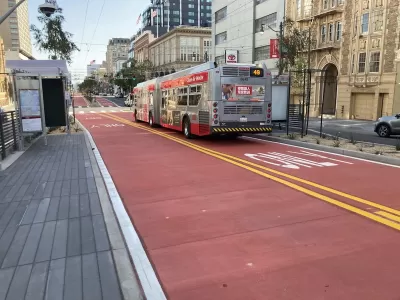
A Bus rapid transit (BRT) project in San Francisco earned the highest-level designation achieved by U.S. transit projects, Silver, by the Institute for Transportation and Development Policy (ITDP) for its effectiveness in improving transit travel times along the Van Ness corridor.
According to a press release from the city, “The Van Ness project includes dedicated center running transit lanes that don’t get slowed down by parking or turning vehicles, transit signal priority that gives buses the green light as they approach an intersection, as well as low-floor vehicles and all-door boarding, that make it quicker and easier for passengers to load and unload at each stop and fast and frequent operations.”
According to data from the SFMTA, “Bus travel on this corridor is now 36% faster, injury traffic collisions are down by 54%, and transit is 45% more reliable.” The project also added pedestrian bulbouts, countdown signals, and other infrastructure to make walking safer.
Raymone Garner, a Muni Operator of 23 years, said the BRT line “gives us a smoother ride that’s safer with better on-time performance. Riders love it because it’s easier for us to get into the bus zone so it’s easier and safer to pick up passengers, especially people with disabilities.”
The press release adds, “The other BRT Silver-designated projects in the nation include the New Britain Busway in Hartford, Connecticut and the Healthline in Cleveland, Ohio. California has two Bronze projects; the Orange (G) Line in Los Angeles and the sbX E Street Bus BRT in San Bernardino.”
FULL STORY: San Francisco's First Bus Rapid Transit Project Receives Internationally Recognized Designation

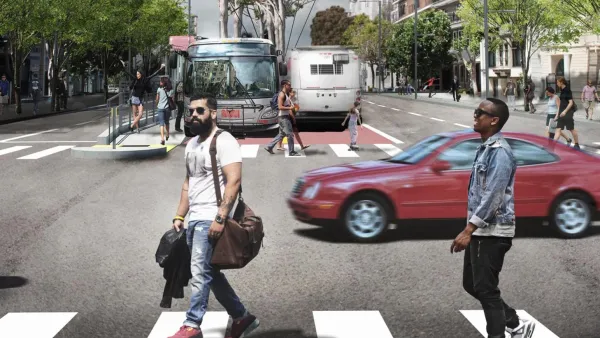
San Francisco's First BRT Line Closer to Opening
The Van Ness Avenue Bus Rapid Transit project will bring the first dedicated BRT corridor to San Francisco, nearly two decades after voters approved the project.
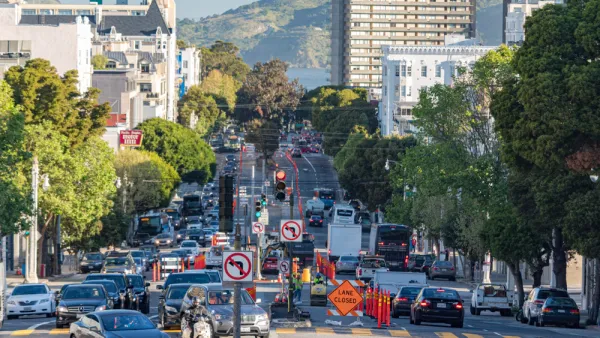
Beleaguered San Francisco Bus Project To Open April 1
San Francisco's much-delayed Van Ness BRT line, expected to speed up travel along the 'grandest boulevard,' has finally received an opening date.

A San Francisco bus that serves thousands of students students is getting some upgrades
Students advocated for changes on the #29 bus, which was notorious for its lack of reliability.

Planetizen Federal Action Tracker
A weekly monitor of how Trump’s orders and actions are impacting planners and planning in America.

The state-sanctioned urbicide of Austin
People don’t kill cities. Freeways do.

US to reduce Colorado River water deliveries to Mexico
A new Colorado Treaty amendment reduces Mexico’s Colorado River water allocation by 250,000 acre feet.

5 New England states march closer to 800 megawatt wind energy project
Securing federal approval for the project may be complicated under the Trump administration, which has historically been hostile towards domestic wind power.

Baltimore to break ground on $50 million Transit Priority Project
The project will bring faster bus trips, safer streets and better bike connections to Baltimore.

Airbnb launches $250 million 'last-dollar financing' housing accelerator, makes first investment in Austin
The company will put $6.4 million towards affordable housing development in Texas’ capital.

FREE Course: Walkable City 1: Why Walkability?
After describing his path towards focusing on walkability as the essence of good planning, Jeff Speck marches through his five principal reasons for making more walkable places.
Reinventing Malls: Planning Alchemy—Turning Gray Fields Into Gold
The course focuses on the opportunities and imperatives that shape reinvention of mall sites.


Eagle County Government
Harvard University Graduate School of Design
Nashville Planning Department
The Architects Foundation
University of Cincinnati Online
The Pocatello Development Authority
The Urban Renewal Agency of the City of Pocatello
Journal of the American Planning Association