California's oil industry has withdrawn its ballot measure challenging a law that restricts oil and gas wells near homes and schools, opting to contest the law in court.



California’s oil industry has withdrawn its controversial ballot measure that aimed to challenge a state law banning new oil and gas wells within 3,200 feet of homes and schools, opting instead to fight the legislation in court. As reported by Julie Cart, this decision means that the protective measures outlined in Senate Bill 1137, signed by Governor Gavin Newsom, will go into effect, ensuring safety improvements for existing wells and prohibiting new drilling in sensitive areas. Environmentalists see this as a significant victory, while the oil industry argues that the law will lead to job losses, increased gas prices, and greater reliance on imported oil.
Authored by Senator Lena Gonzalez, the law mandates that operators of existing wells near homes and schools develop safety plans by 2025 and implement them by 2027. The California Independent Petroleum Association, represented by Jonathan Gregory, stated that while public claims against the referendum could be made without evidence, the courts would require substantiated proof, hence the shift from a referendum to a legal strategy. Governor Newsom praised the withdrawal as a win for public health and safety, emphasizing the importance of keeping drilling operations away from vulnerable communities and populations.
Environmental health risks from oil operations have been a longstanding concern, particularly for the 2.5 million Californians living within 3,200 feet of wells, many of whom are from low-income and predominantly communities of color. The harmful effects include respiratory issues, heart disease, and higher cancer rates. Mabel Tsang of the California Environmental Justice Alliance highlighted the generational health impacts suffered by these communities, reinforcing the necessity of the new regulations.
Despite this victory, the oil industry continues to oppose various legislative efforts aimed at regulating and cleaning up abandoned wells. Assemblymember Isaac Bryan, who helped negotiate the withdrawal, remains critical of the industry's legal challenges and committed to advancing related bills. Environmental activists, undeterred by the industry's tactics, vow to persist in their efforts to protect public health and the environment.
FULL STORY: Controversial measure overturning oil well restrictions won’t be on California ballot

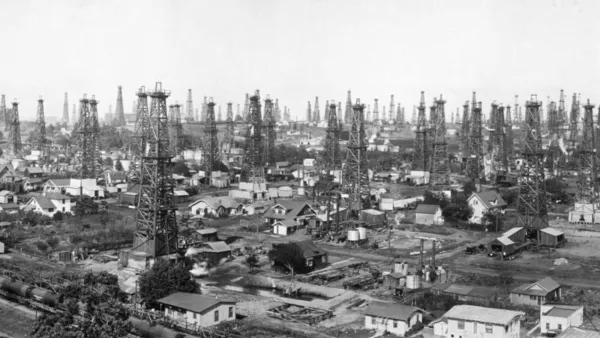
Your Not-So-Friendly Neighborhood Oil Well
Much of California's oil and gas extraction takes place in residential neighborhoods, posing significant health risks to entire communities.
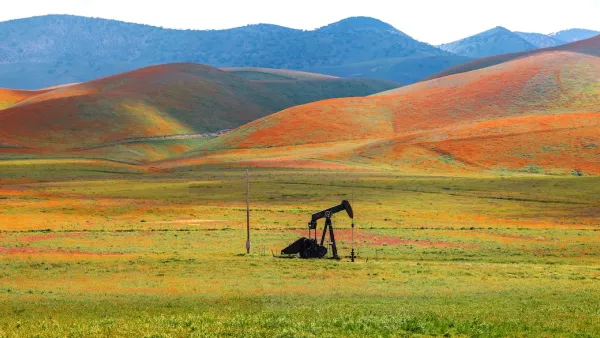
Plugging the Gap: Taxpayers Shoulder the Burden of Orphaned Oil and Gas Wells
Taxpayers, federal agencies, and tribal governments are working to address Arizona's orphaned oil and gas wells, which pose environmental and health risks, while advocates call for greater accountability from oil and gas companies.
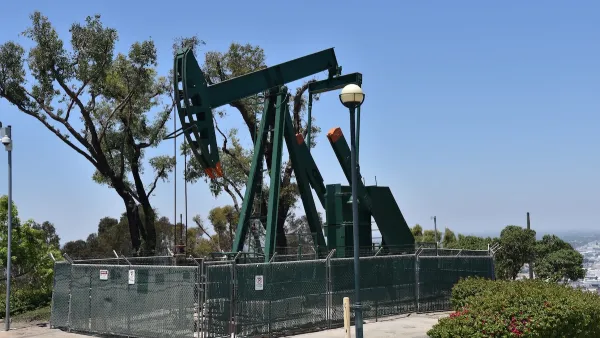
Governor Newsom Signs Bills to Restrict Oil and Gas Operations Near Communities
The signed legislation grants local communities more authority to restrict oil and gas operations near sensitive areas and address the environmental risks of idle wells, while also ensuring the permanent shutdown of low-production wells.

Planetizen Federal Action Tracker
A weekly monitor of how Trump’s orders and actions are impacting planners and planning in America.

The state-sanctioned urbicide of Austin
People don’t kill cities. Freeways do.

US to reduce Colorado River water deliveries to Mexico
A new Colorado Treaty amendment reduces Mexico’s Colorado River water allocation by 250,000 acre feet.

5 New England states march closer to 800 megawatt wind energy project
Securing federal approval for the project may be complicated under the Trump administration, which has historically been hostile towards domestic wind power.

Baltimore to break ground on $50 million Transit Priority Project
The project will bring faster bus trips, safer streets and better bike connections to Baltimore.

Airbnb launches $250 million 'last-dollar financing' housing accelerator, makes first investment in Austin
The company will put $6.4 million towards affordable housing development in Texas’ capital.

FREE Course: Walkable City 1: Why Walkability?
After describing his path towards focusing on walkability as the essence of good planning, Jeff Speck marches through his five principal reasons for making more walkable places.
Reinventing Malls: Planning Alchemy—Turning Gray Fields Into Gold
The course focuses on the opportunities and imperatives that shape reinvention of mall sites.

Eagle County Government
Harvard University Graduate School of Design
Nashville Planning Department
The Architects Foundation
University of Cincinnati Online
The Pocatello Development Authority
The Urban Renewal Agency of the City of Pocatello
Journal of the American Planning Association