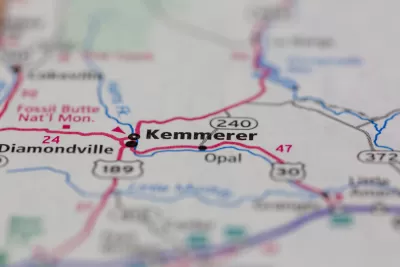
Microsoft co-founder Bill Gates had shovel-in-hand for the groundbreaking of his company's small-scale nuclear power plant in Kemmerer, Wyoming, on June 10.


It was in 1978, 46 years ago, that the Shearon Harris Nuclear Power Plant in North Carolina began construction.
Unlike the Harris Nuclear Plant, which had a capacity of 860 megawatts when built, the pilot Natrium nuclear power plant in Kemmerer “is designed to generate a consistent 345 megawatts of power — enough energy to power about 250,000 homes — with a capability of ramping up to 500 megawatts for short periods, according to the Bellevue, Washington-based TerraPower,” reported Dustin Bleizeffer, who covers energy and climate for WyoFile, on June 10.
Rather than the industry’s existing standard of massive nuclear power plants that consume a lot of water, Natrium is much smaller and will use liquid sodium to cool the reactor.
Construction of the small modular reactor, posted here in November 2021, was delayed by the unprovoked invasion of Ukraine by Russia three months later, resulting in legislation last month affecting the fuel supply. Gates, appearing on CBS's Face the Nation on June 9, “noted that...suppliers in the United Kingdom and South Africa, along with an eventual supply from uranium mines in the U.S. and Canada will allow the project to go forward.”
A final note by Bleizeffer on the importance of the plant to Wyoming and a sign of the transition to cleaner fuels for the nation's largest coal-producing state.
The $4 billion construction project is also considered an economic lifeline for southwest Wyoming, particularly the adjacent towns of Kemmerer and Diamondville, a region impacted by fossil fuels’ decline.
Hat tip to Sammy Roth, climate columnist for the Los Angeles Times newsletter, Boiling Point.
FULL STORY: Microsoft’s Gates breaks ground on novel nuclear power plant in Wyoming

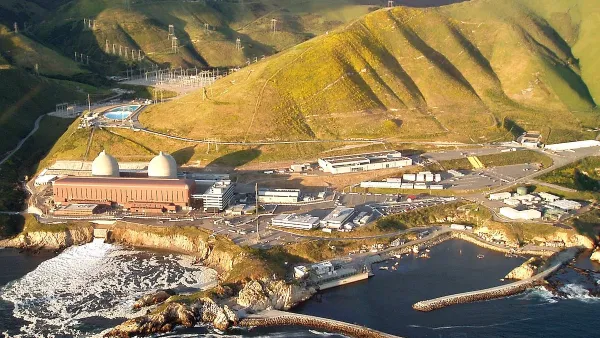
California's Lone Operating Nuclear Plant Gets Five-Year Extension
The Pacific Gas and Electric Company's Diablo Canyon Nuclear Power Plant received approval from the California PUC to operate its two reactors until 2029 and 2030. Five days later, the NRC issued a temporary license renewal.
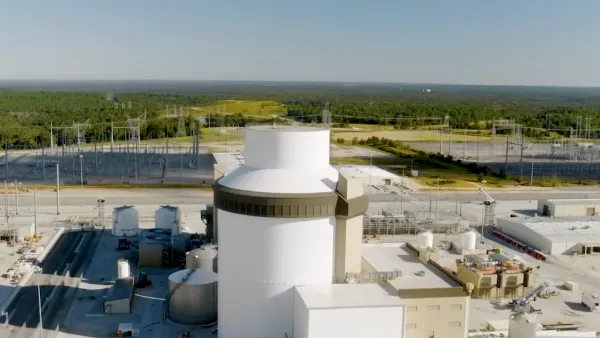
Georgia Makes Clean Energy History in U.S.
The first newly constructed nuclear power plant to generate electricity in the U.S. in over 30 years began operation in Waynesboro, Georgia on July 31.
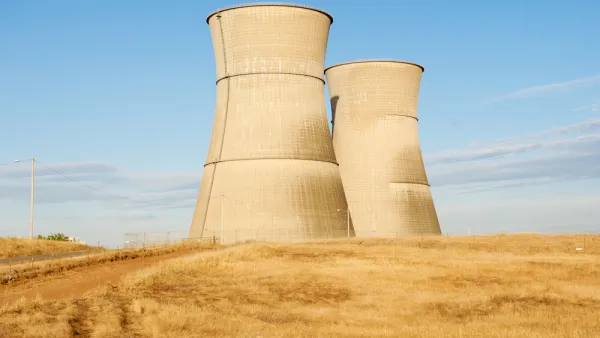
$6 Billion to Keep Uncompetitive Nuclear Plants Alive
The Infrastructure Investment and Jobs Act includes $6 billion to create a credit program to extend the life of existing nuclear power plants, the largest source of carbon-free energy in the nation. The first deadline to bid for credits is May 19.

Planetizen Federal Action Tracker
A weekly monitor of how Trump’s orders and actions are impacting planners and planning in America.

The state-sanctioned urbicide of Austin
People don’t kill cities. Freeways do.

US to reduce Colorado River water deliveries to Mexico
A new Colorado Treaty amendment reduces Mexico’s Colorado River water allocation by 250,000 acre feet.

5 New England states march closer to 800 megawatt wind energy project
Securing federal approval for the project may be complicated under the Trump administration, which has historically been hostile towards domestic wind power.

Baltimore to break ground on $50 million Transit Priority Project
The project will bring faster bus trips, safer streets and better bike connections to Baltimore.

Airbnb launches $250 million 'last-dollar financing' housing accelerator, makes first investment in Austin
The company will put $6.4 million towards affordable housing development in Texas’ capital.

FREE Course: Walkable City 1: Why Walkability?
After describing his path towards focusing on walkability as the essence of good planning, Jeff Speck marches through his five principal reasons for making more walkable places.
Reinventing Malls: Planning Alchemy—Turning Gray Fields Into Gold
The course focuses on the opportunities and imperatives that shape reinvention of mall sites.

Eagle County Government
Harvard University Graduate School of Design
Nashville Planning Department
The Architects Foundation
University of Cincinnati Online
The Pocatello Development Authority
The Urban Renewal Agency of the City of Pocatello
Journal of the American Planning Association