Small, mundane infrastructure projects can make meaningful changes for pedestrian and bike safety.



“While the multi-million dollar highway project might sound impressive, it is the small-scale infrastructure projects—bike lanes, raised crossings, and the like—that are most visible and tangible to people’s lives,” write Chris McCahill and Katya Spear in a piece published by the Mayors Innovation Project. The article calls out the minimal federal investment that goes toward pedestrian and bike infrastructure and highlights the benefits of smaller projects.
According to the authors, “Small-scale infrastructure projects are a powerful tool to allow local leaders to tell better and more effective stories about how infrastructure investments are benefiting individuals and communities.” Projects as simple as a new crosswalk or an expanded sidewalk can create immediate, tangible change in people’s everyday lives.
The authors list the federal and regional grant programs and funding streams that local jurisdictions can leverage to fund these types of projects. They strongly recommend that cities and states work together to access funding sources and promote a vision with clear priorities for road safety.
Read the full story: Smaller infrastructure investments help pave the way to safer communities
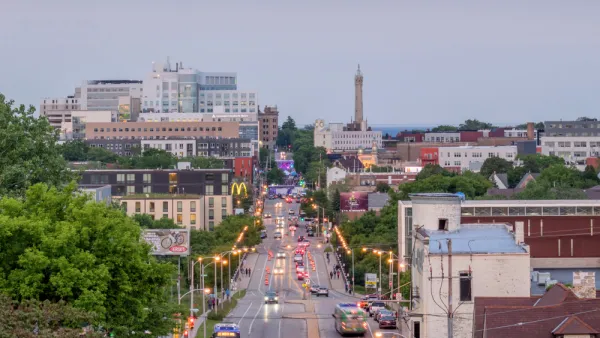
Milwaukee Launches Vision Zero Plan
Seven years after the city signed its Complete Streets Policy, the city is doubling down on its efforts to eliminate traffic deaths.
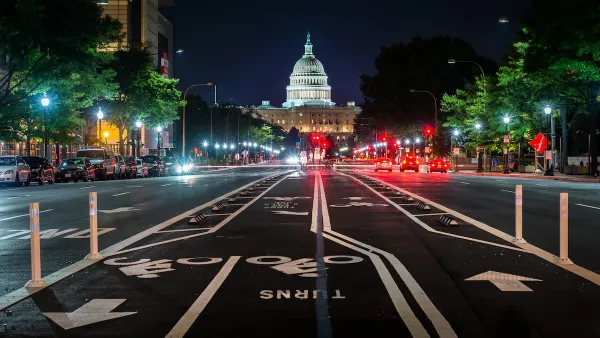
Safe Streets Funding in Jeopardy
The Trump administration is specifically targeting bike infrastructure and other road safety projects in its funding cuts.
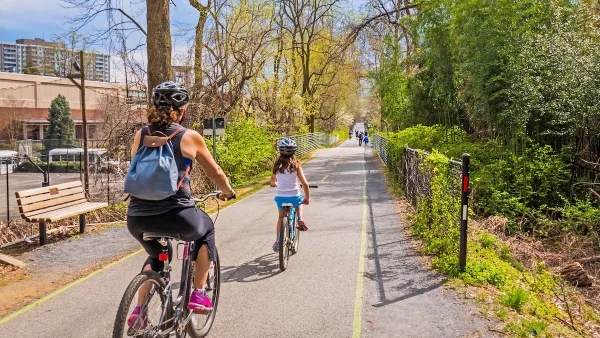
Proposed Bill Would Direct Funds to Road Safety
The Sarah Debbink Langenkamp Active Transportation Safety Act was spurred by the death of a U.S. diplomat who was killed on her bicycle.

Planetizen Federal Action Tracker
A weekly monitor of how Trump’s orders and actions are impacting planners and planning in America.

California plans to bury El Niño’s downpour
If the state plays its cards right, it may be able to store a billion acre-feet of El Niño’s water in aquifers.

Desperate measures: Advocates weigh draining Lake Powell to fill Colorado River
Draining the reservoir could reduce evaporation losses by a couple hundred thousand acre-feet.

Mamdani’s pied-à-terre tax survives legal challenge
A panel of judges found that the plaintiffs failed to demonstrate injury as a result of New York City's implementation of the tax.

Eastern Nebraska is running out of electricity
Data centers and electrification are straining eastern Nebraska’s grid, throttling economic development.

Seattle passes record-breaking transit services expansion
Proposition 1 will double the city’s transit tax to add 95,000 more bus trips and preserve 180,000 bus trips annually.

FREE Course: Walkable City 1: Why Walkability?
After describing his path towards focusing on walkability as the essence of good planning, Jeff Speck marches through his five principal reasons for making more walkable places.
Reinventing Malls: Planning Alchemy—Turning Gray Fields Into Gold
The course focuses on the opportunities and imperatives that shape reinvention of mall sites.

City of Rosemead
Rutgers University, Edward J. Bloustein School of Planning and Public Policy
One Hundred Miles
University of Michigan School for Environment and Sustainability (SEAS)
Hunter College, City University of New York (CUNY)
The Architects Foundation
City of Cambridge
Montrose County
The Pocatello Development Authority