Contracting with private sector vendors can help transit agencies improve efficiency and provide better service.


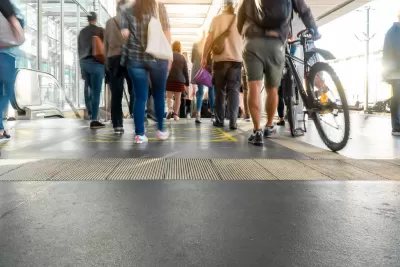
Writing in Smart Cities Dive, Dan Zukowski outlines recommendations recently published by the Eno Center for Transportation that indicate how transit agencies can successfully outsource some of their operations to private sector actors.
According to Eno president and CEO Robert Puentes, “transit agencies should reach out to different organizations, including private contractors, for new technologies, processes and resources.” If done smartly, this can help them cut costs and improve efficiency. Across the United States, roughly 60 percent of transit agencies contract some of their bus services, and all new commuter rail services launched between 1980 and 2016 use private contractors.
Using three case studies, the Eno report highlights best practices, including transparency and open communications with vendors. “Success factors include customizing contracts to the mode of service; allowing the contractor the flexibility to innovate; and positive working relationships between the agency and vendor.”
Read the full story: How transit agencies can succeed at outsourcing operations
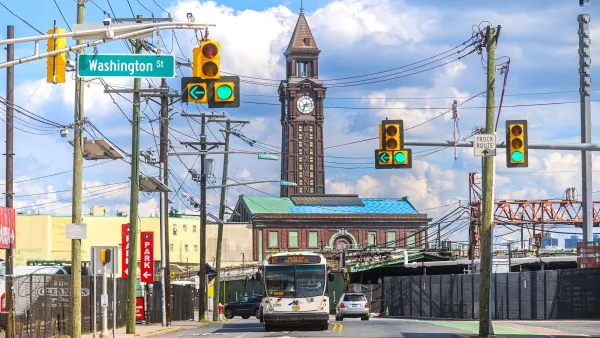
New Jersey has a Plan to buy Transit with LAND. Will it Actually Work?
I have questions.
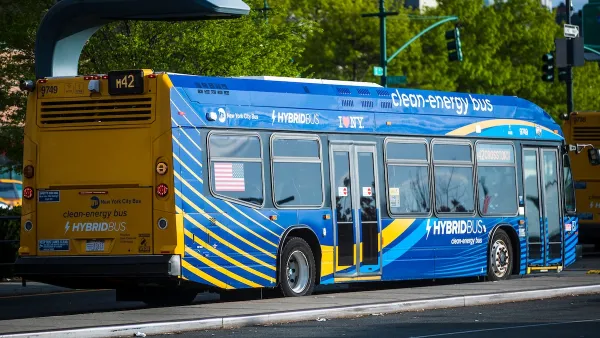
Transit Bus Costs Rise Sharply Due to Tariffs
The cost of a transit bus has gone up by 68 percent since 2021, in part because of recent tariffs on steel and aluminum.
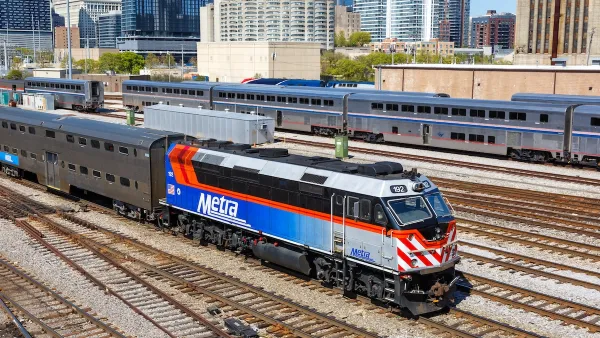
Chicago Transit Faces Severe Service Cuts
Metra officials warn the agency could cut service by as much as 40 percent to make up for a massive budget shortfall.

Planetizen Federal Action Tracker
A weekly monitor of how Trump’s orders and actions are impacting planners and planning in America.

California plans to bury El Niño’s downpour
If the state plays its cards right, it may be able to store a billion acre-feet of El Niño’s water in aquifers.

Desperate measures: Advocates weigh draining Lake Powell to fill Colorado River
Draining the reservoir could reduce evaporation losses by a couple hundred thousand acre-feet.

Mamdani’s pied-à-terre tax survives legal challenge
A panel of judges found that the plaintiffs failed to demonstrate injury as a result of New York City's implementation of the tax.

Eastern Nebraska is running out of electricity
Data centers and electrification are straining eastern Nebraska’s grid, throttling economic development.

Seattle passes record-breaking transit services expansion
Proposition 1 will double the city’s transit tax to add 95,000 more bus trips and preserve 180,000 bus trips annually.

FREE Course: Walkable City 1: Why Walkability?
After describing his path towards focusing on walkability as the essence of good planning, Jeff Speck marches through his five principal reasons for making more walkable places.
Reinventing Malls: Planning Alchemy—Turning Gray Fields Into Gold
The course focuses on the opportunities and imperatives that shape reinvention of mall sites.

City of Rosemead
Rutgers University, Edward J. Bloustein School of Planning and Public Policy
One Hundred Miles
University of Michigan School for Environment and Sustainability (SEAS)
Hunter College, City University of New York (CUNY)
The Architects Foundation
City of Cambridge
Montrose County
The Pocatello Development Authority