The project, dubbed Culdesac, offers EV rentals, free light rail passes, and other perks instead of private parking.


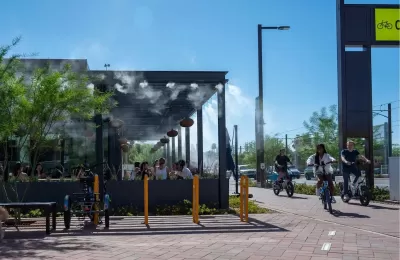
Writing in Fast Company, Adele Peters describes the growth of the Phoenix suburb billed as America’s first built-from-scratch car-free development. Culdesac now has 150 residents, all of whom gave us private cars for the experience.
When tenants at Culdesac need a car for an occasional errand, they can rent an on-site EV for $5 an hour; they also get discounts on Lyft and Waymo and a free all-access light rail pass. A new separated bike lane will soon connect the development to a nearby outdoor mall and a larger bike network; the first 200 residents get a free e-bike when they sign a lease and discounts at the local bike shop.
When complete, Culdesac will have 700 housing units in addition to stores and restaurants. The development also includes features to reduce the heat island effect (no asphalt on the ground) and offers e-bikes so residents can bike in the Southwestern summers.
As Peters points out, “The company plans to later expand to other areas, though the concept may arguably only work in places that already have access to strong public transit.”
FULL STORY: This Arizona neighborhood doesn’t let you own a car. Here’s what it’s like to live there

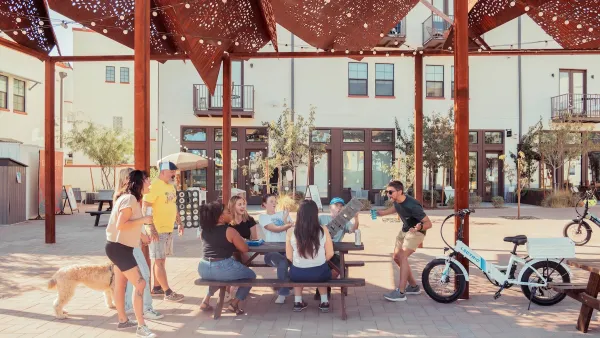
After Culdesac's success in Tempe, Mesa approves new 1,000-unit 'car-light' development
Culdesac Mesa will take the same transit-oriented approach with a compact, walkable design and access to transit and shared mobility options.
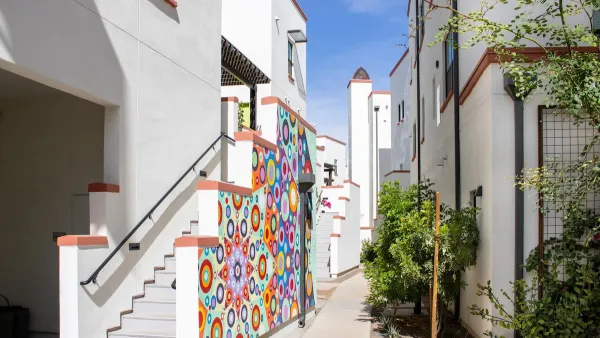
Culdesac Tempe Defies Expectations
Despite initial skepticism about its true potential for sustainable urbanism, the built-from-scratch “car-free neighborhood” is widely popular with its residents.
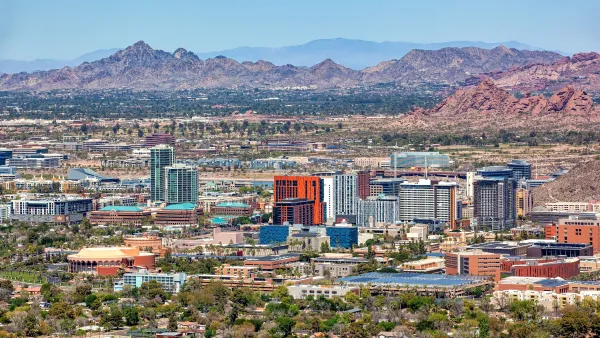
Arizona ‘Car-Free’ Neighborhood Nears Opening
Culdesac Tempe bans personal cars in exchange for access to scooters, bike facilities, and free transit. Is that enough to reduce car ownership in auto-centric Arizona?

Planetizen Federal Action Tracker
A weekly monitor of how Trump’s orders and actions are impacting planners and planning in America.

The state-sanctioned urbicide of Austin
People don’t kill cities. Freeways do.

US to reduce Colorado River water deliveries to Mexico
A new Colorado Treaty amendment reduces Mexico’s Colorado River water allocation by 250,000 acre feet.

Mamdani overhauls NYC's Vision Zero plan with 100 new policy goals
The overhaul aims to reduce traffic deaths and make streets safer for pedestrians, cyclists and drivers through lower speed limits, new safety infrastructure and more.

Amtrak not solely to blame for New Jersey commuter rail's unreliability, report finds
A new study from the Garden State Initiative found that NJ Transit’s budget grew 20% across a 4 year period, but reliability declined significantly over the same period.

EPA erases limits on planet-warming pollution from power plants
Under Monday’s plan, power plants would still have some limits on how much mercury, arsenic and other contaminants they can emit.

FREE Course: Walkable City 1: Why Walkability?
After describing his path towards focusing on walkability as the essence of good planning, Jeff Speck marches through his five principal reasons for making more walkable places.
Reinventing Malls: Planning Alchemy—Turning Gray Fields Into Gold
The course focuses on the opportunities and imperatives that shape reinvention of mall sites.

Eagle County Government
Harvard University Graduate School of Design
Nashville Planning Department
The Architects Foundation
University of Cincinnati Online
The Pocatello Development Authority
The Urban Renewal Agency of the City of Pocatello
Journal of the American Planning Association