The County of Los Angeles recently launched a website to better connect residents of unincorporated areas to information and municipal services offered by the county.


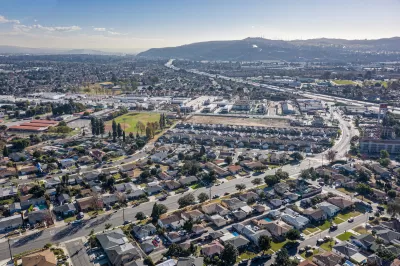
The County of Los Angeles is the most populous and complicated county in the U.S., responsible for developing policies and delivering services to meet the needs of ten million residents, of which one million are living in unincorporated areas which are communities outside of city jurisdictions that have no local mayor or city council. Over 65% of L.A. County's 4,000-square mile land area is unincorporated. There are about 120 to 125 unincorporated areas, which range in size from a few blocks in size to larger urban centers with more than 150,000 residents.
Residents of unincorporated areas rely on L.A. County and their County supervisor for local government representation and services, including land use planning and zoning, parks and recreation, public libraries, public safety, environmental protection, emergency response, code enforcement, homelessness crisis response and other critical services and initiatives.
The County recently created and launched a new website where residents of unincorporated areas can find answers to questions like:
- Who is their County representative?
- What are the municipal serves available to them?
- Which departments do they contact for more information about specific services?
- How to they for apply for permits, register for services, report issues and complaints, and request important documents?
Also available on the website are guides to municipal and unincorporated area services in English and Spanish organized by supervisorial district as well as responses to frequently asked questions.
Read the full story: Unincorporated Area Services - County of Los Angeles

What Community-Based Zoning Enforcement Looks Like in South Central Los Angeles
Passion for urban planning, love of South Central LA communities, and historical background of the neighborhoods combine in this personal account by Jonathan P. Bell of community-based zoning enforcement.
Los Angeles County's Creative Plans to Boost Parks
A recent Los Angeles Times article described the creative ways the city of Los Angeles is trying to meet park needs. Los Angeles County park planner Clement Lau describes the county's side of the story.
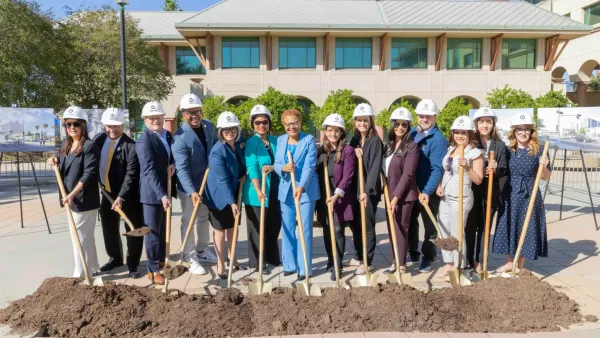
LA begins work on $4 billion light rail through San Fernando Valley
The project will be the areas first light rail service since the termination of the Pacific Electric Railway in the 1950s.

Planetizen Federal Action Tracker
A weekly monitor of how Trump’s orders and actions are impacting planners and planning in America.

California plans to bury El Niño’s downpour
If the state plays its cards right, it may be able to store a billion acre-feet of El Niño’s water in aquifers.

Desperate measures: Advocates weigh draining Lake Powell to fill Colorado River
Draining the reservoir could reduce evaporation losses by a couple hundred thousand acre-feet.

US buildings threatened, destroyed by fires set to triple by 2060
Researchers found a high fire risk for socioeconomically vulnerable neighborhoods in the American West.

LA residents may be allowed to paint their own crosswalks
Councilwoman Katy Yaroslavsky put out a motion instructing the Los Angeles Department of Public Transportation to study the feasibility of allowing volunteers to paint crosswalks.

Dallas moves to overhaul its zoning code
The city's zoning reform will allow more multi-family and mixed-use developments.

FREE Course: Walkable City 1: Why Walkability?
After describing his path towards focusing on walkability as the essence of good planning, Jeff Speck marches through his five principal reasons for making more walkable places.
Reinventing Malls: Planning Alchemy—Turning Gray Fields Into Gold
The course focuses on the opportunities and imperatives that shape reinvention of mall sites.

City of Rosemead
Rutgers University, Edward J. Bloustein School of Planning and Public Policy
One Hundred Miles
Hunter College, City University of New York (CUNY)
The Architects Foundation
University of Cincinnati Online
City of Cambridge
Montrose County
The Pocatello Development Authority