Like other rural communities, Grants Pass is eager to access federal funding aimed at sustainability initiatives, but faces challenges when it comes to meeting grant requirements.


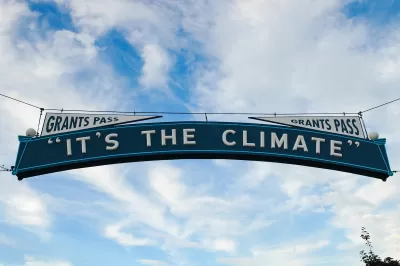
The small town of Grants Pass, Oregon is embarking on an ambitious sustainability plan “that, if implemented, would transition publicly owned buildings and vehicles to renewable energy, diversifying their power sources in case of natural disaster.”
Writing in The Daily Yonder, Claire Carlson outlines the plan, which faces financial challenges and other hurdles to achieving its goals. But adapting to climate change is an urgent need in the region: “In Roseburg, Oregon, about 70 miles north of Grants Pass, a 6.3°F increase would mean the city’s yearly average of 36 days of below-freezing temperatures would decrease to few or none, according to the analysis. Grants Pass would suffer a similar fate, drastically changing the climate it’s so famous for.”
The sustainability plan takes aim at building resilience in the remote region that could easily become isolated or cut off in an emergency situation.
Carlson points out that small, rural communities like Grants Pass often get passed over for funding opportunities due to their small staffs and lack of dedicated grant writers, as well as the inability to meet matching requirements. “This is despite the approximately $87 billion of Inflation Reduction Act money classified as rural-relevant, rural-stipulated, or rural-exclusive funding, according to an analysis from the Brookings Institute.”
Read the full story: With Limited Resources, One Small Town Plans for Climate Change

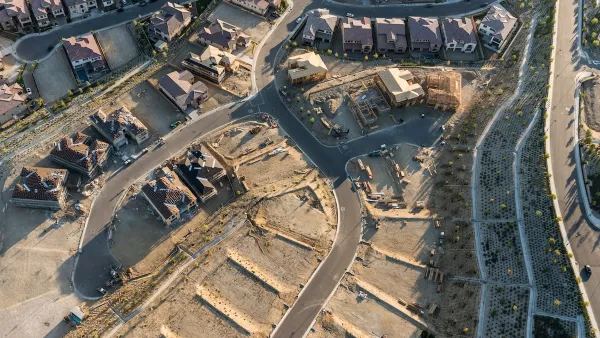
Report Outlines Strategies for Resilient Wildfire Recovery in LA
Project Recovery offers a roadmap for rebuilding more sustainable and climate-resilient communities after wildfires and other disasters.
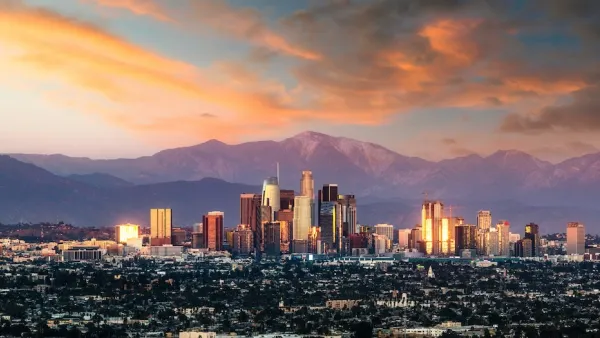
Building Resilient Communities: Insights from the LA County Cities Summit
The Los Angeles County Cities Summit convened local leaders to share strategies for advancing sustainability, addressing climate resilience, extreme heat, and other pressing environmental challenges through policy and community-driven solutions.
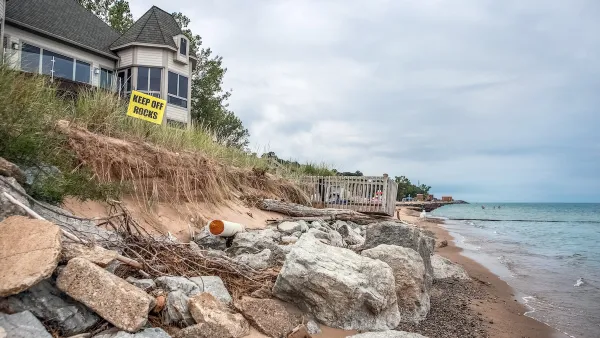
How US Cities Can Prepare for Climate Disasters
Resilience, encompassing infrastructure, governance, economic strength, and social cohesion, is critical for cities to mitigate rising climate risks like flooding, wildfires, and heat, ensuring long-term recovery and adaptability.

Planetizen Federal Action Tracker
A weekly monitor of how Trump’s orders and actions are impacting planners and planning in America.

Amtrak, CN end decades-long dispute with eight-year agreement
The new operating agreement establishes an updated framework for the companies to work together, including processes to resolve disputes.

Judges permit Denver to divert 77,000 acre feet from the Colorado River for reservoir expansion
Overuse and climate change have caused the Colorado River’s water levels to plummet.

NYC DOT wants faster, more permanent street upgrades
The city is examining ways to build more concrete infrastructure without getting entangled in 'decades-long' projects.

'Something we’ve never seen before:' rising utility rates could strain city finances nationwide
Data centers, climate change and other factors have caused utility rates in the United States to increase by 38% since 2020.

Trump to overrule local leaders, lease millions of acres of America’s Pacific Island territories’ seafloors to mining companies
International law says that the Indigenous people of America’s territories have a right to prior and informed consent regarding projects that impact their countries.

FREE Course: Walkable City 1: Why Walkability?
After describing his path towards focusing on walkability as the essence of good planning, Jeff Speck marches through his five principal reasons for making more walkable places.
Reinventing Malls: Planning Alchemy—Turning Gray Fields Into Gold
The course focuses on the opportunities and imperatives that shape reinvention of mall sites.


Harvard University Graduate School of Design
KFH Group Inc.
Greater Baltimore Committee
The Architects Foundation
University of Cincinnati Online
The Pocatello Development Authority
The Urban Renewal Agency of the City of Pocatello