In a summary of a recent talk, Chuck Wolfe provides five tools to help reimagine post-pandemic urban spaces with a focus on livability and co-creation.


Wolfe suggests strategies sensitive to local context and character based on his writing about cities. He envisions a post-pandemic world where cities are premised on a deep understanding of human needs and compassionate city planning. He stresses the importance of co-creation and community involvement.
Ideas such as Place Healing, the Role of Photography, the Urban Diary, Urbanism Without Effort, and The Replacement Question stand behind this range of local actions and can foster teamwork, imagination, and receptivity to fresh, post-pandemic perspectives.
The practical application of these concepts faces the challenges of systemic inequality and environmental sustainability. Their effectiveness will depend on the active participation of diverse stakeholders, including government, businesses, and residents, in creating cities that are not only functional but also reflective of their inhabitants' collective input and aspirations.
FULL STORY: Envisioning the Post-Pandemic City and Town

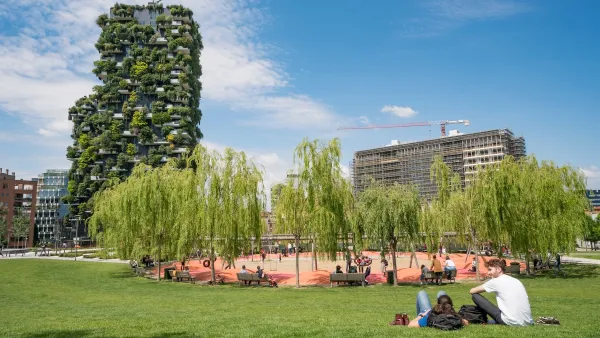
Planning for Love, Part 1: The link between urban form and dating
A brief exploration of dating through history highlights how the spaces in which we live and move shape our social lives and relationships.
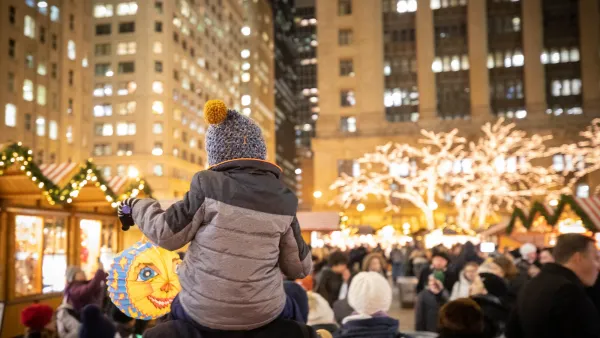
String Lights are Secular! The Holiday Case for Year-round Placemaking
The holidays make streets and spaces warm, cozy, and welcoming. Why don’t we do that year round?
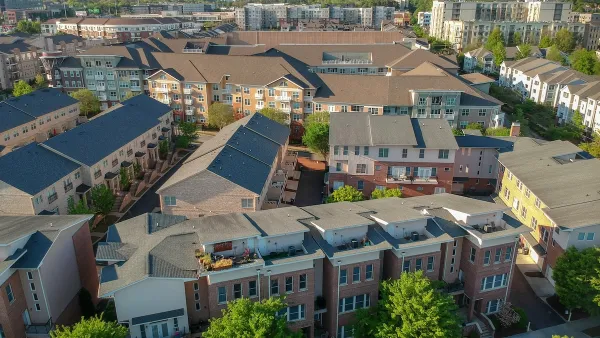
The Rise of Crowdfunded Real Estate
Enabled by provisions in the JOBS Act of 2012 that allow smaller scale investing, community members are becoming co-owners of local real estate projects.

Planetizen Federal Action Tracker
A weekly monitor of how Trump’s orders and actions are impacting planners and planning in America.

The state-sanctioned urbicide of Austin
People don’t kill cities. Freeways do.

US to reduce Colorado River water deliveries to Mexico
A new Colorado Treaty amendment reduces Mexico’s Colorado River water allocation by 250,000 acre feet.

Brightline West’s future may rely on $6 billion federal loan
The company has until Nov. 2 to make a $400 million equity investment into its proposed high-speed rail line.

LA Metro’s ultimatum: no extra buses for LA28 if federal funding isn’t imminently secured
If Metro does not provide additional buses, LA28 organizers will have to find a new way to manage Olympic traffic. LA28’s budget does not include a line item for transit.

Colorado’s Largest Data Center Could Rise Next to Homes — Without a Public Hearing
The proposed campus would consume 11 times the power of Denver International Airport; as it has across the country, opposition mounts.

FREE Course: Walkable City 1: Why Walkability?
After describing his path towards focusing on walkability as the essence of good planning, Jeff Speck marches through his five principal reasons for making more walkable places.
Reinventing Malls: Planning Alchemy—Turning Gray Fields Into Gold
The course focuses on the opportunities and imperatives that shape reinvention of mall sites.

Eagle County Government
Harvard University Graduate School of Design
Nashville Planning Department
The Architects Foundation
University of Cincinnati Online
The Pocatello Development Authority
The Urban Renewal Agency of the City of Pocatello
Journal of the American Planning Association