A deal came together “quickly and unexpectedly" on the final night of the nearly 2-week United Nations climate talks in Dubai, UAE, according to a series of articles by Washington Post climate reporters.


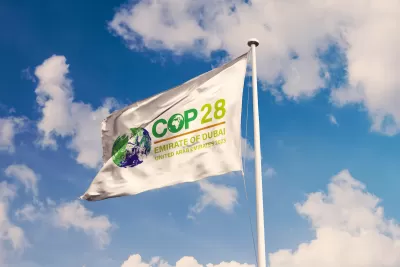
“This was a paradigm-shifting day for climate talks,” writes Chico Harlan, a global climate correspondent for The Washington Post on December 13, the day after the 28th session of the Conference of the Parties (COP 28) to the United Nations Framework Convention on Climate Change (UNFCCC) was scheduled to conclude.
[See earlier post: “COP28: Will Developed Nations Reduce Emissions?” December 6, 2023]
“The chief global goal of the text is to achieve carbon neutrality by 2050, but even in that scenario, there would be a limited use for oil and gas,” adds Harlan in the source article, one of several updates written by Post reporters after the agreement was unexpectedly reached on December 13.
The text also mentions the need to ramp up technologies “such as carbon capture” that could be used in tandem with fossil fuels to capture emissions.
“It’s easy to criticize this deal, which followed two weeks of tough negotiations, as weak and insufficient,” opined the Los Angeles Times editorial board on Dec. 13. "It is nonbinding and full of caveats and loopholes.”
It calls for “transitioning away” from fossil fuels, rather than phasing out, which many entities, including the United States, the European Union and vulnerable island states, were pushing for.
But the agreement is a milestone nonetheless. There is now a baseline global consensus on the need to move beyond fossil fuels.
FULL STORY: The ‘beginning of the end’ for fossil fuels

COP28: Will Developed Nations Reduce Emissions?
Tensions between developed and developing nations surfaced over emissions and energy, with the former focused on reducing fossil fuels and the latter pointing to unrealized emissions reductions from the nations most responsible for global warming.

The Year in Good Climate News
Despite the ups and downs, there are reasons to feel optimistic.
Trump Administration Unfreezes Pennsylvania Climate Funding Amidst Lawsuits
Funding for air and water quality programs still at risk.

The state-sanctioned urbicide of Austin
People don’t kill cities. Freeways do.

US to reduce Colorado River water deliveries to Mexico
A new Colorado Treaty amendment reduces Mexico’s Colorado River water allocation by 250,000 acre feet.

New Jersey’s second-largest city bans standalone data centers
Jersey City will continue to allow co-location facilities, such as those meant for research institutions that store their own data.

Amtrak not solely to blame for New Jersey commuter rail's unreliability, report finds
A new study from the Garden State Initiative found that NJ Transit’s budget grew 20% across a 4 year period, but reliability declined significantly over the same period.

EPA erases limits on planet-warming pollution from power plants
Under Monday’s plan, power plants would still have some limits on how much mercury, arsenic and other contaminants they can emit.

Phoenix announces new on-demand transit service, more frequent RAPID buses
Both new services will launch in October, and are part of Phoenix's Project Effective Access Solutions for Easing Congestion.

FREE Course: Walkable City 1: Why Walkability?
After describing his path towards focusing on walkability as the essence of good planning, Jeff Speck marches through his five principal reasons for making more walkable places.
Reinventing Malls: Planning Alchemy—Turning Gray Fields Into Gold
The course focuses on the opportunities and imperatives that shape reinvention of mall sites.

Eagle County Government
Harvard University Graduate School of Design
Nashville Planning Department
The Architects Foundation
University of Cincinnati Online
The Pocatello Development Authority
The Urban Renewal Agency of the City of Pocatello
Journal of the American Planning Association