The project is part of MARTA’s effort to support more transit-oriented development in downtown Atlanta.



A massive redevelopment project at Atlanta’s Five Points Metropolitan Atlanta Rapid Transit Authority (MARTA) transit station is moving forward into a public review phase required under the National Environmental Policy Act (NEPA).
As Josh Green explains in Urbanize Atlanta, “The $206-million overhaul calls for removing and replacing Five Points station’s concrete canopy, reconnecting Broad Street to pedestrian traffic, adding customer amenities, and incorporating spaces for public art, agriculture, and communal gatherings.”
The project includes measures to mitigate negative impacts on the historically significant aspects of the station such as “architectural documentation such as photography and interpretive panels that memorialize today’s concourse and plaza levels.”
While the station overhaul won’t be complete before the 2026 World Cup games Atlanta is hosting, “The project is expected to help set the stage for transit-oriented development downtown, including a future residential component at Underground Atlanta.”
Read the full story: MARTA's Five Points station redevelopment takes step forward

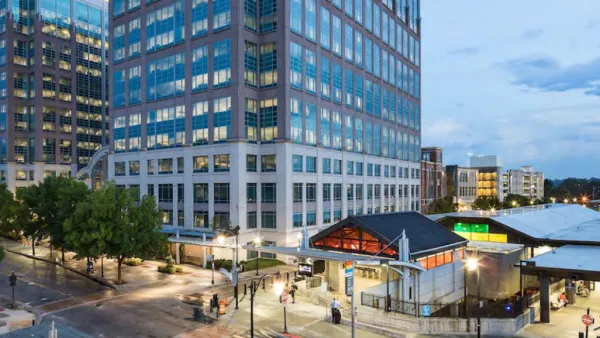
New TOD Breaks Ground in Atlanta Area
The project will include over 500 housing units, commercial and retail space, and park spaces.
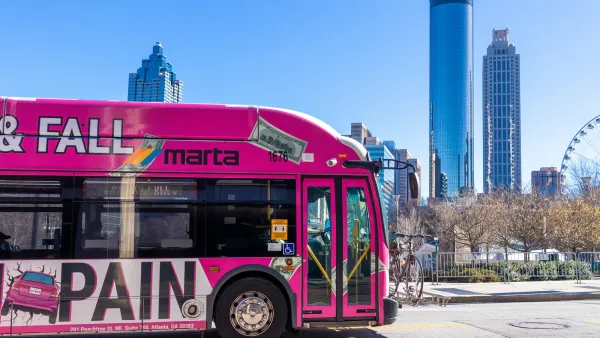
MARTA’s NextGen Bus System to Relaunch With Increased Frequency, New Last-mile Rideshare Program
Atlanta’s transit agency will enhance service on some routes while compensating for service cuts on others with a new on-demand service.
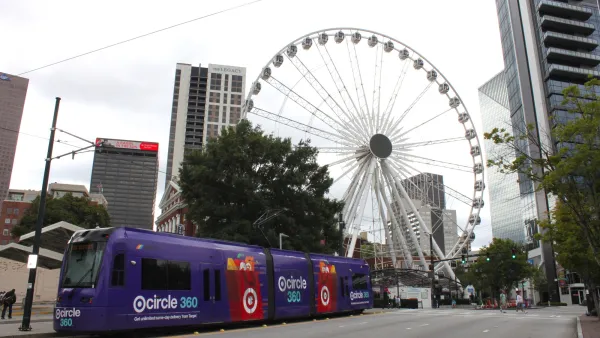
MARTA Streetcar Returns February 3
Streetcar service in Atlanta was suspended for five months for repairs and upgrades.

Planetizen Federal Action Tracker
A weekly monitor of how Trump’s orders and actions are impacting planners and planning in America.

California plans to bury El Niño’s downpour
If the state plays its cards right, it may be able to store a billion acre-feet of El Niño’s water in aquifers.

Chicago breaks ground on $3 billion megadevelopment
The new neighborhood, titled Foundry Park, will one day host 3,700 residences.

Satanic place names
From streams and lakes to valleys and canyons, I mapped more than 1,000 places named after the Devil.

California High-Speed Rail Authority CEO resigns after $600,000 scandal
Under Ian Choudri, the authority used taxpayer dollars to fund first class flights and trips to nightclubs.

Want to study the Missouri River? Soon, you may need unanimous approval from 10 states
Legislation would require 10 governors’ permission to study or build projects moving water outside the basin.

FREE Course: Walkable City 1: Why Walkability?
After describing his path towards focusing on walkability as the essence of good planning, Jeff Speck marches through his five principal reasons for making more walkable places.
Reinventing Malls: Planning Alchemy—Turning Gray Fields Into Gold
The course focuses on the opportunities and imperatives that shape reinvention of mall sites.

City of Rosemead
Rutgers University, Edward J. Bloustein School of Planning and Public Policy
One Hundred Miles
Hunter College, City University of New York (CUNY)
The Architects Foundation
University of Cincinnati Online
City of Cambridge
Montrose County
The Pocatello Development Authority