While walking trips decline, driving is back to near-pre-pandemic levels.


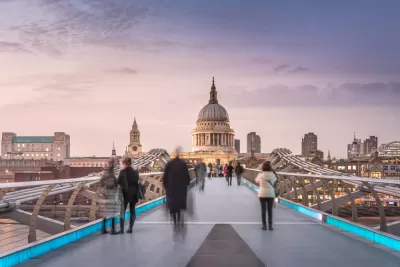
“According to a new report from the mobility data analytics firm Streetlight, U.S. walking trips dropped by a stunning 36 percent between 2019 and 2022, despite a global respiratory pandemic that some hoped would encourage more pedestrian activity,” writes George Kevin Jordan in Streetsblog USA. Cycling rates also dropped slightly between 2021 and 2022.
The report shows that all 50 states and every major metro area lost walking activity, with some cities seeing drops as high as 49 percent. Meanwhile, driving is back to levels just 4 percent below 2019. “That's grim data for a country with serious milestones to reach in order to curb the impacts of climate change,” Jordan writes. The report attributes the decline in part to the mobility shifts spurred by the growth of remote work and the higher rates of car ownership in recent years.
However, there are bright spots: “in some communities, the trend may already be turning around. Between 2021 and 2022, California and New York experienced a 13 and six percent increase in walking activity, respectively, while D.C. topped the charts with a 32 percent year-over-year spike.” Other cities can promote similar patterns through quick-build interventions that make walking safer and more attractive—“at least while they work towards more permanent types of traffic calming and land use reform that makes walking a natural choice.”
FULL STORY: Report: Americans Are Walking Less As Pedestrian Deaths Rise

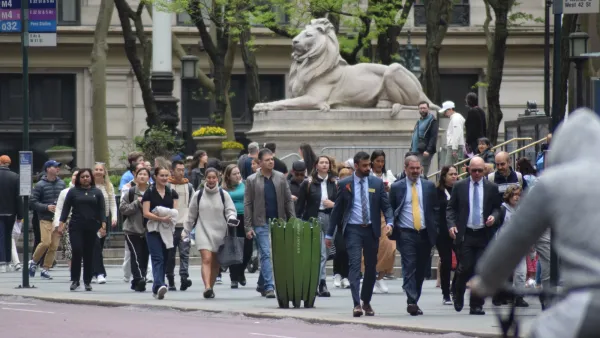
See the First Complete Map of NYC Walking Traffic
A new model of pedestrian routes and activity can help NYC planners make more informed decisions about transportation infrastructure and pedestrian safety improvements.
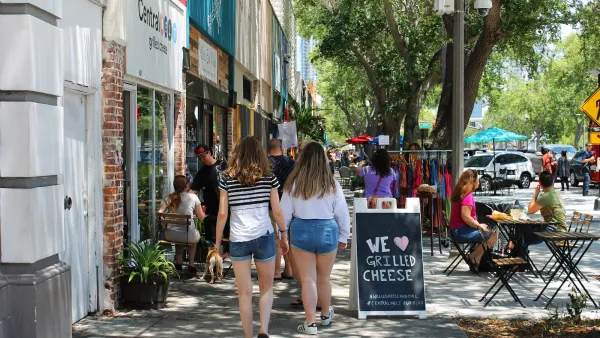
St. Petersburg Launches Sidewalk Master Plan to Close Gaps in Pedestrian Network and Improve Accessibility
The plan will inform priorities for fiscal year 2027.

Jeff Speck’s “Interesting Walk,” In Unexpected Art Forms
We thought it would be fun to ask the Planetizen family to show us their version of the Interesting Walk. What we got back surprised and delighted us beyond expectation.

Planetizen Federal Action Tracker
A weekly monitor of how Trump’s orders and actions are impacting planners and planning in America.

The state-sanctioned urbicide of Austin
People don’t kill cities. Freeways do.

US to reduce Colorado River water deliveries to Mexico
A new Colorado Treaty amendment reduces Mexico’s Colorado River water allocation by 250,000 acre feet.

5 New England states march closer to 800 megawatt wind energy project
Securing federal approval for the project may be complicated under the Trump administration, which has historically been hostile towards domestic wind power.

Baltimore to break ground on $50 million Transit Priority Project
The project will bring faster bus trips, safer streets and better bike connections to Baltimore.

Airbnb launches $250 million 'last-dollar financing' housing accelerator, makes first investment in Austin
The company will put $6.4 million towards affordable housing development in Texas’ capital.

FREE Course: Walkable City 1: Why Walkability?
After describing his path towards focusing on walkability as the essence of good planning, Jeff Speck marches through his five principal reasons for making more walkable places.
Reinventing Malls: Planning Alchemy—Turning Gray Fields Into Gold
The course focuses on the opportunities and imperatives that shape reinvention of mall sites.

Eagle County Government
Harvard University Graduate School of Design
Nashville Planning Department
The Architects Foundation
University of Cincinnati Online
The Pocatello Development Authority
The Urban Renewal Agency of the City of Pocatello
Journal of the American Planning Association