The concept focuses on road design and policy that reduces the likelihood of severe injuries and deaths.


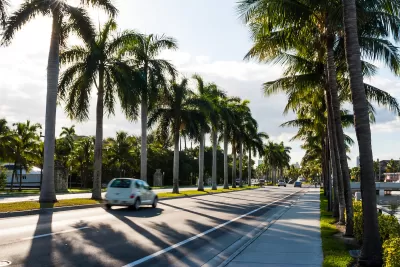
Florida is moving toward a ‘Safe System’ approach to traffic safety as road fatalities in the state rise, reports Susan Giles Wantuck for WUSF. According to Pei-Sung Lin of the Center for Urban Transportation Research at the University of South Florida, the approach acknowledges that humans make mistakes and aims to reduce the likelihood that those mistakes will be fatal.
For example, since crashes at higher speeds are more likely to result in serious injuries and deaths, designing roads with roundabouts, low speed limits, and other traffic calming features can improve safety by forcing drivers to slow down. “[F]or bike riders and pedestrians, a crash at 15 miles per hour, instead of one at 45, may be one they can survive.”
Lin also explains that “redundancy is crucial.” The article adds, “What that means is safe people, safe roads and the latter can be accomplished by providing ‘clearer signage, pavement markings, regular pavement friction, clear traffic control devices ... that also will contribute to protection of our users.’”
Read the full story: Florida is adopting Safe System Approach to improve safety, reduce traffic deaths and severe injuries

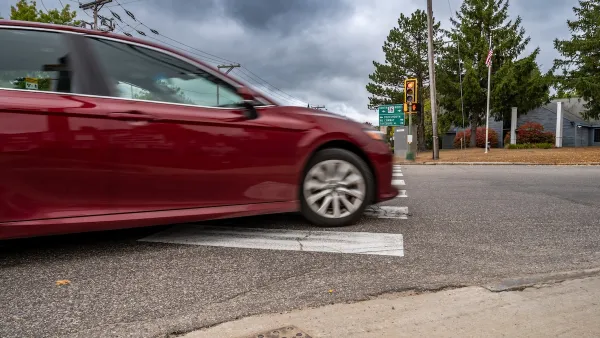
Banning Right Turns on Red Just One Step Toward Vision Zero
Experts caution that blanket bans on right turns on red make only a slight contribution to reducing fatal crashes, and other interventions are needed to bring down traffic fatalities.
Moving Beyond Crash Statistics to Understand Road Safety
Why measuring traffic deaths alone doesn’t paint a full picture.
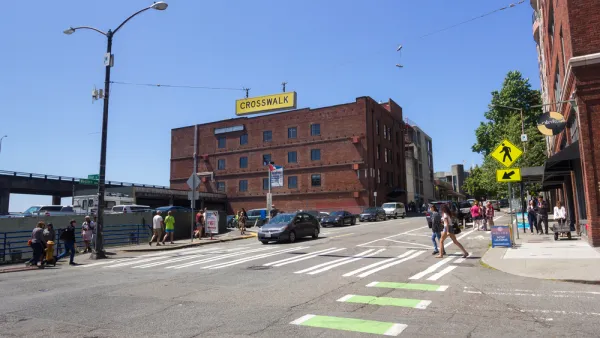
Washington Focuses Road Safety Efforts on Individuals, Neglecting Design
Legislative efforts to reduce traffic deaths could move the needle toward Vision Zero, but state leaders failed to commit infrastructure funds to making structural improvements.

Planetizen Federal Action Tracker
A weekly monitor of how Trump’s orders and actions are impacting planners and planning in America.

The state-sanctioned urbicide of Austin
People don’t kill cities. Freeways do.

US to reduce Colorado River water deliveries to Mexico
A new Colorado Treaty amendment reduces Mexico’s Colorado River water allocation by 250,000 acre feet.

Nation's most wind-powered state turns to coal as data centers increase energy demand
For the first time in decades, Iowa has increased its generation of coal power.

NYC cools commuters with city's first rain garden above a bus stop
New York City officials say the plants in the rain garden can absorb 16 gallons of rainwater during heavy storms.

Brightline West’s future may rely on $6 billion federal loan
The company has until Nov. 2 to make a $400 million equity investment into its proposed high-speed rail line.

FREE Course: Walkable City 1: Why Walkability?
After describing his path towards focusing on walkability as the essence of good planning, Jeff Speck marches through his five principal reasons for making more walkable places.
Reinventing Malls: Planning Alchemy—Turning Gray Fields Into Gold
The course focuses on the opportunities and imperatives that shape reinvention of mall sites.

Eagle County Government
Harvard University Graduate School of Design
Nashville Planning Department
The Architects Foundation
University of Cincinnati Online
The Pocatello Development Authority
The Urban Renewal Agency of the City of Pocatello
Journal of the American Planning Association