A small transit agency in Northern California is making ambitious expansion plans.


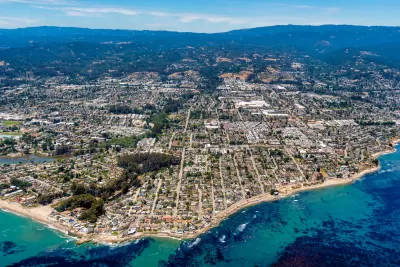
In a post on his blog, Human Transit, Jarrett Walker praises the expanding transit service in Santa Cruz County, California, a coastal area just south of the San Francisco Bay Area.
“Like many US agencies, Santa Cruz Metro had to make cuts during the pandemic to match the service to their shortage of bus drivers. In the last year, though, the pace of hiring has picked up, and the agency can do its first substantial expansion.” As Walker notes, his consultancy was asked to advise Santa Cruz Metro on its expansion plan, which the agency adopted last week.
According to Walker, “Phase 1, now scheduled for implementation this December, will change the network completely.” Unlike the current system, which has no service more frequent than every 30 minutes, the upgraded system will increase both frequencies and improve the timing of connections.
“It’s an especially big change in Watsonville, whose confusing tangle of overlapping hourly routes was especially useless for most trips. There, service is restructured to put a majority of the population and jobs near half-hourly service, mostly on lines that run through to the other cities to the west.”
The system will restore 15-minute headways on the lines that connect downtown Santa Cruz to the University of California campus. The agency will also simplify and combine certain routes. “Meanwhile, this is just the first phase of a more ambitious expansion that will be discussed with the public soon in hopes of further frequency expansions in 2024.”
Read the full story: Santa Cruz County: A Growing Transit Agency in a Beautiful Place

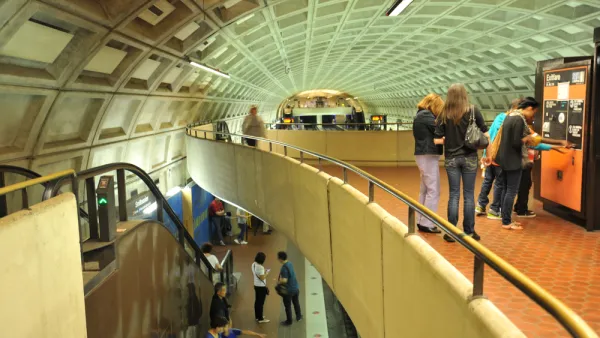
D.C. Metro Announces Service Improvements
The Red, Blue, and Silver lines will see faster headways as the agency reintroduces its 7000-series rail cars to the fleet.
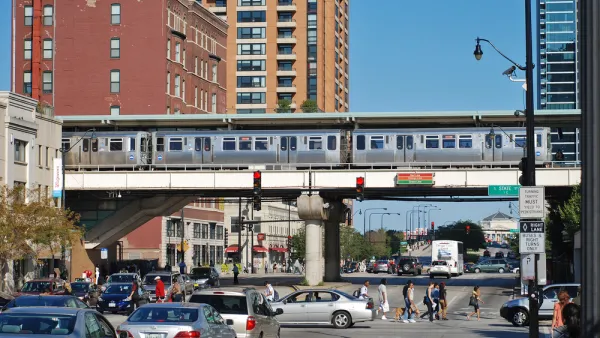
Chicago Transit Still Stumbling After Redesign
The city’s transit agency made changes to its schedules to make wait times more predictable and streamline services on the most popular routes, but riders are still experiencing headways longer than before the pandemic.
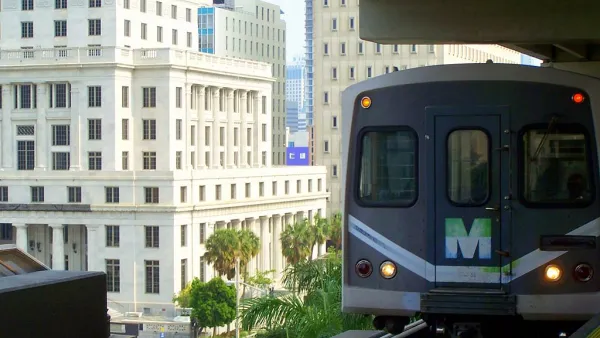
Visualizing Transit Reliability (Or Not)
A new tool in Miami could use broader application in cities around the country (hint hint).

Planetizen Federal Action Tracker
A weekly monitor of how Trump’s orders and actions are impacting planners and planning in America.

The state-sanctioned urbicide of Austin
People don’t kill cities. Freeways do.

US to reduce Colorado River water deliveries to Mexico
A new Colorado Treaty amendment reduces Mexico’s Colorado River water allocation by 250,000 acre feet.

Brightline West’s future may rely on $6 billion federal loan
The company has until Nov. 2 to make a $400 million equity investment into its proposed high-speed rail line.

LA Metro’s ultimatum: no extra buses for LA28 if federal funding isn’t imminently secured
If Metro does not provide additional buses, LA28 organizers will have to find a new way to manage Olympic traffic. LA28’s budget does not include a line item for transit.

Colorado’s Largest Data Center Could Rise Next to Homes — Without a Public Hearing
The proposed campus would consume 11 times the power of Denver International Airport; as it has across the country, opposition mounts.

FREE Course: Walkable City 1: Why Walkability?
After describing his path towards focusing on walkability as the essence of good planning, Jeff Speck marches through his five principal reasons for making more walkable places.
Reinventing Malls: Planning Alchemy—Turning Gray Fields Into Gold
The course focuses on the opportunities and imperatives that shape reinvention of mall sites.

Eagle County Government
Harvard University Graduate School of Design
Nashville Planning Department
The Architects Foundation
University of Cincinnati Online
The Pocatello Development Authority
The Urban Renewal Agency of the City of Pocatello
Journal of the American Planning Association