A new tool in Miami could use broader application in cities around the country (hint hint).


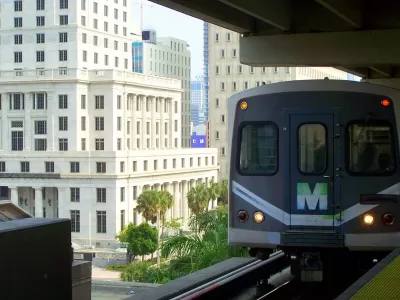
Douglas Hanks reports on a new real-time tracker of Metrorail trains in Miami, created by the advocacy group Transit Alliance. The tracker uses online data from the county to calculate the number of late trains, presenting their findings in a colorful and useable online display.
On the Metrorail Audit page, each train is represented by a dot with a color representing the arrival time. While the page shows today's trains in chronological order, it also offers a view of the previous day's trains grouped by their arrival performance. The site also lets us know that at the time of this writing there have been 235 on-time trains, 618 late or bunched trains, and 111 ghost trains in the past week.
Jarrett Walker picked up the news of the Transit Alliance tracker and gave it a stamp of approval, noting especially the tracker's focus on headways (wait times) rather than on-time performance. Walker concludes his post about the tracker with an appeal for an institute "to create a database of reliability info across many agencies, searchable many ways — and always based on this headway reliability rather than on-time performance."
Hat tip to Rachel Dovey for sharing news of the Transit Alliance tracker.
Read the full story: Will Metrorail get you there on time today? Now you can track late trains instantly.

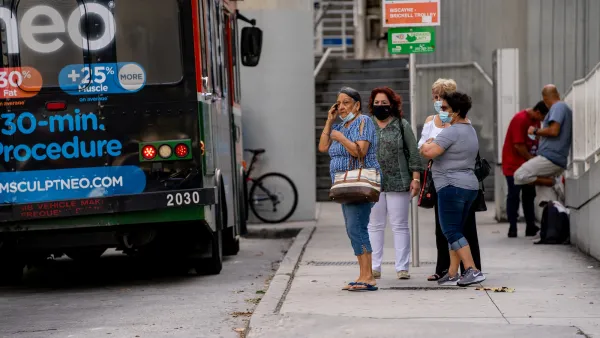
Miami promised a 'Better Bus Network.' Riders say it hasn't delivered.
Ridership on Miami-Dade Transit dropped by 2%-10% every month between October and December 2025.
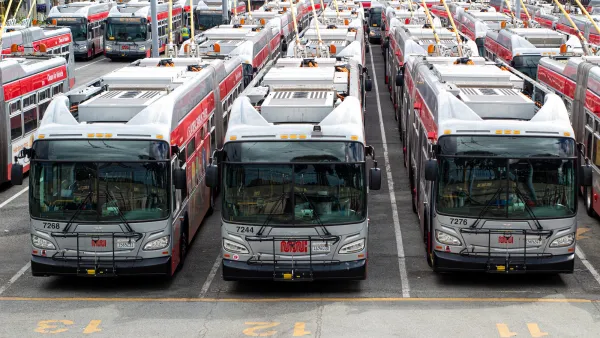
Report: USA Must Triple its Transit Vehicles to Offer ‘World-class’ Transit
To achieve the level of transit access that most global cities enjoy, the United States would need trillions more in funding… and a LOT of buses.
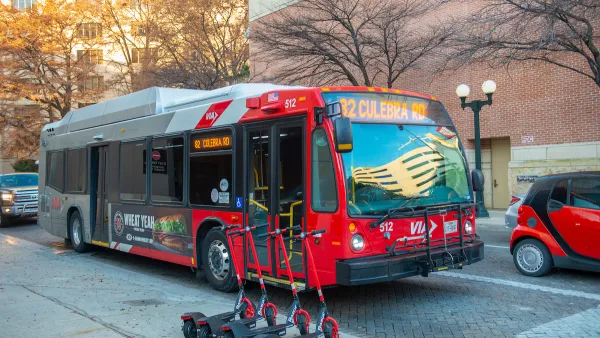
Mid-Size Cities Struggle to Provide Reliable Transit
Smaller transit agencies face some unique challenges.

Amtrak, CN end decades-long dispute with eight-year agreement
The new operating agreement establishes an updated framework for the companies to work together, including processes to resolve disputes.

Judges permit Denver to divert 77,000 acre feet from the Colorado River for reservoir expansion
Overuse and climate change have caused the Colorado River’s water levels to plummet.

Nation's most wind-powered state turns to coal as data centers increase energy demand
For the first time in decades, Iowa has increased its generation of coal power.

Boston has spent millions making the Green Line more accessible — and there’s no end in sight
While the city has invested millions into expanding and adding platforms to the Green Line to make it more accessible, new train cars set to arrive next year will be too tall for disabled passengers to board without raising the current platforms.

Idaho may see an 18% drop in federal surface transit funding — the largest estimated cut in the US
Transit systems in rural communities are much more reliant on federal funding to provide their services.

How ‘post-disaster gentrification’ alters neighborhoods after natural calamities
After hurricanes, fires or other calamities, the original residents of a community are often replaced by younger, wealthier residents.

FREE Course: Walkable City 1: Why Walkability?
After describing his path towards focusing on walkability as the essence of good planning, Jeff Speck marches through his five principal reasons for making more walkable places.
Reinventing Malls: Planning Alchemy—Turning Gray Fields Into Gold
The course focuses on the opportunities and imperatives that shape reinvention of mall sites.


City of Wisconsin Rapids
Harvard University Graduate School of Design
KFH Group Inc.
The Architects Foundation
University of Cincinnati Online
The Pocatello Development Authority
The Urban Renewal Agency of the City of Pocatello