As remote work and changed commuting patterns endure, transit agencies are shifting their focus to serve a wider variety of riders.


Transit agencies like Bay Area Rapid Transit (BART) in the San Francisco Bay Area are reworking their schedules to provide more frequent service on nights and weekends, and running shorter trains to improve safety by having more people in each car as ridership remains relatively low, writes Jared Brey in Governing. “As part of the change, the agency is also reducing service on weekdays on several lines,” Brey adds.
On the other side of the country, “the Massachusetts Bay Transportation Authority in Boston launched new night and weekend service on its commuter rail lines,” and “The Metropolitan Transit Authority in New York has been incrementally increasing midday, night and weekend service over the last year, in keeping with new investments included as part of the budget deal that helped the agency resolve its fiscal cliff.”
Washington, D.C. and Philadelphia are also increasing service on off-peak hours in a bid to, in the words of Philadelphia’s Southeastern Pennsylvania Transportation Authority, create a network that can be “easily and reliably used for any sort of trip — whether that be commuting, everyday errands or leisure activities.”
FULL STORY: Transit Agencies Rethink Schedules for Fewer Commuters

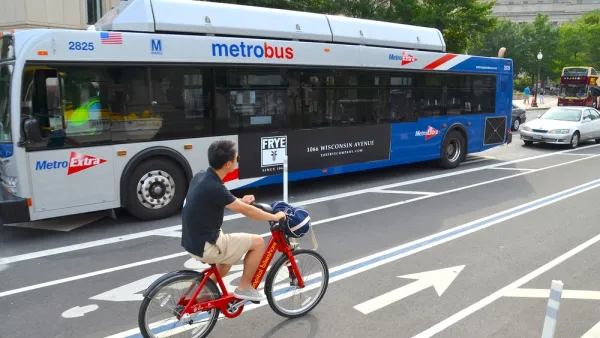
Opinion: How to Save D.C. Transit
Ridership data shows that many D.C. transit users depend on the service, despite a drop in ridership. The system needs changes—and funding—to have a future.
BART Reorients Service for Weekend Travelers
With weekday commuter ridership still lagging far below 2019 levels and remote work not going anywhere anytime soon, the agency plans to increase train frequencies on weekends and reduce some weekday service.
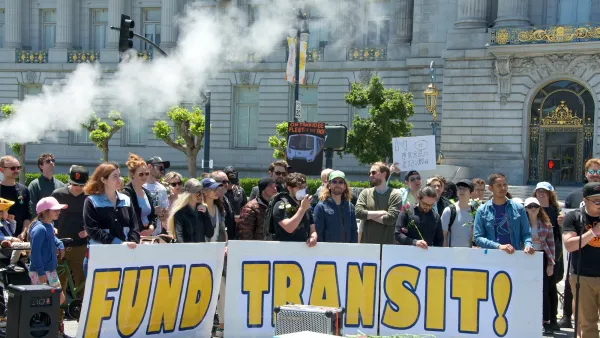
BART approves 2027 budget with no cuts, banking on November ballot measure for new funding
The Bay Area transit agency hopes to move forward without service cuts or fare increases.

Planetizen Federal Action Tracker
A weekly monitor of how Trump’s orders and actions are impacting planners and planning in America.

The state-sanctioned urbicide of Austin
People don’t kill cities. Freeways do.

US to reduce Colorado River water deliveries to Mexico
A new Colorado Treaty amendment reduces Mexico’s Colorado River water allocation by 250,000 acre feet.

Mamdani overhauls NYC's Vision Zero plan with 100 new policy goals
The overhaul aims to reduce traffic deaths and make streets safer for pedestrians, cyclists and drivers through lower speed limits, new safety infrastructure and more.

Amtrak not solely to blame for New Jersey commuter rail's unreliability, report finds
A new study from the Garden State Initiative found that NJ Transit’s budget grew 20% across a 4 year period, but reliability declined significantly over the same period.

EPA erases limits on planet-warming pollution from power plants
Under Monday’s plan, power plants would still have some limits on how much mercury, arsenic and other contaminants they can emit.

FREE Course: Walkable City 1: Why Walkability?
After describing his path towards focusing on walkability as the essence of good planning, Jeff Speck marches through his five principal reasons for making more walkable places.
Reinventing Malls: Planning Alchemy—Turning Gray Fields Into Gold
The course focuses on the opportunities and imperatives that shape reinvention of mall sites.

Eagle County Government
Harvard University Graduate School of Design
Nashville Planning Department
The Architects Foundation
University of Cincinnati Online
The Pocatello Development Authority
The Urban Renewal Agency of the City of Pocatello
Journal of the American Planning Association