City officials presented preliminary plans for new bus routes aimed at connecting neighborhoods previously underserved by transit.


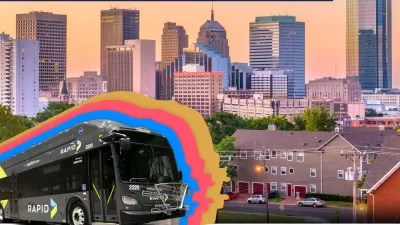
Oklahoma City residents had a chance to voice their input on new bus rapid transit (BRT) lines the city is planning, reports Jessie Christopher Smith in The Oklahoman. “Managers and advisers with the city’s MAPS 4 project asked people living in the historic southside Capitol Hill community for their thoughts on the planned ‘alignments’ set to run through the southwest area, although project consultants said the feedback would help them determine exactly what streets the route should encompass.”
Daisy Muñoz, project manager for the Alliance for Economic Development of Oklahoma City, says the plan will bring improved transit access to historically under-resourced parts of the heavily auto-centric city. “Putting this public funding toward BRT is just one component of trying to create the infrastructure for a more complete, integrated transportation system,” Muñoz said.
“Engineers plan to connect the proposed routes for the northeast and the south corridors through the city's downtown Santa Fe Transit Hub, which already provides access to current bus routes and the streetcar.”
Read the full story: OKC consultants invite public feedback to refine new preliminary BRT routes
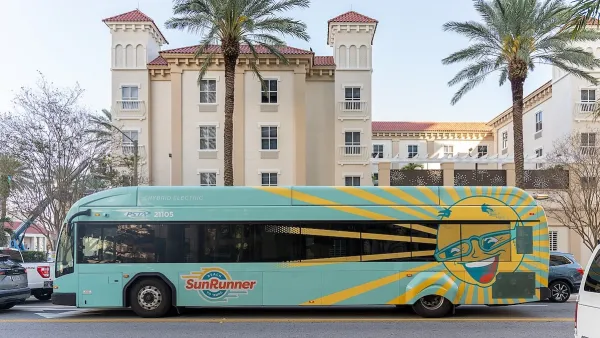
Florida DOT Orders Removal of St. Pete Bus Lane
The state says a popular BRT line has increased crashes and traffic on a state-owned portion of its corridor, prompting it to call for its reversal.

Miami to Launch America's First Fully Electric Bus Rapid Transit Line
The project, led by Miami-Dade County, will link Dadeland South to Florida City via a 20-mile dedicated lane.
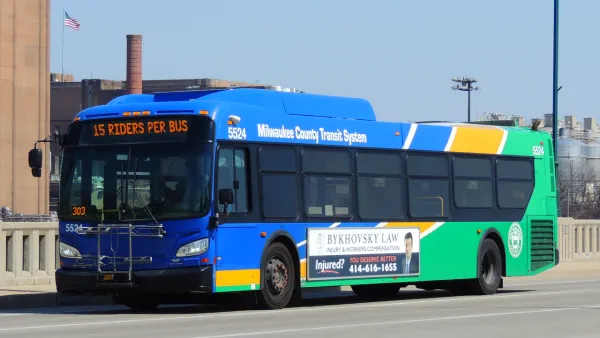
Postponed Milwaukee BRT Project at Least a Decade Away
The county’s transit system won’t pursue a second rapid bus line due to financial constraints.

Desperate measures: Advocates weigh draining Lake Powell to fill Colorado River
Draining the reservoir could reduce evaporation losses by a couple hundred thousand acre-feet.

Eastern Nebraska is running out of electricity
Data centers and electrification are straining eastern Nebraska’s grid, throttling economic development.

Malls are becoming the midtowns of the future
Mall and office park redevelopments are a generational opportunity to create new nodes of urbanity.

NYC breaks ground on anti-flooding infrastructure project
New York City's new system will reduce stormwater flows to local sewers by 90%.

One Kentucky town’s secret to affordable housing
The Smoketown Community Land Trust has already built seven affordable homes for community members.

Houston gains petal-shaped cooling infrastructure to make streets more ‘delightful’
The city has installed the pavilions along 15 blocks in Houston.

FREE Course: Walkable City 1: Why Walkability?
After describing his path towards focusing on walkability as the essence of good planning, Jeff Speck marches through his five principal reasons for making more walkable places.
Reinventing Malls: Planning Alchemy—Turning Gray Fields Into Gold
The course focuses on the opportunities and imperatives that shape reinvention of mall sites.

City of Rosemead
Rutgers University, Edward J. Bloustein School of Planning and Public Policy
One Hundred Miles
University of Michigan School for Environment and Sustainability (SEAS)
Hunter College, City University of New York (CUNY)
The Architects Foundation
City of Cambridge
Montrose County
The Pocatello Development Authority