Transforming asphalt schoolyards into green spaces with porous surfaces can improve the well-being of students and neighbors and contribute to more effective stormwater management in urban areas.


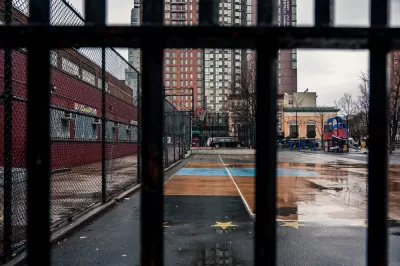
Schoolyards could be the next frontier for green infrastructure in urban areas, according to an article by Marianne Dhenin in Next City.
In dense urban areas such as New York City, building a new park can be an expensive undertaking. But redesigning existing schoolyards to be more green and ‘spongy’ can help with stormwater drainage, improve air quality, and bring green spaces to park-poor neighborhoods, closing the equity gap that leaves 100 million Americans with little or no access to nearby parks. “According to TPL, in 2022, at least 73 of the nation’s 100 largest cities opened schoolyards after hours to the general public, up from just 44 cities in 2018.”
The benefits of greener schoolyards extend to students, too. “Studies have linked vegetation in schoolyards to better school-wide academic performance, even after controlling for significant confounding factors like student poverty and minority status.”
Organizations including the Trust for Public Land (TPL) are working with schools around the country to develop their own schoolyard greening projects, and a bill introduced in the Senate last year would direct federal funding to the cause.
More on green schoolyards:
FULL STORY: Greener School Playgrounds Are An Overlooked Climate Solution

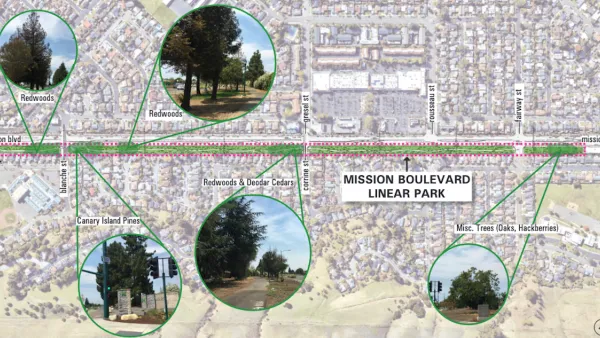
Parks Departments Try to Build New Green Spaces on Shrinking Budgets
Even as the role of parks and urban green space in public and ecological health becomes more apparent, city budgets are hard-pressed to meet the costs of park construction and maintenance.
Chattanooga Earns North America’s First ‘National Park City’ Designation
The award recognizes cities that prioritize biodiversity and resident access to parks and green spaces.
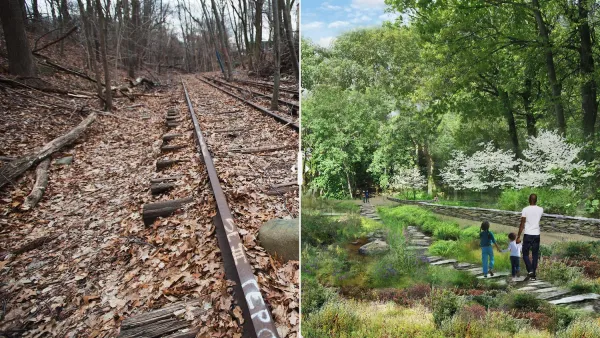
From Queens to Chattanooga, Federal Funding Cuts are Killing Park Projects
Cuts to grants from the Department of Transportation to the EPA are impacting small and large park projects across the country.

Planetizen Federal Action Tracker
A weekly monitor of how Trump’s orders and actions are impacting planners and planning in America.

The state-sanctioned urbicide of Austin
People don’t kill cities. Freeways do.

US to reduce Colorado River water deliveries to Mexico
A new Colorado Treaty amendment reduces Mexico’s Colorado River water allocation by 250,000 acre feet.

5 New England states march closer to 800 megawatt wind energy project
Securing federal approval for the project may be complicated under the Trump administration, which has historically been hostile towards domestic wind power.

Baltimore to break ground on $50 million Transit Priority Project
The project will bring faster bus trips, safer streets and better bike connections to Baltimore.

Airbnb launches $250 million 'last-dollar financing' housing accelerator, makes first investment in Austin
The company will put $6.4 million towards affordable housing development in Texas’ capital.

FREE Course: Walkable City 1: Why Walkability?
After describing his path towards focusing on walkability as the essence of good planning, Jeff Speck marches through his five principal reasons for making more walkable places.
Reinventing Malls: Planning Alchemy—Turning Gray Fields Into Gold
The course focuses on the opportunities and imperatives that shape reinvention of mall sites.

Eagle County Government
Harvard University Graduate School of Design
Nashville Planning Department
The Architects Foundation
University of Cincinnati Online
The Pocatello Development Authority
The Urban Renewal Agency of the City of Pocatello
Journal of the American Planning Association