California's budget now includes an unprecedented investment of $150 million to create green schoolyards and schoolyard forests at K-12 schools across the state.


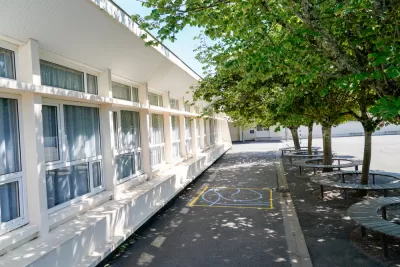
There is a growing movement to transform asphalt-covered school grounds into park-like green spaces that improve children’s well-being, learning, and play while contributing to their communities' ecological health and climate resilience. The State of California, for example, recently announced that it will make available $150 million over the next two years so that school districts, nonprofits and local government agencies can apply for funding to plant trees, create gardens and other green spaces, or build shade structures on school campuses. Projects may also include planting native or drought-tolerant vegetation.
Funding from the State will enable schools to accelerate efforts to reduce the heat island effect caused by too many buildings or roads in developed areas. A key supporter of such efforts is Green Schoolyards America, which works with a variety of partners in California and across the United States to support schoolyard greening investments, policies, and programs that advance equity, climate resilience, and environmental literacy.
Green Schoolyards America also recently launched the California Schoolyard Forest System℠, a statewide initiative in partnership with the California Department of Forestry and Fire Protection (CAL FIRE) and the California Department of Education. The initiative will increase tree canopy on public school grounds across California to shade and protect PreK-12 students from extreme heat and rising temperatures due to climate change.
FULL STORY: California to invest $150 million in schoolyard greening!

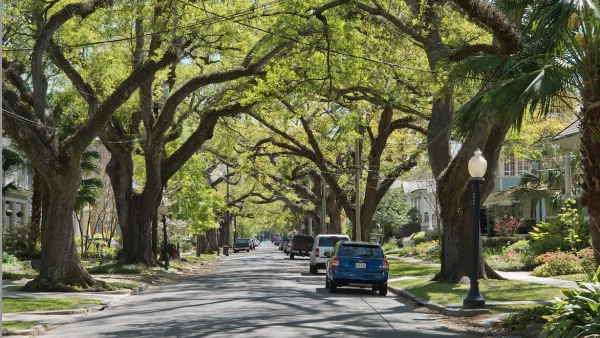
Art in the Shade: Confronting Climate and Equity Through Creativity
Through powerful, multisensory installations, Roots of Cool uses art to illuminate Los Angeles’ climate and shade inequities, inviting visitors to imagine a more just, tree-filled future.
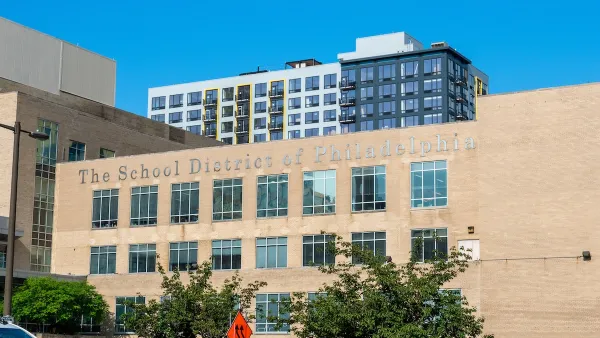
Concrete to Community: A Schoolyard Makeover in West Philly
With guidance from the Trust for Public Land, third graders at Overbrook Elementary are leading the redesign of their asphalt schoolyard into a vibrant green space, learning valuable skills and creating lasting community impact in the process.
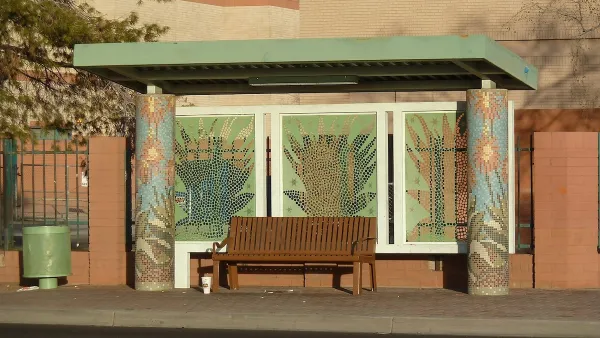
Phoenix Shade Plan Focuses on Bus Stops
The city’s updated Shade Master Plan calls for trees and built structures at bus stops to protect residents from heat.

Planetizen Federal Action Tracker
A weekly monitor of how Trump’s orders and actions are impacting planners and planning in America.

The state-sanctioned urbicide of Austin
People don’t kill cities. Freeways do.

US to reduce Colorado River water deliveries to Mexico
A new Colorado Treaty amendment reduces Mexico’s Colorado River water allocation by 250,000 acre feet.

5 New England states march closer to 800 megawatt wind energy project
Securing federal approval for the project may be complicated under the Trump administration, which has historically been hostile towards domestic wind power.

Baltimore to break ground on $50 million Transit Priority Project
The project will bring faster bus trips, safer streets and better bike connections to Baltimore.

Airbnb launches $250 million 'last-dollar financing' housing accelerator, makes first investment in Austin
The company will put $6.4 million towards affordable housing development in Texas’ capital.

FREE Course: Walkable City 1: Why Walkability?
After describing his path towards focusing on walkability as the essence of good planning, Jeff Speck marches through his five principal reasons for making more walkable places.
Reinventing Malls: Planning Alchemy—Turning Gray Fields Into Gold
The course focuses on the opportunities and imperatives that shape reinvention of mall sites.

Eagle County Government
Harvard University Graduate School of Design
Nashville Planning Department
The Architects Foundation
University of Cincinnati Online
The Pocatello Development Authority
The Urban Renewal Agency of the City of Pocatello
Journal of the American Planning Association