Supporters of a stalled streetcar project say reviving the line would create more transit connections and boost economic development in the area.


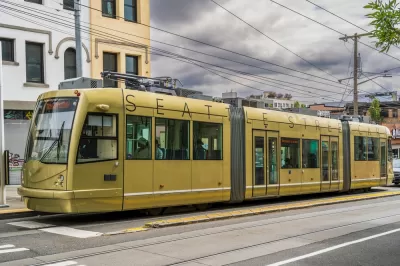
A shelved streetcar project in downtown Seattle could be revived under a plan by the Downtown Seattle Association (DSA), with support from the new director of the city’s department of transportation (SDOT).
According to Doug Trumm, writing for The Urbanist, “The Center City streetcar would run along First Avenue and Stewart Avenue and close a 1.3-mile-long gap between Seattle’s existing but unconnected lines: the South Lake Union Streetcar and the First Hill Streetcar.” The added segment would bring the Seattle streetcar system to five miles and serve up to 20,000 daily riders, according to projections.
Boosters like the DSA hope the streetcar will stimulate more economic development in the downtown core and encourage more transit-oriented development along the route, particularly if paired with zoning changes. SDOT director Greg Spotts “proposed a ‘cultural connector’ app to pair with the streetcar and encourage its use by offering the all-day ride pass and wayfinding and tips for nearby attractions.”
While the vision is there, funding for the project, which was last estimated at $285 million in 2019, is less clear, though supporters argue federal grants could cover much of the cost. Trumm adds, “The Downtown Seattle Association is hoping that the City can take steps toward lining up funding and restarting the project in 2023, potentially clearing a path to opening the Center City streetcar by 2026 in time for the World Cup matches in Seattle.”
FULL STORY: Streetcar Project Could Kickstart Downtown Recovery


Feasibility Study for Proposed Seattle Streetcar Loses Funding
The $1 million cut doesn’t bode well for the beleaguered project, which some city councilmembers see as redundant and overpriced.
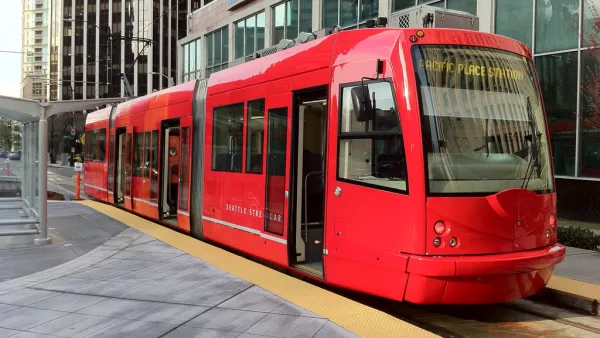
Doubts Raised About Revenue Model for Seattle's Expanded Streetcar
Can an expansion of Seattle's streetcar system somehow outperform its previous iterations, and all other public transit modes in the city?
Seattle Streetcar Extension Looks Unlikely to Proceed
A proposal to extend the First Hill Streetcar along Broadway in Capitol Hill has lost the support of some of its key stakeholders and now looks very much in doubt.

Planetizen Federal Action Tracker
A weekly monitor of how Trump’s orders and actions are impacting planners and planning in America.

The state-sanctioned urbicide of Austin
People don’t kill cities. Freeways do.

US to reduce Colorado River water deliveries to Mexico
A new Colorado Treaty amendment reduces Mexico’s Colorado River water allocation by 250,000 acre feet.

Mamdani overhauls NYC's Vision Zero plan with 100 new policy goals
The overhaul aims to reduce traffic deaths and make streets safer for pedestrians, cyclists and drivers through lower speed limits, new safety infrastructure and more.

Amtrak not solely to blame for New Jersey commuter rail's unreliability, report finds
A new study from the Garden State Initiative found that NJ Transit’s budget grew 20% across a 4 year period, but reliability declined significantly over the same period.

EPA erases limits on planet-warming pollution from power plants
Under Monday’s plan, power plants would still have some limits on how much mercury, arsenic and other contaminants they can emit.

FREE Course: Walkable City 1: Why Walkability?
After describing his path towards focusing on walkability as the essence of good planning, Jeff Speck marches through his five principal reasons for making more walkable places.
Reinventing Malls: Planning Alchemy—Turning Gray Fields Into Gold
The course focuses on the opportunities and imperatives that shape reinvention of mall sites.

Eagle County Government
Harvard University Graduate School of Design
Nashville Planning Department
The Architects Foundation
University of Cincinnati Online
The Pocatello Development Authority
The Urban Renewal Agency of the City of Pocatello
Journal of the American Planning Association