A new tool from Strong Towns provides a model for comprehensively evaluating the causes behind deadly crashes and how to prevent them.



A new program from Strong Towns will introduce “a new standard of care” that would take into account a broader range of factors when assessing vehicle crashes and seek to find ways to improve outcomes rather than simply looking for where to assign blame.
“In the medical profession, adverse outcomes go through a morbidity and mortality conference, a process of internal review where all contributing factors are considered. Yes, patients are responsible for their behavior, but to what extent did the clinic or hospital—through its processes, recommendations, environment, or other actions—contribute to the negative outcome? What could have been done differently?”
Strong Towns proposes that traffic crashes should be treated in a similar way. “When a crash occurs, the public response focuses only on a few contributing factors. Was the driver intoxicated? Were they speeding? Were they distracted?” This approach fails to account for infrastructural factors and other causes of crashes. “With their new National Crash Analysis Studio, Strong Towns is creating a way for local leaders to conduct full-cause analyses of fatal crashes to understand the causes and improve future outcomes.”
Individuals or groups that want to conduct a crash analysis in their community at no cost can apply to the program, which will launch in January 2023.
Read the full story: Introducing a New Standard of Care for Traffic Fatalities
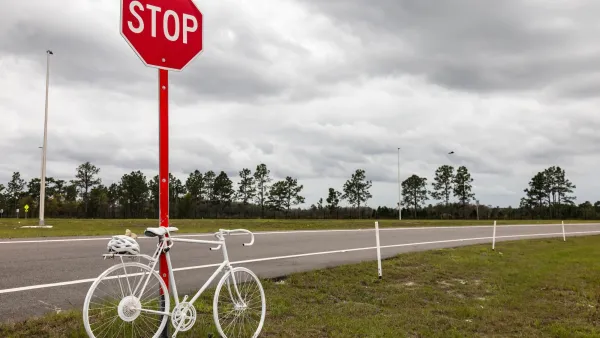
Landscapes of love and loss
As urban planners, every piece of infrastructure we build is a memorial — whether we know it or not.

The Geography of Fatal Car Crashes
Where do the most traffic deaths happen?
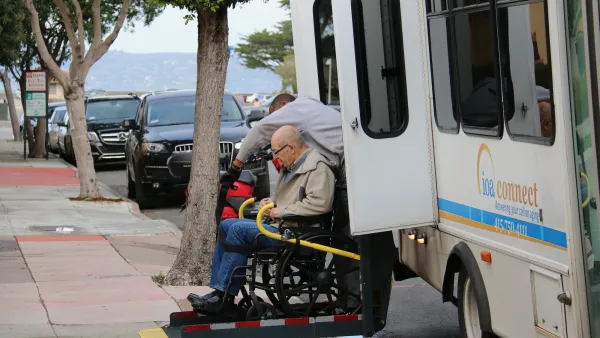
Seniors Account for 32% of Traffic Deaths in the Bay Area
Road safety interventions would help protect seniors and other vulnerable groups from traffic violence.

Planetizen Federal Action Tracker
A weekly monitor of how Trump’s orders and actions are impacting planners and planning in America.

California plans to bury El Niño’s downpour
If the state plays its cards right, it may be able to store a billion acre-feet of El Niño’s water in aquifers.

Desperate measures: Advocates weigh draining Lake Powell to fill Colorado River
Draining the reservoir could reduce evaporation losses by a couple hundred thousand acre-feet.

Mamdani’s pied-à-terre tax survives legal challenge
A panel of judges found that the plaintiffs failed to demonstrate injury as a result of New York City's implementation of the tax.

Eastern Nebraska is running out of electricity
Data centers and electrification are straining eastern Nebraska’s grid, throttling economic development.

Seattle passes record-breaking transit services expansion
Proposition 1 will double the city’s transit tax to add 95,000 more bus trips and preserve 180,000 bus trips annually.

FREE Course: Walkable City 1: Why Walkability?
After describing his path towards focusing on walkability as the essence of good planning, Jeff Speck marches through his five principal reasons for making more walkable places.
Reinventing Malls: Planning Alchemy—Turning Gray Fields Into Gold
The course focuses on the opportunities and imperatives that shape reinvention of mall sites.

City of Rosemead
Rutgers University, Edward J. Bloustein School of Planning and Public Policy
One Hundred Miles
University of Michigan School for Environment and Sustainability (SEAS)
Hunter College, City University of New York (CUNY)
The Architects Foundation
City of Cambridge
Montrose County
The Pocatello Development Authority