A Minneapolis study showed cyclists experienced the highest rates of satisfaction during their commute.


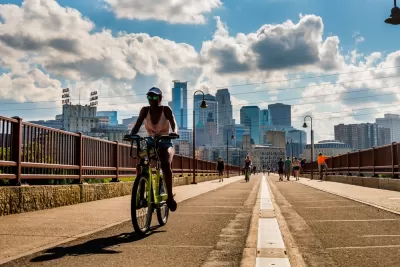
According to the University of Minnesota’s Transportation Happiness Map, people on bikes are the happiest commuters, reports Carlton Reid in Forbes.
Using data from a smartphone app, Yingling Fan, an urban and regional planning professor at the University of Minnesota, tracks commuter routes along with other key indicators. “This app collects GPS data on routes chosen and then asks participants to rank segments by emotions, mapping happiness, meaningfulness, pain, sadness, stress, and tiredness.” In Minneapolis, “The research discovered that the mapped route with the highest scores for ‘happiness’ was the separated, riverside cycleway beside the West River Parkway.”
“A Statistics Canada survey found that 66% of people who cycle or walk to work are ‘very satisfied’ with their commutes. However, only 32% of car commuters say the same, and for public transit users, it’s even less, at just 25%. Just 6% of Canadian cyclists say they are ‘dissatisfied’ with their commute.” Experts attribute this in part to the feeling of helplessness experienced by drivers or transit riders who feel trapped in traffic, unable to alter their commute or change their situation.
Notably, the article doesn’t mention biking conditions: the study was undertaken in Minneapolis, arguably one of the nation’s best biking cities. Bike commuters in less well-equipped cities may, this editor suspects, report somewhat different happiness results.
Read the full story: Cyclists Have Happiest Commute, Shows US Smartphone App
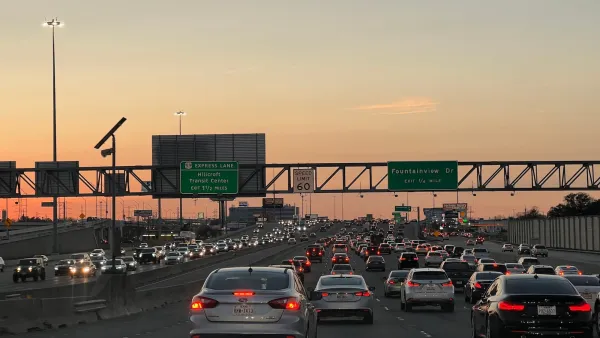
US Traffic Patterns are Shifting, but Car-centric Development Persists
Los Angeles, Honolulu, and San Francisco ranked among the nation’s most congested cities, while New York reduced traffic and increased transit speed and ridership thanks to its congestion pricing program.
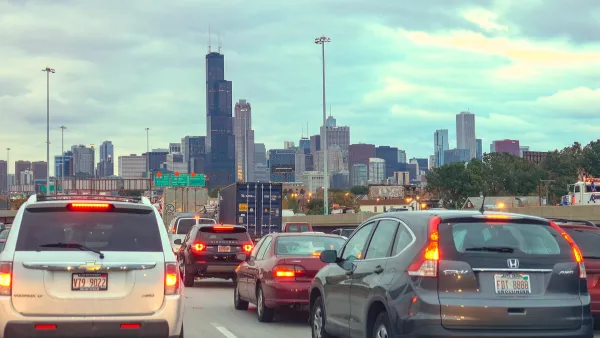
Since NYC Congestion Pricing, Chicago now has Nation’s Worst Traffic
Chicago overtook New York for the worst traffic of any major U.S. city as NYC saw traffic decline after congestion pricing went into effect.
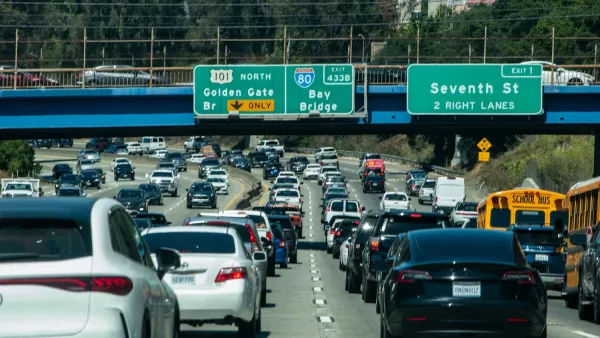
US Commuters Lost 8 Workdays to Traffic in 2024
As more employers call workers back to the office, commute times are growing — and costing drivers in time and money.

Planetizen Federal Action Tracker
A weekly monitor of how Trump’s orders and actions are impacting planners and planning in America.

California plans to bury El Niño’s downpour
If the state plays its cards right, it may be able to store a billion acre-feet of El Niño’s water in aquifers.

Desperate measures: Advocates weigh draining Lake Powell to fill Colorado River
Draining the reservoir could reduce evaporation losses by a couple hundred thousand acre-feet.

Chicago voters approve permanent festival grounds, penalty for vacant property owners
Currently, major summer and fall festivals take over public parks for weeks at a time, drawing criticism from nearby residents

NYC votes to cut outdoor dining red tape, speed up permitting
New York City also voted to allow the Department of Transportation to begin work on urgent projects before notifying elected officials.

California appears to reject Prop. 45
The proposition would have expanded the projects that qualify for a streamlined environmental review, effectively paring down the California Environmental Quality Act.

FREE Course: Walkable City 1: Why Walkability?
After describing his path towards focusing on walkability as the essence of good planning, Jeff Speck marches through his five principal reasons for making more walkable places.
Reinventing Malls: Planning Alchemy—Turning Gray Fields Into Gold
The course focuses on the opportunities and imperatives that shape reinvention of mall sites.

City of Rosemead
Rutgers University, Edward J. Bloustein School of Planning and Public Policy
One Hundred Miles
Hunter College, City University of New York (CUNY)
The Architects Foundation
University of Cincinnati Online
City of Cambridge
Montrose County
The Pocatello Development Authority