A proposal to outlaw right turns on red and legalize the so-called Idaho Stop for bikes and scooters is aimed at improving road safety and limiting dangerous interactions between cyclists and drivers.


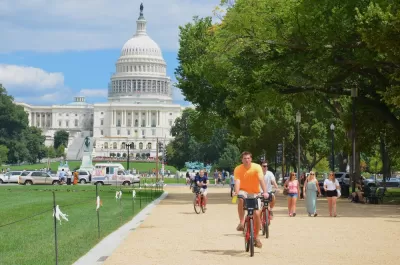
The District of Columbia is poised to ban right turns on red lights as part of an effort to improve road safety for cyclists, reports Keely Bastow in the Washingtonian.
The Safer Streets Amendment Act of 2022, introduced by District councilmember Mary Cheh, “would restrict right turns on red lights and also implement the Idaho Stop, which allows bikes, e-bikes, and scooters to treat red lights as stop signs and stop signs as yield signs.”
Proponents of the Idaho Stop say it makes cyclists more visible and gives them more time to get ahead of car traffic. Some also see the proposed change as an equity issue: “Passing the amendment also would mean that cyclists would not be ticketed for what they already do, a practice that disproportionately affects residents of color; in 2020, over 87 percent of cyclists stopped in DC were Black.”
Late last year, California Governor Gavin Newsom vetoed a similar bill to legalize the Idaho Stop in that state. The Idaho Stop is legal in Oregon, Washington, Colorado, Arkansas, Delaware, and its namesake state, Idaho.
FULL STORY: Say Goodbye to Turning Right on Red in DC

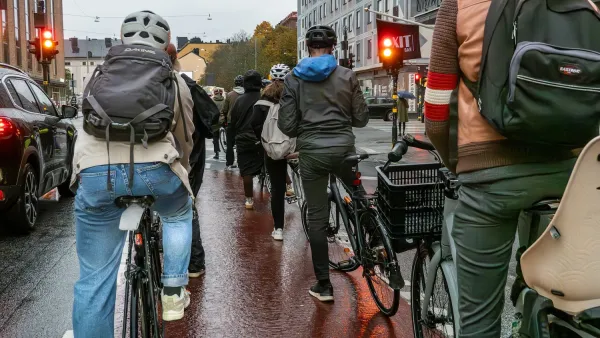
Cyclists may be Right to run Stop Signs and Red Lights. Here’s why
One researcher argues that the Idaho stop might not be such a bad idea after all.

Research Affirms Safety of ‘Idaho Stop’
Allowing cyclists to treat stop signs as yield signs does not negatively impact safety and can help people on bikes more effectively navigate roadways.
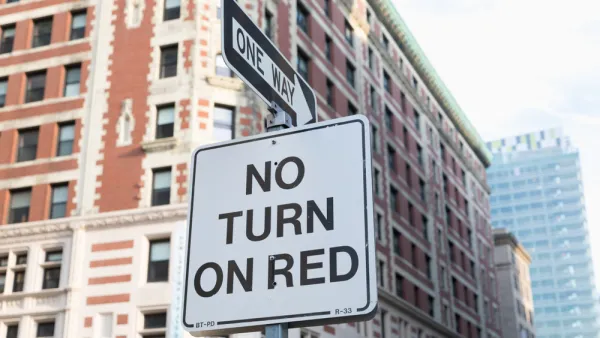
D.C. Could Legalize ‘Idaho Stop,’ Ban Right Turns on Red
Proposed legislation would allow cyclists to treat stop signs as yield signs and eliminate right turns on red in an effort to reduce cyclist and pedestrian fatalities.

Planetizen Federal Action Tracker
A weekly monitor of how Trump’s orders and actions are impacting planners and planning in America.

The state-sanctioned urbicide of Austin
People don’t kill cities. Freeways do.

US to reduce Colorado River water deliveries to Mexico
A new Colorado Treaty amendment reduces Mexico’s Colorado River water allocation by 250,000 acre feet.

5 New England states march closer to 800 megawatt wind energy project
Securing federal approval for the project may be complicated under the Trump administration, which has historically been hostile towards domestic wind power.

Baltimore to break ground on $50 million Transit Priority Project
The project will bring faster bus trips, safer streets and better bike connections to Baltimore.

Airbnb launches $250 million 'last-dollar financing' housing accelerator, makes first investment in Austin
The company will put $6.4 million towards affordable housing development in Texas’ capital.

FREE Course: Walkable City 1: Why Walkability?
After describing his path towards focusing on walkability as the essence of good planning, Jeff Speck marches through his five principal reasons for making more walkable places.
Reinventing Malls: Planning Alchemy—Turning Gray Fields Into Gold
The course focuses on the opportunities and imperatives that shape reinvention of mall sites.

Eagle County Government
Harvard University Graduate School of Design
Nashville Planning Department
The Architects Foundation
University of Cincinnati Online
The Pocatello Development Authority
The Urban Renewal Agency of the City of Pocatello
Journal of the American Planning Association