Before the Republicans in the Oregon Senate skipped town, they managed to approve a bill that legalizes the Idaho Stop for bikers around the state. The Oregon House also approved the bill this week.



Hannah Chinn reports from Oregon, where the notoriously bike-friendly state has taken a step to legalizing a notoriously bike-friendly law: the Idaho Stop.
Legislators in the Ohio State Legislature passed an Idaho Stop bill on Tuesday of this week, which would "allow cyclists to treat stop signs like yield signs."
"Senate Bill 998 permits bicyclists to enter intersections controlled by either stop signs or flashing red signals without stopping completely, provided they yield lawful right of way to other approaching traffic. Sen. Floyd Prozanski (D-Eugene), a chief sponsor of the bill, said it only applies to bicyclists — so no changes for motorcycles, unicyclists, or scooters," reports Chinn.
Despite the Oregon State protesting a climate change bill and holding the state government hostage by skipping town, thus risking the future of the climate bill as well as substantial, statewide land use reforms under consideration in the state, the Oregon Senate has already approve the Idaho Stop bill, so this piece of legislation is on its way to Governor Kate Brown's desk.
FULL STORY: The Oregon House Just Passed A Bill to Allow Cyclists to Treat Stop Signs Like Yield Signs

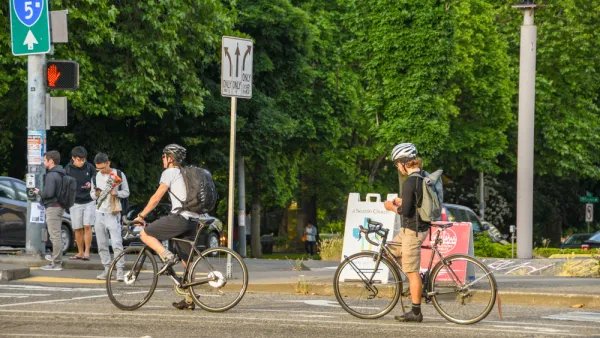
Starting Today: The Idaho Stop Is Legal in Washington State
A law passed in March allowing people on bikes to treat stop signs as yield signs when conditions permit takes effect today in Washington State.
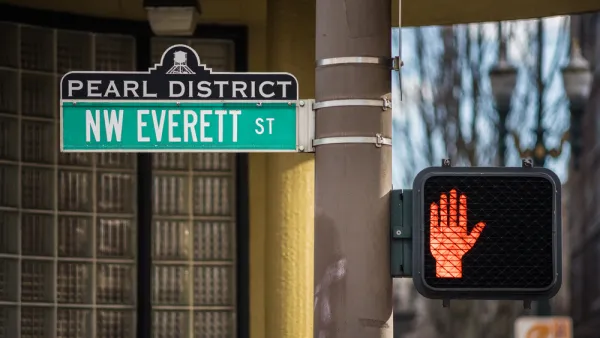
Oregon Could Be Next to Legalize the Idaho Stop
The Oregon State Legislature is moving forward with Senate Bill 998, which includes an amendment that would legalize the practice of rolling through stop signs and blinking red lights on a bike when no car traffic is present.

The Idaho Stop Now Legal in Arkansas
The state of Arkansas is now the second station in the nation to completely legalize the Idaho Stop—a frequently practiced maneuver on bikes that advocates say is a key to bike safety and comfort on the streets.

The state-sanctioned urbicide of Austin
People don’t kill cities. Freeways do.

US to reduce Colorado River water deliveries to Mexico
A new Colorado Treaty amendment reduces Mexico’s Colorado River water allocation by 250,000 acre feet.

New Jersey’s second-largest city bans standalone data centers
Jersey City will continue to allow co-location facilities, such as those meant for research institutions that store their own data.

Amtrak not solely to blame for New Jersey commuter rail's unreliability, report finds
A new study from the Garden State Initiative found that NJ Transit’s budget grew 20% across a 4 year period, but reliability declined significantly over the same period.

EPA erases limits on planet-warming pollution from power plants
Under Monday’s plan, power plants would still have some limits on how much mercury, arsenic and other contaminants they can emit.

Phoenix announces new on-demand transit service, more frequent RAPID buses
Both new services will launch in October, and are part of Phoenix's Project Effective Access Solutions for Easing Congestion.

FREE Course: Walkable City 1: Why Walkability?
After describing his path towards focusing on walkability as the essence of good planning, Jeff Speck marches through his five principal reasons for making more walkable places.
Reinventing Malls: Planning Alchemy—Turning Gray Fields Into Gold
The course focuses on the opportunities and imperatives that shape reinvention of mall sites.

Eagle County Government
Harvard University Graduate School of Design
Nashville Planning Department
The Architects Foundation
University of Cincinnati Online
The Pocatello Development Authority
The Urban Renewal Agency of the City of Pocatello
Journal of the American Planning Association