The latest round of federal infrastructure funding includes the largest contribution to emerge, so far, from the 2021 infrastructure bill for the removal of an urban freeway.


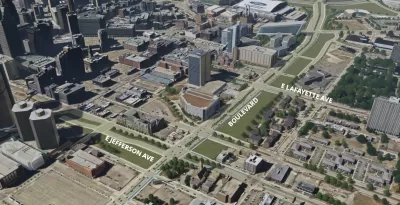
The Biden administration on September 15 announced $1.5 billion in competitive grant funding for $1.5 billion for 26 highway, multimodal freight, and rail projects. Several big ticket items headlining the list, including more than $127 million for the Western Hills Viaduct replacement in Cincinnati and $105 million for the state of Michigan to convert Interstate 375 to a boulevard.
The $1.5 billion is just one funding round of a planned $7.25 billion in spending for the Infrastructure for Rebuilding America (INFRA) competitive grant program over the next four years—a total increased by 50 percent increase by the Infrastructure Investment and Jobs Act, approved at the end of 2021.
The Interstate 375 removal project is attracting the most local and national media attention among the 26 grant winners, with coverage from the Detroit News, the Washington Post, and Center Square.
“The award is the biggest step the administration has taken toward helping to remove an aging highway, fulfilling — in one community, at least — a goal the White House set when it announced infrastructure plans early last year,” according to the article by Ian Duncan for the Washington Post.
A U.S. Department of Transportation press release notes that the INFRA funding announcement will be closely followed by announcements of funding announcements for two new grant programs: the Rural Surface Transportation Grant program (RURAL). and the National Infrastructure Project Assistance program (Mega). A new, streamlined process created by the U.S. DOT allowed applicants to submit one application for all three grant programs.
The INFRA grant awards follow on the heels of several other IIJA-fueled funding announcements, including $2.2 billion for the Rebuilding American Infrastructure with Sustainability and Equity (RAISE) competitive grant funding program, $1.66 billion for the Bus and Bus Facilities and Low or No Emission Vehicle programs, and $1 billion for the “Build Back Better Regional Challenge.”

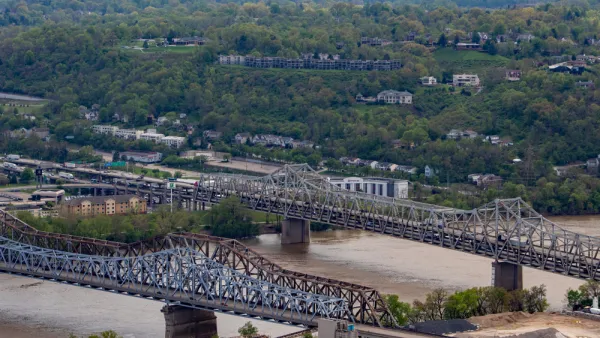
$1.6 Billion for Ohio River Bridge Included in Latest Federal Grant Announcements
The Biden administration this week spanned the country to announce over $2 billion in grant funding for bridge projects.
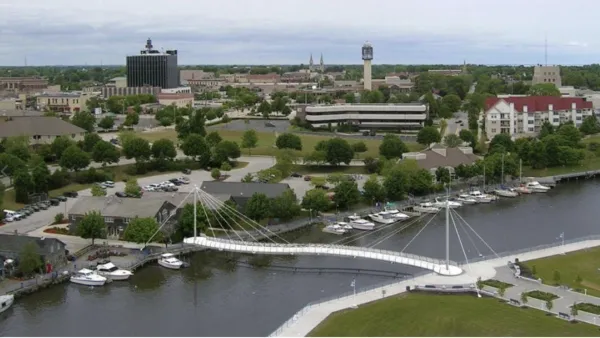
How Locals Are Planning to Spend $2.2 Billion in RAISE Transportation Grants, Part Two
Part two of a series of post providing specific information for 164 of the 166 projects recently awarded funding by the U.S. Department of Transportation's RAISE grant funding program.
How Locals Are Planning to Spend $2.2 Billion in RAISE Transportation Grants
The U.S. Department of Transportation earlier this month announced $2.2 billion in RAISE grants. The Biden administration has promised that the RAISE grant program will improve equity and sustainability in the nation's transportation systems.

Planetizen Federal Action Tracker
A weekly monitor of how Trump’s orders and actions are impacting planners and planning in America.

The state-sanctioned urbicide of Austin
People don’t kill cities. Freeways do.

US to reduce Colorado River water deliveries to Mexico
A new Colorado Treaty amendment reduces Mexico’s Colorado River water allocation by 250,000 acre feet.

5 New England states march closer to 800 megawatt wind energy project
Securing federal approval for the project may be complicated under the Trump administration, which has historically been hostile towards domestic wind power.

Baltimore to break ground on $50 million Transit Priority Project
The project will bring faster bus trips, safer streets and better bike connections to Baltimore.

Airbnb launches $250 million 'last-dollar financing' housing accelerator, makes first investment in Austin
The company will put $6.4 million towards affordable housing development in Texas’ capital.

FREE Course: Walkable City 1: Why Walkability?
After describing his path towards focusing on walkability as the essence of good planning, Jeff Speck marches through his five principal reasons for making more walkable places.
Reinventing Malls: Planning Alchemy—Turning Gray Fields Into Gold
The course focuses on the opportunities and imperatives that shape reinvention of mall sites.

Eagle County Government
Harvard University Graduate School of Design
Nashville Planning Department
The Architects Foundation
University of Cincinnati Online
The Pocatello Development Authority
The Urban Renewal Agency of the City of Pocatello
Journal of the American Planning Association