Part two of a series of post providing specific information for 164 of the 166 projects recently awarded funding by the U.S. Department of Transportation's RAISE grant funding program.



Earlier this month, the U.S. Department of Transportation and the Biden administration announced $2.2 billion in RAISE grant funding for transportation projects around the United States. With a 50-50 split between urban and rural projects, the Biden administration has promised to leverage the RAISE program, bolstered with funding from the Infrastructure Investment and Jobs Act, to reduce emissions while improving equity, increase options for car-free mobility, and improve the sustainability of the nation’s transportation systems.
The Biden administration announced the RAISE program in April 2021 as a replacement for the BUILD grant program of the Trump administration, itself a replacement of the TIGER grant program of the Obama administration.
To provide more scrutiny of the RAISE grant funding round, especially as compared to the Biden administration’s own ambitions and the funding programs of its predecessors, Planetizen has gathered local news coverage and public relations communications on almost all of the programs funded by RAISE this month.
A few other aggregations of the RAISE grant funding program provide additional insight into the scope and the specifics of the funding round. Mass Transit, for example, tallies the total funding allocated for transit-specific projects at $476 million out of the $2.2 billion total. Freight Waves adds up the funding for all port projects and comes up with a total of $57 million. Yonah Freemark shared the results of an analysis of RAISE spending on Twitter that counted 10 percent of the $2.2 billion going toward new road construction or expansion.
For some anecdotal evidence about how grant programs during the Biden administration are differing from grant programs under the Obama administration, note that a planned extension of the Milwaukee streetcar, known as the Hop, was originally funded with $14.2 million in TIGER grants from the Obama administration. A plan to extend the Hop, however, has been passed over in all four tries for grant funding, including with this most recent round of RAISE grant funding.
The following list completes the work of part one of the series by listing the 82 projects in the second half of the grant award list (out of a total of 166). Also included are news coverage or press releases, starting with projects in the state of Missouri, for all but one of the projects (looking at you, Dallas). See part one of the series for Arizona through Mississippi.
News Coverage
Missouri
- Bi-State Sustainable Reinvestment Corridor (Missouri and Kansas)
- Bi-State Sustainable Reinvestment Corridor Project gets $5.6 Million RAISE Grant (Northeast News, August 10)
- Noland Multimodal Corridor (Independence, Missouri)
- Five KC-area projects get green light for $48.2M in federal funds to bolster supply chain, support racial equity, economic growth (Missouri Business Alert, August 16)
- South Main Corridor Improvement Project Phase II (Maryville, Missouri)
- South Main phase 2 to be funded through federal grant (Maryville Forum, August 9)
- US 69 Safe Streets and Sidewalks (Excelsior Spring, Missouri)
- RAISE Grant Invests $21.5 Million in Excelsior Springs Infrastructure (Excelsior Citizen, August 14)
- US 71 Reconnecting Neighborhoods (Kansas City, Missouri)
- KC receives huge federal grant to address issues of safety and equity caused by 71 Highway (KMBC News, August 15)
Montana
- Columbia Falls Gateway to Glacier Safety and Mobility Project (Columbia Falls, Montana)
- Columbia Falls, Lake County Receive Infrastructure Grants (Flathead Beacon, August 24)
- Chippewa Cree Route 6 Planning Grant (Rocky Boy’s Reservation, Motana)
- Chippewa Cree Tribe Receiving $2.2 Million for Road Planning Study (Hi-Line Today, August 13)
- Lake County Road Reconstruction (Lake County, Montana)
- Lake Co. receives $13 million RAISE grant for Flathead roads (Missoulian, August 24)
Nebraska
- Project Access York (York, Nebraska)
- York receives $15 million transportation grant (York News-Times, August 11)
- Lincoln Multimodal Transportation Center (Lincoln, Nebraska)
- Lincoln StarTran awarded $23.6 million grant for new transportation center (KLKN TV, AUGUST 11)
Nevada
- Victory Infrastructure (Fernley, Nevada)
- Fernley’s ‘Victory Project’ receives $25 million grant (Elko Dailly Free Press, August 25)
New Hampshire
- Renewing Berlin With Renewable Energy (Berlin, New Hampshire)
- Berlin Receives Federal Funds for Infrastructure (Business NH Magazine, August 11)
New Jersey
- Raising a Resilient Route 40 (Atlantic City, New Jersey)
- Elevation of Route 40 into Atlantic City part of $2B federal transportation funding package (The Press of Atlantic City, August 12)
New Mexico
- Albuquerque Rail Trail (Albuquerque, New Mexico)
- ABQ trail project gets injection of federal money (Albuquerque Journal, August 23)
- Dark Canyon Bridge Planning (Carlsbad, New Mexico)
- Carlsbad seeks millions to build bridge over Dark Canyon Arroyo (Carlsbad Current-Argus, August 19)
New York
- Comprehensive Roadway Infrastructure Planning and Design Project (Shinnecock Indian Nation, New York)
- Feds award Shinnecock Nation a $1.14M roadway grant to improve infrastructure (Newsday, August 15)
- North Genesee State Gateway Bridge and Multi-Modal Connector Project (Utica, New York)
- NYC Greenway Expansion (New York City, New York)
- NYC uses $7M federal grant to plan more greenways in underserved communities (amNY, August 22)
- Transforming Main Street (Buffalo, New York)
- New federal funds aim for 'safe, walkable, bikeable' Main Street in Buffalo (Buffalo News, August 8)
North Carolina
- New Intermodal Facility – Port of Wilmington (Wilmington, North Carolina)
- Wilmington port receives RAISE grant to fund new intermodal facility (Progressive Railroading, August 22)
- FLOW Better – Fixing Low Water Bridges for Emergency, Transportation, Technology, Equity, and Resilience (North Carolina)
- Bridge reconstruction coming to High Country counties as part of federal infrastructure law (Watauga Democrat, August 12)
- Weeksville Road Accessibility and Connectivity Plan (Elizabeth City, North Carolina)
- EC getting $2 million for multi-use path design (The Daily Advance, August 11)
- North Carolina Regional S-Line Mobility Hub Plan (Wake Forest, North Carolina)
- Partnership for Active Regional Transportation and Neighborhood Equity (Rutherfordton and Spindale, North Carolina)
- Rutherfordton-Spindale highway approved (The Daily Courier, August 16)
North Dakota
- Tribal Safety Project (North Dakota)
- North Dakota DOT gets $19.5M for tribal safety project (The Bismark Tribune, August 10)
- North Dakota/Minnesota Community Bridge Connectivity project (Fargo, North Dakota)
Ohio
- State to Central: Building Better Neighborhoods (Cincinnati, Ohio)
- $20 million overhaul coming to key Cincinnati corridors from West End to Lower Price Hill (Cincinnati Business Courier, August 15)
- Connecting Residents on Safer Streets Marietta (Marietta, Ohio)
- RAISE Grant could help provide transportation to downtown Marietta (The Marietta Times, August 13)
- ERI US 6 Connectivity Corridor Including Sandusky Bay Pathway (Sandusky, Ohio)
- Sandusky lands $24.5 million federal grant to improve U.S. 6 into Cedar Point, expand bikeway (Cleveland.com, August 15)
- Mansfield Rising – Main Street Revitalization (Mansfield, Ohio)
- Mansfield to receive $7 million federal grant for Main Street Corridor Improvement project (Richland Source, August 9)
Oklahoma
- Thlopthlocco Tribal Town Interior Roads, Housing Roads, and Walkways (Thlopthlocco Tribal Town, Oklahoma)
- Reconnecting Neighborhoods in West Tulsa: The W. 51st Street Extension Project (Tulsa, Oklahoma)
- Tulsa, Jenks transportation projects get federal infrastructure grants (Tulsa World, August 12)
- Complete Street Project to Enhance Equity and Safety (Wagoner, Oklahoma)
- Wagoner wins $7 million Federal RAISE Grant (Tulsa World, August 24)
- Tulsa-Jenks Multi-Modal Safety Project (Jenks, Oklahoma)
- Tulsa, Jenks transportation projects get federal infrastructure grants (Tulsa World, August 12)
Oregon
- Beaverton Downtown Loop Complete Street Project (Beaverton, Oregon)
- Beaverton receives $2M for better sidewalks, bike lanes downtown (Beaverton Valley Times, August 18)
- Earthquake Ready Burnside Bridge (Portland, Oregon)
- Several federal grants could pay for new Burnside Bridge (Portland Tribune, August 23)
- McGilchrist Complete Streets Project (Salem, Oregon)
- 'Abysmal' South Salem street gets millions in federal funds for improvements (Statesman Journal, August 18)
Pennsylvania
- New Pathways to Equity (Pittsburgh, Pennsylvania)
- Pittsburgh to get $11.3 million federal grant to rebuild Hill District streets (Pittsburgh Post-Gazette, August 11)
- Revitalizing Philadelphia’s Local Roadways (Philadelphia, Pennsylvania)
- $25 million awarded to improve street safety in North, West, and Northeast Philly neighborhoods (Philadelphia Inquirer, August 11)
Puerto Rico
- Wharf C Reconstruction and Resiliency Enhancement Project (San Jose, Puerto Rico)
- Puerto Rico Ports Authority gets $25M to rebuild Puerto Nuevo pier (News Is My Business, August 12)
Rhode Island
- Providence Riverwalk Resilience Project (Providence, Rhoda Island)
- Federal grant will upgrade Providence Riverwalk, Waterplace Park (Providence Business First, August 15)
- RIPTA Newport-Middletown Garage and Bus Electrification (Newport, Rhode Island)
- Electric Buses Will Soon Be Reality in Newport (Newport This Week, August 18)
South Carolina
- Investing in Countywide Infrastructure to Equitably and Sustainably Connect Greenville (Greenville, South Carolina)
- Greenlink to receive $5.8 million in federal funds to improve bus stops (Greenville Journal, August 11)
South Dakota
- U.S. 12 Reconstruction (Morristown and Watagua, South Dakota)
- SDDOT receives federal RAISE grant for reconstruction of U.S. Highway 12 between Watauga and Morristown (Timber Lake Topic, August 18)
Tennessee
- SR43 Complete Streets and ITS Traffic Signal Coordination Project (Morristown, Tennessee)
- Morristown earns $23.4 million federal grant for S. Cumberland corridor improvement (Citizen Tribune, August 14)
- The Wilcox Boulevard Bridge – River to Ridge Mobility Project (Chattanooga, Tennessee)
- City Receives $25 Million Federal Grant To Replace And Improve Wilcox Boulevard Bridge (The Pulse, August 12)
- U.S. Highway 127 Corridor Optimization (Dunlap, Tennessee)
- $14.6 million highway grant for Dunlap (The Dunlap Tribune, August 12)
Texas
- Multimodal Laydown, Transportation Infrastructure Fostering Community Based Job Creation (Port Arthur, Texas)
- Port of Port Arthur to receive $13.6 million federal grant (Beaumont Enterprise, August 10)
- Telephone Road: Main Street Revitalization Project (Houston, Texas)
- Project to remake part of Telephone Road into pedestrian-friendly boulevard wins $21M federal grant (Houston Chronicle, August 9)
- Texas Active Transportation Network (El Paso, Texas)
- Northeast Texas Trail receives millions in grant funding (Herald Banner, August 21)
- Commerce Street Corridor Redesign (Harlingen, Texas)
- City of Harlingen receives RAISE grant (KRGV August 9)
- Improved Bicycle/Pedestrian Routes to Trail and Technology Upgrades (Dallas, Texas)
- No article or press release found for this $25 million grant award
- Ysleta Port of Entry Pedestrian and Site Improvements (El Paso, Texas)
- $12 Million Grant to Improve Ysleta Port of Entry (Lower RGV News, August 11)
Utah
- Planning and Optimizing a Multi-Modal Logistics Center in Southern Utah (Southern Utah)
- Federal grant helps advance Southern Utah multimodal logistics facility (Supply Chain Quarterly, August 15)
- State Route 224 Battery Electric and BRT Project (Summit County, Utah)
- High Valley Transit receives $25 million federal grant (Park Record, August 14)
Vermont
- Federal Street Multimodal Connector (St. Albans, Vermont)
- St. Albans City awarded $7.7 million federal grant for Federal Street; Project in planning stages (Saint Albans Messenger, August 17)
- Transit Oriented Development Plan for Northwest Vermont (Chittenden County, Vermont)
- 3 Vermont infrastructure projects to receive $34 million in federal funding (VT Digger, August 11)
- Winooski River Bridge Replacement (Winooski and Burlington, Vermont)
- Deteriorating Burlington-Winooski bridge wins major $24.8M grant: Here's what's next. (Burlington Free Press, August 12)
Virgin Islands
- Veterans Drive Improvements Phase 2 (Charlotte Amalie, Virgin Islands)
- Public Works Secures $25M Grant for Phase 2 of Veterans Drive Project (The St. Thomas Source, August 9)
Virginia
- Arthur Ashe Boulevard Bridge Replacement (Richmond, Virginia)
- Richmond receives $18.4 million infrastructure grant for bridge project (Richmond Times-Dispatch, August 10)
- Community Connectivity and Mobility: A Multimodal Assessment and Master Plan (Tappahannock, Virginia)
- Complete High Street Innovation Corridor (Portsmouth, Virginia)
- I-95 Exit 126/Route 1 Revitalization Planning Project (Spotsylvania, Virginia)
- Grant to help fund Spotsylvania roadwork (The Free Lance-Star, August 10)
- Long Bridge Bicycle and Pedestrian Crossing Project (Arlington, Virginia)
- Federal funds boost effort to pedestrian/bicycle bridge over Potomac (InsideNoVa, August 12)
- Three Notched Trail Shared Use Path Master Plan (Albemarle, Virginia)
- Federal Funds awarded to help plan for Three Notched Trail (Information Charlottesville, August 16)
Washington
- Connecting Lynwood: Poplar Way Bridge (Lynwood, Washington)
- Lynnwood awarded $25 million grant to build new I-5 overpass (MyNorthwest, August 18)
- Airport Road Multimodal and Regional Access Improvements (Pullman, Washington)
- Pullman's Airport Road Improvement Project Awarded $5 Million Federal Grant (Big Country News, August
- Bothell Way NE Multimodal Improvements (Bothell, Washington)
- RAISE Grants Move Away From Road Expansion, But Not In Seattle Metro (The Urbanist, August 17)
- Heritage Connectivity Trails – Phase 1 (Yakima, Washington)
- Yakima to receive part of $100M state RAISE funds (NBC Right Now, August 9)
- Lummi Island Ferry Replacement and System Modernization Project (Whatcom County, Washington)
- Whatcom County’s Lummi Island is getting a new ferry (MyNorthwest, August 12)
- Pines Road/BNSF Grade Separation Project (Spokane Valley, Washington)
- Spokane Valley scores $21.6M for major projects, including underpass (The Center Square, August 12)
West Virginia
- Wheeling Streetscape (Wheeling, West Virginia)
- Wheeling Streetscape project sees bid awarded, $16M in federal funding (WVNews, August 9)
- Greenbag Road Corridor Planning and Design Project (Morgantown, West Virginia)
- Green Bag Road design gets $4.2 million in discretionary grant dollars (The Dominion Post, August 12)
Wisconsin
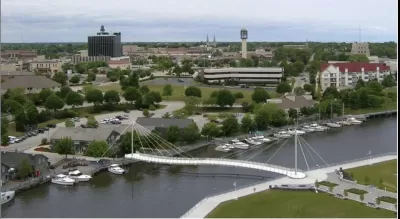
- Bicycle and Pedestrian Swing Bridge (Sheboygan, Wisconsin)
- Sheboygan gets $5.3 million for pedestrian bridge (Sheboygan Sun, August 16)
- Oneida Bus Garage (Oneida Nation, Wisconsin)
- FCPC Pathway to Wellness: Multimodal Safety and Connectivity Project (Crandon, Wisconsin)
- Oneida Nation and Forest County receiving grants for infrastructure projects (Fox 11 News, August 10)
- Gateways to Opportunity Project (Beloit, Wisconsin)
- $13M federal grant to improve roads around Beloit casino (Beloit News, August 10)
Wyoming
- Lincoln County Rural Planning Project (Lincoln County, Wyoming)
- The Port Projects Will Attract Nearly $57 in Infrastructure Grants (Lincoln County, Wyoming)
Press Releases
Montana
- Northern Cheyenne Rosebud Cut-Across US 212 to MT 39 (Northern Cheyenne Indian Reservation, Montana)
- $41 million announced to support projects in Montana from the RAISE program (U.S. Department of Transportation via Kilgore News Herald, August 11)
Nevada
- City of Las Vegas Greenvision: Stewart Avenue Complete Streets Project (Las Vegas, Nevada)
- Rep. Titus Announces $23.9 Million for Infrastructure Improvements in Las Vegas (Congresswoman Dana Titus, August 9)
- Cortez Mastro Announces More Than $23 Million in Funding to Improve Stewart Avenue in Las Vegas (Catherine Cortez maestro, August 8)
New Jersey
- Intermodal Transportation Infrastructure Planning Project (Elizabeth, New Jersey)
- Congressman Sires Applauds Award of Federal Transportation Funding to the City of Elizabeth (Congressman Albio Sires, August 9)
New York
- Southern Tier Regional Transit Hub (Seneca Nation of Indians, New York)
- Biden-Harris Administration Announces $59.2 Million in Funding for Five Projects in New York to Modernize Transportation and Make it More Affordable, Increase Safety and Strengthen Supply Chains (United States Department of Transportation, August 11)
North Dakota
- BIA Route 3 Resurfacing Project (Standing Rocks Sioux Tribe, North Dakota)
- The Bipartisan Infrastructure Law Will Deliver for North Dakota (U.S. Department of Transportation)
Northern Mariana Islands
- Saipan Harbor Navigation Improvements (Saipan, Northern Mariana Islands)
- $3.1m for Saipan port improvements (Congressman Gregoria Kilili Camacho Sablan, August 15)
Oklahoma
- SH-37 BNSF Grade Separation and Multimodal Improvements (Moore, Oklahoma)
- Southwest Oklahoma Regional Multimodal Transportation Plan (Oklahoma)
- Biden-Harris administration announces six transportation projects in Oklahoma (U.S. Department of Transportation via Stillwater News Press, August 16)
South Carolina
- Lowcountry Lowline: Reconnecting Disadvantaged Communities Near I-26 (Charleston, South Carolina)
- Congressman Clyburn announces $7 million grant to transform disadvantaged communities in Charleston (Congressman James E. Clyburn via Lowcountry Panorama, August 17)
Washington
- Reconnecting I-90 Communities (Spokane-Seattle, Washington)
- Washington To Get Nearly $100 Million in Infrastructure Investments Through RAISE Grants (Senator Maria Cantwell, August 10)

How Locals Are Planning to Spend $2.2 Billion in RAISE Transportation Grants
The U.S. Department of Transportation earlier this month announced $2.2 billion in RAISE grants. The Biden administration has promised that the RAISE grant program will improve equity and sustainability in the nation's transportation systems.
$2.2 Billion in RAISE Grant Funding Announced for Transportation Projects
The Rebuilding American Infrastructure with Sustainability and Equity (RAISE) competitive grant program, supersized by the federal infrastructure bill in 2021, just announced a new round of funding.
Biden Administration Proposes New Rule to Track Emission Reductions by State DOTs
Some skepticism is warranted about the potential impact of a proposed federal rule for states and regional planning agencies to track greenhouse gas reductions from transportation investment.

Planetizen Federal Action Tracker
A weekly monitor of how Trump’s orders and actions are impacting planners and planning in America.

California plans to bury El Niño’s downpour
If the state plays its cards right, it may be able to store a billion acre-feet of El Niño’s water in aquifers.

Chicago breaks ground on $3 billion megadevelopment
The new neighborhood, titled Foundry Park, will one day host 3,700 residences.

California High-Speed Rail Authority CEO resigns after $600,000 scandal
Under Ian Choudri, the authority used taxpayer dollars to fund first class flights and trips to nightclubs.

Want to study the Missouri River? Soon, you may need unanimous approval from 10 states
Legislation would require 10 governors’ permission to study or build projects moving water outside the basin.

Desperate measures: Advocates weigh draining Lake Powell to fill Colorado River
Draining the reservoir could reduce evaporation losses by a couple hundred thousand acre-feet.

FREE Course: Walkable City 1: Why Walkability?
After describing his path towards focusing on walkability as the essence of good planning, Jeff Speck marches through his five principal reasons for making more walkable places.
Reinventing Malls: Planning Alchemy—Turning Gray Fields Into Gold
The course focuses on the opportunities and imperatives that shape reinvention of mall sites.

City of Rosemead
Rutgers University, Edward J. Bloustein School of Planning and Public Policy
One Hundred Miles
Hunter College, City University of New York (CUNY)
The Architects Foundation
University of Cincinnati Online
City of Cambridge
Montrose County
The Pocatello Development Authority

