Critics of free transit programs argue that free fares may not decrease driving or fight climate change. Dr. Destiny Thomas explains why that argument ‘misses the point.’


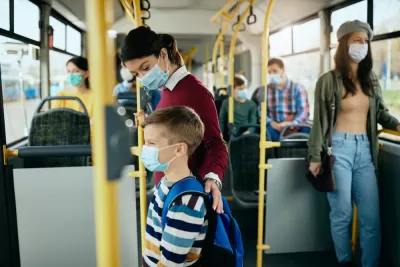
In an excerpt from a conversation for Streetsblog’s The Brake podcast, Kea Wilson and Dr. Destiny Thomas discuss why the arguments frequently made against free transit programs are “missing the point.”
Thomas addresses the claim that free transit may not reduce driving or emissions, calling the construction of free transit as a climate change solution “a construct of inequity in and of itself.” According to Thomas, “We need free transit because people can’t afford it, because of how our societies have become rooted in capitalism and the monetization of basic needs and commodities. And that’s a very different point of juncture.”
For Thomas, “putting the burden of resolving our climate change crisis on people who are already suffering and struggling — I think that is morally disastrous.” Free transit may not be a silver bullet, Thomas says, but “You have to be willing to take approaches that are reparative for a small number of people who are just suffering, and we have to be okay with those measures not benefiting everyone at the same time.”
Hear the full conversation on The Brake.
FULL STORY: Why Arguments Against ‘Free Transit’ Are Missing the Point

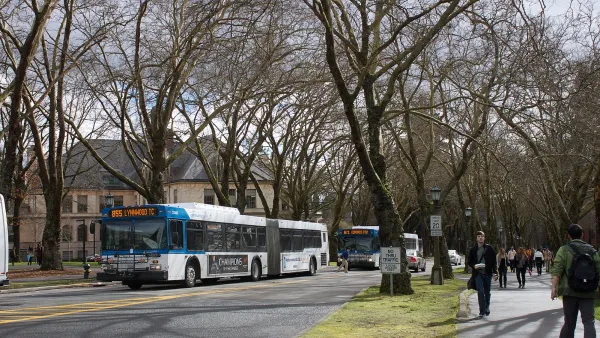
How Inadequate Transit Harms College Students
A lack of access to affordable and reliable transit is being cited as a major reason why many college students don't finish school.
Opinion: To Increase Equity, Make Buses Free
With buses as a dominant transport mode for low-income households and "essential workers," free fares would increase access to economic opportunities and free up limited income for cash-strapped commuters.
MPO Boards Don’t Reflect Their Constituencies
Metropolitan planning organizations make important transportation planning decisions, but their memberships often don’t reflect their region’s demographics.

The state-sanctioned urbicide of Austin
People don’t kill cities. Freeways do.

US to reduce Colorado River water deliveries to Mexico
A new Colorado Treaty amendment reduces Mexico’s Colorado River water allocation by 250,000 acre feet.

New Jersey’s second-largest city bans standalone data centers
Jersey City will continue to allow co-location facilities, such as those meant for research institutions that store their own data.

Amtrak not solely to blame for New Jersey commuter rail's unreliability, report finds
A new study from the Garden State Initiative found that NJ Transit’s budget grew 20% across a 4 year period, but reliability declined significantly over the same period.

EPA erases limits on planet-warming pollution from power plants
Under Monday’s plan, power plants would still have some limits on how much mercury, arsenic and other contaminants they can emit.

Phoenix announces new on-demand transit service, more frequent RAPID buses
Both new services will launch in October, and are part of Phoenix's Project Effective Access Solutions for Easing Congestion.

FREE Course: Walkable City 1: Why Walkability?
After describing his path towards focusing on walkability as the essence of good planning, Jeff Speck marches through his five principal reasons for making more walkable places.
Reinventing Malls: Planning Alchemy—Turning Gray Fields Into Gold
The course focuses on the opportunities and imperatives that shape reinvention of mall sites.

Eagle County Government
Harvard University Graduate School of Design
Nashville Planning Department
The Architects Foundation
University of Cincinnati Online
The Pocatello Development Authority
The Urban Renewal Agency of the City of Pocatello
Journal of the American Planning Association