A research and capacity building initiative based at Utah State University seeks to help fast-growing tourist meccas in the West plan for smart growth.


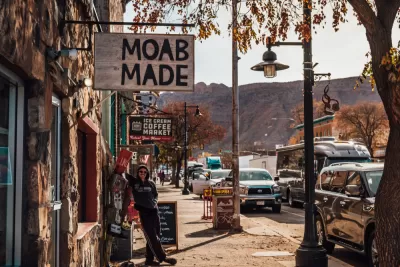
Writing in High Country News, Heather Hansman describes an initiative known as GNAR—Gateway and Natural Resource Amenities—that seeks to help small communities experiencing heavy tourism and migration manage growth effectively. The initiative was started by Danya Rumore, a professor of planning at the University of Utah.
“Communities started to come on board, and in January of 2020, the GNAR Initiative became a part of the Institute of Outdoor Recreation and Tourism at Utah State University. Rumore worked with academics there to create a cross-discipline, geographically broad forum to seed research, share best practices, and brainstorm ways to change practices in Western states, where state-level policy has often meant regressive planning and growth policies, including exclusionary zoning,” Hansman writes.
“Recreation towns aren’t the only places that have been hammered by changing demographics and shifting economic tides during the past two years, but Rumore says many of them were already struggling with how to plan for growth, house their workers and manage the uneven economic progress.” The sudden influx of new residents brought on by the COVID-19 pandemic blindsided many of them, accelerating their issues. “The towns might have relatively few residents, but their many visitors make use of the town’s resources, overwhelming the infrastructure without necessarily adding to the tax base. They tend to be liberal enclaves in conservative states where planning isn’t funded, even though growth is accelerating.”
Hansman provides some examples: “Businesses in Sandpoint closed because their workers couldn’t find housing. Moab’s water system approached its limit. Along Springdale’s former commercial strip, which has largely been converted to vacation rentals, Zion traffic was backed up for hours, making it hard for locals to get to work.”
The GNAR initiative has two main components: research and capacity building and education. “There is no silver bullet. No town is going to perfectly balance growth with identity, and no policy will make everyone happy, especially as new crowds and new incomes streams move in. But Rumore sees the GNAR communities as canaries in the coal mine of wealth inequality, and she believes that it’s crucial to give them tools to proactively plan for the kind of growth they want, so they aren’t overwhelmed by rapid change.”
FULL STORY: How growing Western rec towns might hold onto their futures

Housing Scarcity in Rural America
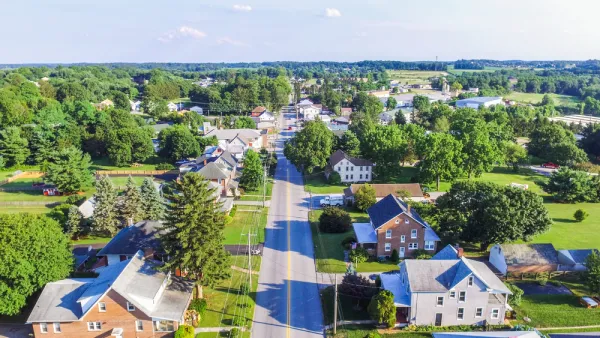
With the growth of ‘Zoom towns’ and the sharply rising demand for small-town living, rural communities are facing pressure to maintain housing affordability for long-time residents and boost housing production.

Misinformation and 'AI slop' are hamstringing rural solar development
False claims about the potential drawbacks of solar farms are prompting some communities to reject potentially lucrative energy projects.

Congestion Costing Reality Check, Part 2: A congestion costing critique
There are good reasons to be skeptical of highway industry claims that traffic congestion is a growing problem. Their analysis is often incomplete and biased. Let’s pull back the curtain on some major congestion cost studies.

Planetizen Federal Action Tracker
A weekly monitor of how Trump’s orders and actions are impacting planners and planning in America.

The state-sanctioned urbicide of Austin
People don’t kill cities. Freeways do.

US to reduce Colorado River water deliveries to Mexico
A new Colorado Treaty amendment reduces Mexico’s Colorado River water allocation by 250,000 acre feet.

Brightline West’s future may rely on $6 billion federal loan
The company has until Nov. 2 to make a $400 million equity investment into its proposed high-speed rail line.

LA Metro’s ultimatum: no extra buses for LA28 if federal funding isn’t imminently secured
If Metro does not provide additional buses, LA28 organizers will have to find a new way to manage Olympic traffic. LA28’s budget does not include a line item for transit.

Colorado’s Largest Data Center Could Rise Next to Homes — Without a Public Hearing
The proposed campus would consume 11 times the power of Denver International Airport; as it has across the country, opposition mounts.

FREE Course: Walkable City 1: Why Walkability?
After describing his path towards focusing on walkability as the essence of good planning, Jeff Speck marches through his five principal reasons for making more walkable places.
Reinventing Malls: Planning Alchemy—Turning Gray Fields Into Gold
The course focuses on the opportunities and imperatives that shape reinvention of mall sites.

Eagle County Government
Harvard University Graduate School of Design
Nashville Planning Department
The Architects Foundation
University of Cincinnati Online
The Pocatello Development Authority
The Urban Renewal Agency of the City of Pocatello
Journal of the American Planning Association