The proposed legislation would have prohibited new construction in historically underserved areas that often bear the burnt of the negative impacts of freeways.



“Assemblymember Cristina Garcia’s (D-Bell Gardens) bill that would have prohibited California state agencies from investing time and money into freeway expansions in low-income communities that are hard-hit by pollution and displacement, A.B. 1778, died in the Senate Transportation Committee on Tuesday.” As Melanie Curry reports for Streetsblog California, Assemblymember Garcia had been working with committee chair Senator Lena Gonzales (D-Long Beach), who opposed the bill, to make amendments that would gain Gonzales’s support, but had to introduce it this week.
The bill failed by an 8-2 vote. “Lots of arguments have been made against the bill already, most of them coming from groups that have a stake in continuing the status quo of unfettered freeway building.”
Garcia says she “wrote the bill because of the large number of people who have lost their housing because of freeway construction that has slammed through communities where people are least able to protect themselves.” Critics of freeway construction also point to the negative health impacts on surrounding neighborhoods. “In addition, the increased traffic that comes with expanding freeways not only does not solve the congestion that it claims to solve, it creates a further burden of pollution on communities that already experience bad air quality.”
More background on the bill here.
Read the full story: No-Freeway-Expansion Bill Dies in Senate Committee
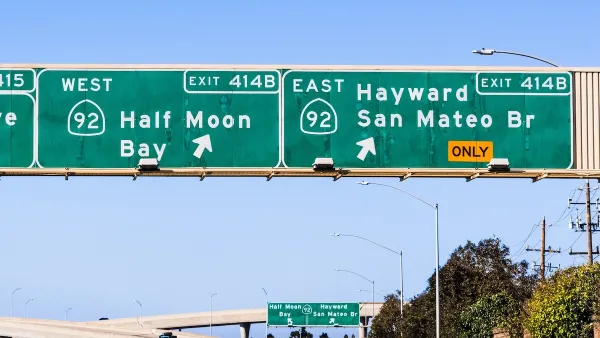
San Mateo Formally Opposes Freeway Project
The city council will send a letter to Caltrans urging the agency to reconsider a plan to expand the 101 through the city of San Mateo.

Milwaukee Environmental Groups Sue to Stop Freeway Expansion
Groups including the Sierra Club say the expansion of I-94 would negatively impact communities of color and increase flood risks.
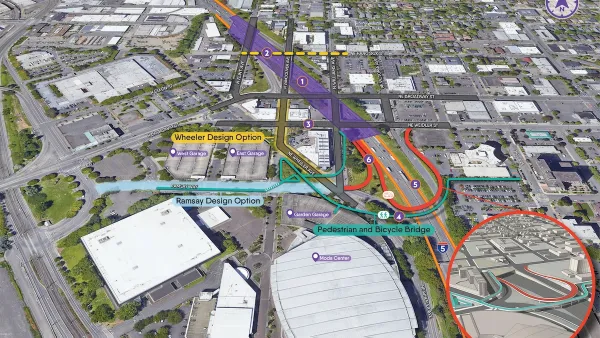
Portland Advocates Call on Feds to Oppose Freeway Expansion
The Oregon DOT is requesting a federal grant to fund a controversial freeway expansion through the Rose Quarter.

Planetizen Federal Action Tracker
A weekly monitor of how Trump’s orders and actions are impacting planners and planning in America.

California plans to bury El Niño’s downpour
If the state plays its cards right, it may be able to store a billion acre-feet of El Niño’s water in aquifers.

Desperate measures: Advocates weigh draining Lake Powell to fill Colorado River
Draining the reservoir could reduce evaporation losses by a couple hundred thousand acre-feet.

In Texas, data centers are swallowing promised parkland
Residents who moved to Taylor, Texas for a rural community now have to contend with three data centers in their backyard.

How a Chicago-sized wind farm beat the odds and powered on
The project spanned five presidential administrations and a standoff with a U.S. military base.

MTA gives itself 30 days to transform pit into basketball court
The site has been under construction since 2022; the city originally estimated it would finish the court in 2024.

FREE Course: Walkable City 1: Why Walkability?
After describing his path towards focusing on walkability as the essence of good planning, Jeff Speck marches through his five principal reasons for making more walkable places.
Reinventing Malls: Planning Alchemy—Turning Gray Fields Into Gold
The course focuses on the opportunities and imperatives that shape reinvention of mall sites.

City of Rosemead
Rutgers University, Edward J. Bloustein School of Planning and Public Policy
One Hundred Miles
Hunter College, City University of New York (CUNY)
The Architects Foundation
University of Cincinnati Online
City of Cambridge
Montrose County
The Pocatello Development Authority