“Downtown on the Brink” reads the headline of a recent San Francisco Chronicle feature.


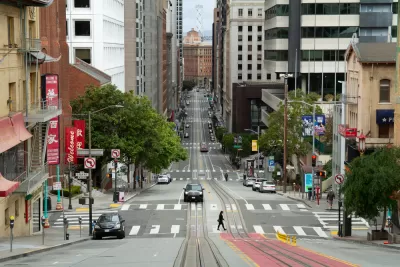
Some Downtown San Francisco storefronts are still shuttered and graffitied, but some signs of life are returning to the streets as professionals and tourists return to the city’s famous urban neighborhoods. But the city’s Downtown is far from back to normal, and big changes will be necessary to avoid a “general economic decline,” according to a big interactive feature published recently by the San Francisco Chronicle, written by Noah Arroyo with visual supplements by Jessica Christian.
“Before the pandemic, office work was responsible for a whopping 72% of the city’s gross domestic product, according to the Controller’s Office — work that was heavily concentrated in the Financial District, the Market Street corridor, the Embarcadero and Mission Bay,” writes Arroyo.
Various metrics indicate Downtown San Francisco is far from recovered from the effects of working from home and social distancing. Office Space vacancy is up from 4.8 million square feet in the first quarter of 2019 to 18.7 million square feet in the first quarter of 2022, according to data presented in the article. That’s the highest level of office vacancies since the Great Recession. Convention attendees have dropped from 221,500 to 30,300 in the same period, and BART exits are down from 9.8 million to 2.3 million. Sales tax revenue in 2021 dropped to 33.5 million, compared to 55.6 million in 2019.
More data is included in the source article, with discussion of these trends focused on the effect for the city’s coffers, local businesses that operate in downtown neighborhoods, and public safety. The article also, however, asks “city planners, businesses and residents” what they will do in response.
“City officials and business leaders are working together, understanding that unless the city can defy national remote-work trends, its economic core will be forever altered,” writes Arroyo. So far, the San Francisco Office of Economic and Workforce Development is working on a strategy to bring the city’s economic core “back to life,” according to the article, but so far, city officials are taking a wait-and-see approach.
“It’s a bit premature for us to share specifics at this stage,” said Gloria Chan, the office’s director of communications, in an email to the Chronicle.
FULL STORY: Downtown S.F. on the brink: It’s worse than it looks

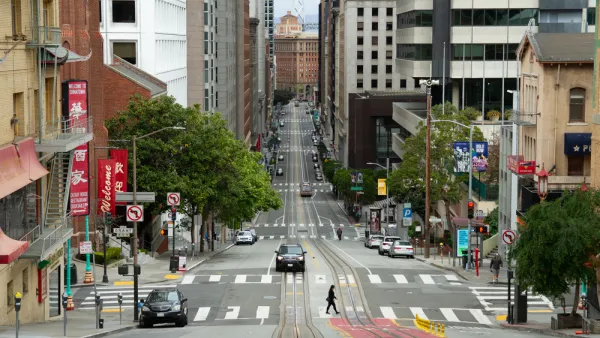
Analysis of Downtown Recoveries Reveals Post-Pandemic Winners and Losers
The recovery of U.S. downtowns is happening at widely different paces depending on which city you consider.
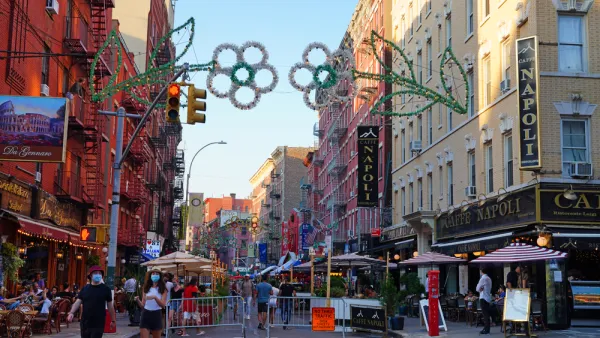
The Once-in-a-Generation Opportunity to Remake Downtown
Urban cores around the country were transforming into live, work, and play destinations before the pandemic. The pandemic was a setback for this transformation, but it could also be a rare opportunity. It’s up to city leadership to seize it.
Office Vacancies Could Cost San Francisco $200 Million by 2028
The fiscal toll of the pandemic is only beginning to reveal itself. The challenges presented to growing office vacancy rates are not unique to San Francisco.

Planetizen Federal Action Tracker
A weekly monitor of how Trump’s orders and actions are impacting planners and planning in America.

The state-sanctioned urbicide of Austin
People don’t kill cities. Freeways do.

US to reduce Colorado River water deliveries to Mexico
A new Colorado Treaty amendment reduces Mexico’s Colorado River water allocation by 250,000 acre feet.

Mamdani overhauls NYC's Vision Zero plan with 100 new policy goals
The overhaul aims to reduce traffic deaths and make streets safer for pedestrians, cyclists and drivers through lower speed limits, new safety infrastructure and more.

Amtrak not solely to blame for New Jersey commuter rail's unreliability, report finds
A new study from the Garden State Initiative found that NJ Transit’s budget grew 20% across a 4 year period, but reliability declined significantly over the same period.

EPA erases limits on planet-warming pollution from power plants
Under Monday’s plan, power plants would still have some limits on how much mercury, arsenic and other contaminants they can emit.

FREE Course: Walkable City 1: Why Walkability?
After describing his path towards focusing on walkability as the essence of good planning, Jeff Speck marches through his five principal reasons for making more walkable places.
Reinventing Malls: Planning Alchemy—Turning Gray Fields Into Gold
The course focuses on the opportunities and imperatives that shape reinvention of mall sites.

Eagle County Government
Harvard University Graduate School of Design
Nashville Planning Department
The Architects Foundation
University of Cincinnati Online
The Pocatello Development Authority
The Urban Renewal Agency of the City of Pocatello
Journal of the American Planning Association