While recent federal legislation allocates billions to transit projects, local leaders face difficult choices as they struggle to match federal funds while ridership remains below pre-pandemic numbers.


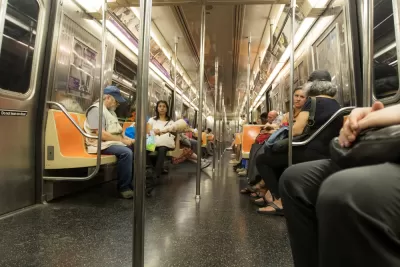
The federal Infrastructure Investment and Jobs Act (IIJA) will pump billions of dollars into transit projects across the nation, writes Thomas Day in Governing, but local governments will have to develop strategies to meet federal requirements as they reshape their systems around post-pandemic travel patterns.
“Difficult choices will need to be made now — think new tax increment financing districts, congestion pricing or repurposing of existing public funds — or IIJA grant dollars will be left on the table,” Day says. “Unlike the COVID-19 relief bills, which included funding to support operational expenses, much of the IIJA’s public transit funds must be spent on capital projects.” Accordingly, “For IIJA to revive and sustain public transit, local governments and transit agencies need to make an effective push to recover lost revenue, then act on a bold vision of post-COVID-19 cities.”
“Transit-oriented development, long a fascination among urban planners, may now provide a solution for mayors who have seen the lifeblood sucked out of downtowns as professional service workers continue to work from home,” posits Day. “By building housing closer to transit, protecting low-income residents and public housing, increasing urban density and providing easier access to downtown civic amenities, cities could strengthen the magnetic pull of urban centers even if work-from-home trends continue.” This could help draw riders back to public transit and counter the hollowing out of downtowns by introducing a wider variety of uses in downtown cores, as well as more convenient ways to access them.
Read the full story: Federal Transit Billions Are Coming, but There’s a Catch

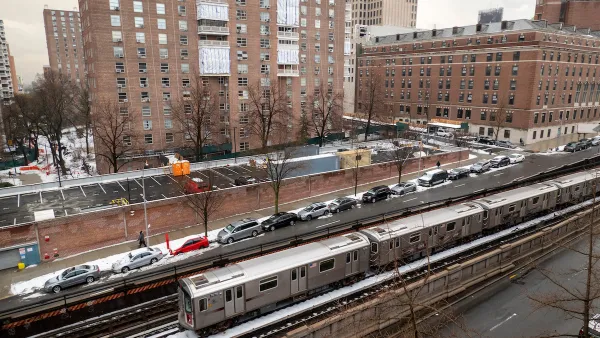
Federal Loan Programs Offer Billions for TOD
USDOT is encouraging developers to take advantage of loans aimed at supporting the building of multifamily buildings near transit lines.
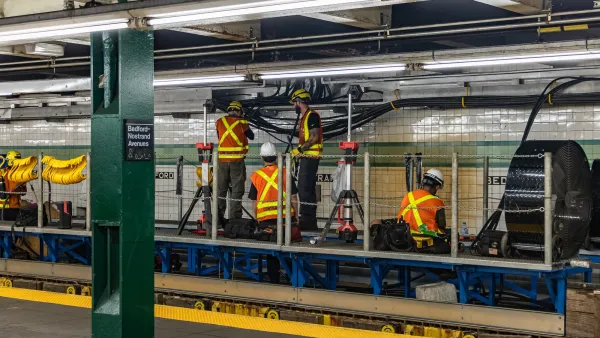
Report: BUILD Act would strip over $2B in transit projects from California and New York alone
The proposed federal transportation bill would eliminate billions in funding from the Federal Transit Administration, the Federal Railroad Administration and other federal agencies that fund transit and multimodal transportation programs.
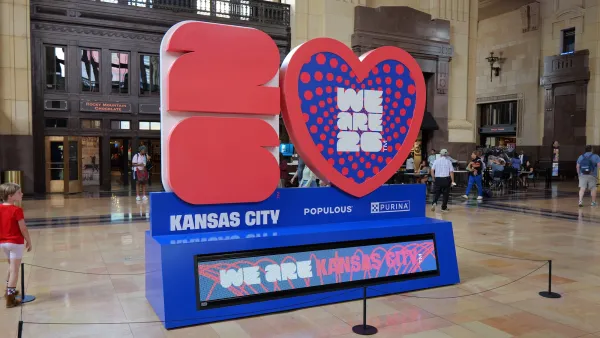
World Cup crowds offer 'stress test' for Kansas City transit planners
Transportation officials are closely monitoring travel patterns during the World Cup to understand how the city's transit system can be improved as the population grows.

Planetizen Federal Action Tracker
A weekly monitor of how Trump’s orders and actions are impacting planners and planning in America.

Colorado’s Largest Data Center Could Rise Next to Homes — Without a Public Hearing
The proposed campus would consume 11 times the power of Denver International Airport; as it has across the country, opposition mounts.

Amtrak, CN end decades-long dispute with eight-year agreement
The new operating agreement establishes an updated framework for the companies to work together, including processes to resolve disputes.

'This is going to be painful:’ Virginia stares down $1.7 billion funding gap for highway maintenance
The state may address the deficit by shifting $290 million from its construction budget to maintenance projects.

Judges permit Denver to divert 77,000 acre feet from the Colorado River for reservoir expansion
Overuse and climate change have caused the Colorado River’s water levels to plummet.
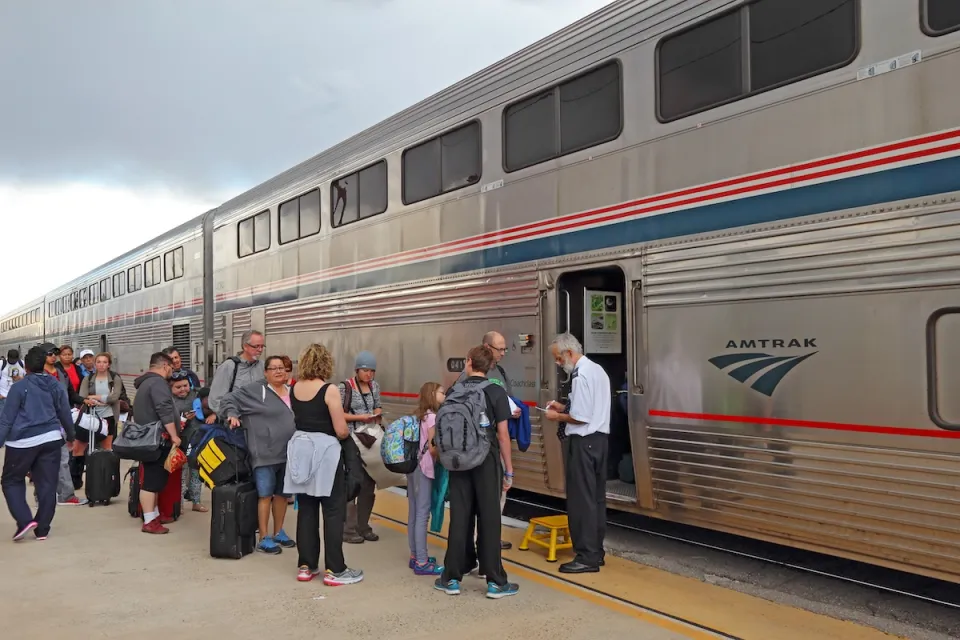
Amtrak, CN end decades-long dispute with eight-year agreement
The new operating agreement establishes an updated framework for the companies to work together, including processes to resolve disputes.

FREE Course: Walkable City 1: Why Walkability?
After describing his path towards focusing on walkability as the essence of good planning, Jeff Speck marches through his five principal reasons for making more walkable places.
Reinventing Malls: Planning Alchemy—Turning Gray Fields Into Gold
The course focuses on the opportunities and imperatives that shape reinvention of mall sites.

KFH Group Inc.
Greater Baltimore Committee
Eagle County Government
The Architects Foundation
University of Cincinnati Online
The Pocatello Development Authority
The Urban Renewal Agency of the City of Pocatello