Meanwhile, cities say the state’s housing needs assessment sets impossible goals for affordable housing production.


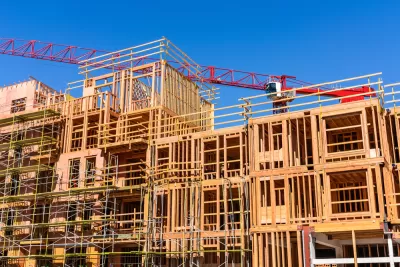
California’s affordable housing crisis continues to create conflict between cities and the state, which recently implemented stricter enforcement measures for its Regional Housing Needs Assessment, an evaluation conducted every eight years that calculates the state’s housing needs. “The state determined the six-county region covered by the Southern California Association of Governments, or SCAG, needs 1.34 million new homes by the end of the decade, an average of nearly 168,000 homes per year, adding enough housing for a population roughly the size of Chicago.”
According to an article by Jeff Collins in The Orange County Register, “South Pasadena remains an example of how some Southern California cities are failing to adequately plan for future housing needs, pro-housing advocates say.” The article cites examples of unrealistic projections, which include sites that have little chance of redevelopment. “South Pasadena’s first draft housing plan envisioned building 49 homes on the 1.2-acre site that now houses City Hall and the police and fire stations. The plan was dropped in the revised ‘housing element’ released on April 21 because the city had no firm plans for relocating City Hall.” Collins notes that the city revised its plan in April to reflect more realistic projections.
In the past, the state rubber-stamped city housing plans even when they had a low chance of meeting their targets. “Now, new laws require cities to fully document why each site has a reasonable chance of getting developed by October 2029, the end of the current planning cycle. New measures also require municipalities to include plans for low-income housing in ‘high resource’ affluent neighborhoods and to take steps to undo historic patterns of segregation.”
The issue goes far beyond South Pasadena. “A 2021 analysis of 10 draft housing elements by Mapcraft Labs concluded that about 70% of proposed housing sites were unlikely to provide the projected number of units by the end of the decade.”
City leaders, meanwhile, argue that state allocations set unrealistic goals. “We are a built-out city, and our numbers went from 63 (homes) in the last cycle to 2,067,” said South Pasadena Community Development Director Angelica Frausto-Lupo.
FULL STORY: Southern California housing plans contain ‘fake sites,’ lack analysis, critics say

California Attorney General Wants to Get Serious About Housing
A bill sponsored by the AG’s office would give the state’s top attorney more power to intervene in lawsuits related to the state’s housing laws.

San Francisco Rezoning Makes Room for 34,000 Housing Units
To meet state-mandated housing goals, San Francisco plans to accommodate thousands of new housing units focused in the city’s west side, which has seen little growth for decades.
Analysis: DC needs tens of thousands of new homes — not just 'zoned capacity'
Estimates for Washington DC's housing needs range from 15,000 to 170,000.

Planetizen Federal Action Tracker
A weekly monitor of how Trump’s orders and actions are impacting planners and planning in America.

The state-sanctioned urbicide of Austin
People don’t kill cities. Freeways do.

US to reduce Colorado River water deliveries to Mexico
A new Colorado Treaty amendment reduces Mexico’s Colorado River water allocation by 250,000 acre feet.

Mamdani overhauls NYC's Vision Zero plan with 100 new policy goals
The overhaul aims to reduce traffic deaths and make streets safer for pedestrians, cyclists and drivers through lower speed limits, new safety infrastructure and more.

Amtrak not solely to blame for New Jersey commuter rail's unreliability, report finds
A new study from the Garden State Initiative found that NJ Transit’s budget grew 20% across a 4 year period, but reliability declined significantly over the same period.

EPA erases limits on planet-warming pollution from power plants
Under Monday’s plan, power plants would still have some limits on how much mercury, arsenic and other contaminants they can emit.

FREE Course: Walkable City 1: Why Walkability?
After describing his path towards focusing on walkability as the essence of good planning, Jeff Speck marches through his five principal reasons for making more walkable places.
Reinventing Malls: Planning Alchemy—Turning Gray Fields Into Gold
The course focuses on the opportunities and imperatives that shape reinvention of mall sites.

Eagle County Government
Harvard University Graduate School of Design
Nashville Planning Department
The Architects Foundation
University of Cincinnati Online
The Pocatello Development Authority
The Urban Renewal Agency of the City of Pocatello
Journal of the American Planning Association