The city’s efforts to reduce driving and parking downtown by raising parking fees and ticket fines seem to have little effect on driving habits.


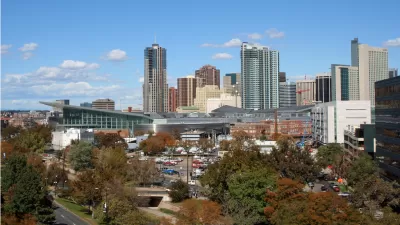
Denver’s efforts to reduce driving and parking in the city’s downtown seem to have little effect, reports Alayna Alvarez for Axios Denver.
Although “City leaders said the fee increase could get Denver closer to achieving its goal of reducing greenhouse gas emissions by 80% by 2050 with fewer drivers on the road and less car exhaust in the air,” Alvarez writes that “Parking meter revenue this year through March more than doubled to $3.8 million compared to the first quarter of 2021, city transportation department spokesperson Nancy Kuhn tells Axios Denver,” belying the assumption that higher fees would deter drivers.
The money will fund infrastructure projects, writes Alvarez: “Half the revenue will be funneled toward transit, sidewalks, bikeways and street safety improvements, while the rest will flow into the city's general fund.”
Alvarez notes that “Parking violation fines also increased this year to more closely align Denver with its peer cities and reduce vehicle congestion,” but so far, “Neither policy appears to have reduced traffic on Denver's roadways.”
Read the full story: Denver's higher parking fees and fines is not deterring drivers

Denver mayor pushes for cheap downtown parking, says promoting transit is 'not our strategy'
The 'Mayor's Park $5' program encourages local businesses to reduce their parking prices to bring more people downtown.
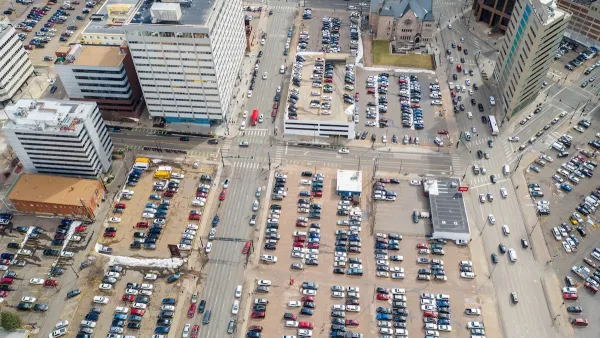
Study: Eliminating Parking Requirements Would Boost Denver Housing by 12.5%
Denver and other Colorado cities have recently reduced or eliminate parking requirements, paving the way to more affordable housing development.
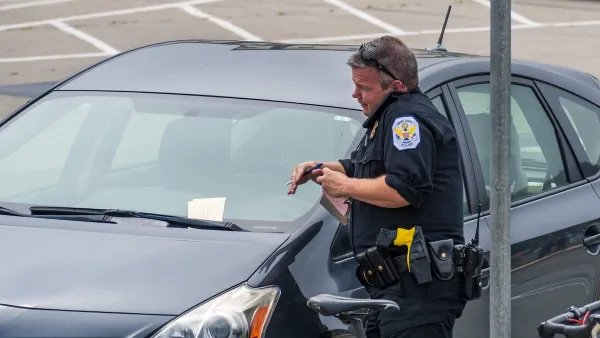
For a Few Hours, This Site Put San Francisco Drivers a Step Ahead of Parking Officers
A web developer used city parking enforcement data to map the routes of parking enforcement officers.

Planetizen Federal Action Tracker
A weekly monitor of how Trump’s orders and actions are impacting planners and planning in America.

The state-sanctioned urbicide of Austin
People don’t kill cities. Freeways do.
Colorado’s Largest Data Center Could Rise Next to Homes — Without a Public Hearing
The proposed campus would consume 11 times the power of Denver International Airport; as it has across the country, opposition mounts.

Nation's most wind-powered state turns to coal as data centers increase energy demand
For the first time in decades, Iowa has increased its generation of coal power.

NYC cools commuters with city's first rain garden above a bus stop
New York City officials say the plants in the rain garden can absorb 16 gallons of rainwater during heavy storms.

Brightline West’s future may rely on $6 billion federal loan
The company has until Nov. 2 to make a $400 million equity investment into its proposed high-speed rail line.

FREE Course: Walkable City 1: Why Walkability?
After describing his path towards focusing on walkability as the essence of good planning, Jeff Speck marches through his five principal reasons for making more walkable places.
Reinventing Malls: Planning Alchemy—Turning Gray Fields Into Gold
The course focuses on the opportunities and imperatives that shape reinvention of mall sites.

Greater Baltimore Committee
Eagle County Government
Harvard University Graduate School of Design
The Architects Foundation
University of Cincinnati Online
The Pocatello Development Authority
The Urban Renewal Agency of the City of Pocatello
Journal of the American Planning Association