Smaller transit systems may be effectively positioned to take the lead in electrifying their fleets and bringing electric vehicles to a wider range of communities.


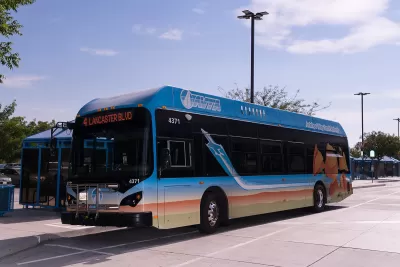
A transit operator in a desert community north of Los Angeles "celebrated a milestone last month no other transit agency in the country can claim: the first fleet to be fully electrified, hitting its zero-emission goal a full 18 years earlier than scheduled." As Alissa Walker reports, the Antelope Valley Transit Authority now boasts 77 electric buses and ten electric microtransit vans.
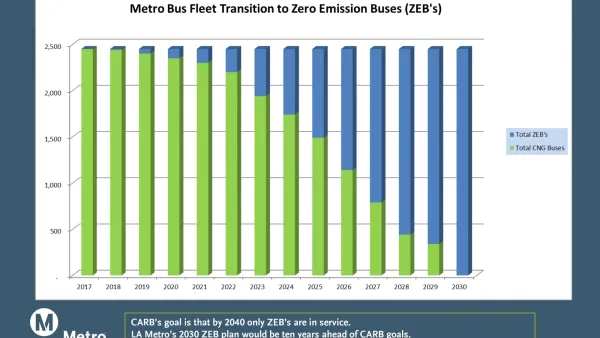
While big-city transit agencies are still years or decades away from electrifying their fleets — the MTA is aiming for full electrification by 2040; L.A. County’s Metro is hoping for 2030 — the Antelope Valley, a region of about 450,000 people, got there long before anyone else.
According to Walker, "There are hundreds of midsize cities like these across the U.S., and this is where the electrification revolution can start. The big cities will be the ones playing catch-up."
AVTA's success story, Walker says, provides a "glimpse at what's possible" as more federal and state funding is directed to electrification efforts. "In California, a majority of the people who have access to electric vehicles live in a handful of wealthy Zip Codes. What’s happening in the Antelope Valley flips that, delivering electrification to the communities severed by trucking routes and suffering from bad air."
FULL STORY: The Electrification Revolution Can Start in Smaller Cities

Transit Agencies Move Toward Electric Buses
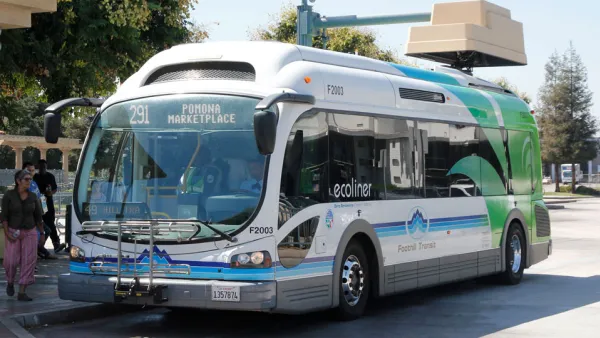
Transit agencies from Washington to Florida are beginning to make the switch from diesel and natural gas-powered buses to battery electric buses, some faster than others.

Fighting Homelessness by Closing a Commuter Rail Station
The high desert city of Lancaster in northern Los Angeles County has an innovative plan to reduce its homeless population: Close its Metrolink station, the last stop on the Antelope Valley line, that serves 400 commuters daily.
Los Angeles Metro to Go Fully Electric by 2030
The move is risky. The agency has no electric buses now, and the last ones it operated performed so badly they had to be returned. The plan is to make the transition in phases, and hope that battery technology improves.

Planetizen Federal Action Tracker
A weekly monitor of how Trump’s orders and actions are impacting planners and planning in America.

The state-sanctioned urbicide of Austin
People don’t kill cities. Freeways do.

US to reduce Colorado River water deliveries to Mexico
A new Colorado Treaty amendment reduces Mexico’s Colorado River water allocation by 250,000 acre feet.

5 New England states march closer to 800 megawatt wind energy project
Securing federal approval for the project may be complicated under the Trump administration, which has historically been hostile towards domestic wind power.

Baltimore to break ground on $50 million Transit Priority Project
The project will bring faster bus trips, safer streets and better bike connections to Baltimore.

Airbnb launches $250 million 'last-dollar financing' housing accelerator, makes first investment in Austin
The company will put $6.4 million towards affordable housing development in Texas’ capital.

FREE Course: Walkable City 1: Why Walkability?
After describing his path towards focusing on walkability as the essence of good planning, Jeff Speck marches through his five principal reasons for making more walkable places.
Reinventing Malls: Planning Alchemy—Turning Gray Fields Into Gold
The course focuses on the opportunities and imperatives that shape reinvention of mall sites.


Eagle County Government
Harvard University Graduate School of Design
Nashville Planning Department
The Architects Foundation
University of Cincinnati Online
The Pocatello Development Authority
The Urban Renewal Agency of the City of Pocatello
Journal of the American Planning Association