Critics say the Postal Service's argument for its weak commitment to electrifying its vehicle fleet doesn't hold water.


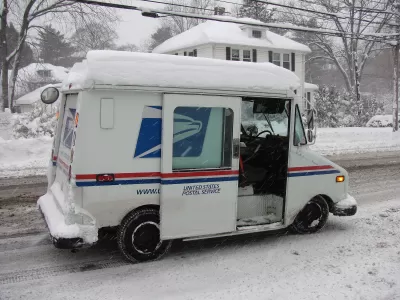
Despite a mandate to electrify federal agency vehicle fleets by 2035, the U.S. Postal Service is only committing to replacing 10 percent of its delivery trucks with electric vehicles, a minimal pledge that sustainability advocates deem unacceptable. While the USPS revealed new, pedestrian-friendly truck designs last year, it appears most of them will still run on gas. As Kea Wilson reports, the agency, which operates the largest government-owned vehicle fleet in the nation, is citing financial and logistical challenges.
The agency claims that it would be difficult to keep EV batteries charged during long mail routes, but the Natural Resources Defense Council (NRDC) rejects this argument, pointing out that "fewer than 6 percent of U.S. mail routes are longer than 70 miles, while today’s electric cargo vans can already go 140 miles on a charge — a capacity that’s likely to go up as battery technology improves."
According to the article, linked below, the agency also fails to mention the possibility of introducing electric cargo bikes or tricycles for mail delivery in dense urban areas, despite their potential to slash emissions and cost. Advocates tout the environmental, financial, and public health benefits of switching to electric bikes and trikes where appropriate.
Read the full story: RETURN TO SENDER: USPS Decarbonization Plan is Weak, Say Advocates

How New Federal Rule Could Impact EV Adoption
An adjustment to federal pollution limits will require a greater share of low-carbon vehicles, but the rule also gives automakers some flexibility in deploying electric and hybrid cars.
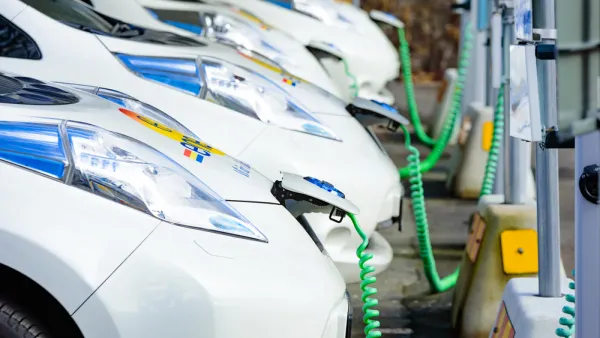
To Fight ‘Range Anxiety,’ Oregon To Invest $100 Million in Electric Vehicle Charging
The Oregon Department of Transportation plans to install EV chargers along crucial transportation corridors and expand charging options around the state to encourage more Oregonians to buy electric vehicles.
'Charging as a Service' Could Accelerate Decarbonization
The proliferation of private EV charging services, coupled with federal investment in charging stations, has the potential to reduce 'charging anxiety' and encourage a faster switch to electric vehicles.

Planetizen Federal Action Tracker
A weekly monitor of how Trump’s orders and actions are impacting planners and planning in America.

Colorado’s Largest Data Center Could Rise Next to Homes — Without a Public Hearing
The proposed campus would consume 11 times the power of Denver International Airport; as it has across the country, opposition mounts.

US to reduce Colorado River water deliveries to Mexico
A new Colorado Treaty amendment reduces Mexico’s Colorado River water allocation by 250,000 acre feet.

'This is going to be painful:’ Virginia stares down $1.7 billion funding gap for highway maintenance
The state may address the deficit by shifting $290 million from its construction budget to maintenance projects.

Judges permit Denver to divert 77,000 acre feet from the Colorado River for reservoir expansion
Overuse and climate change have caused the Colorado River’s water levels to plummet.
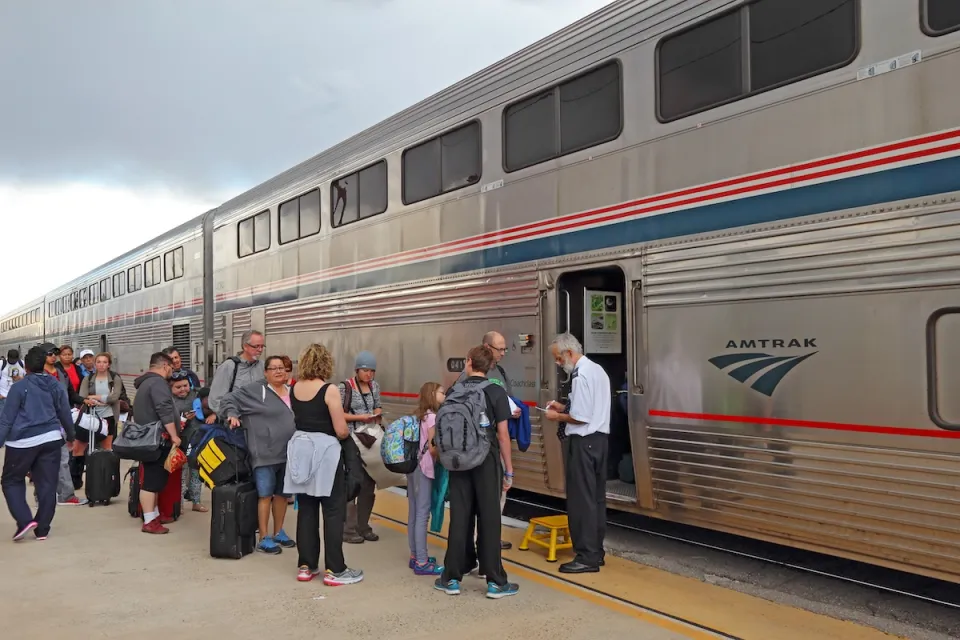
Amtrak, CN end decades-long dispute with eight-year agreement
The new operating agreement establishes an updated framework for the companies to work together, including processes to resolve disputes.

FREE Course: Walkable City 1: Why Walkability?
After describing his path towards focusing on walkability as the essence of good planning, Jeff Speck marches through his five principal reasons for making more walkable places.
Reinventing Malls: Planning Alchemy—Turning Gray Fields Into Gold
The course focuses on the opportunities and imperatives that shape reinvention of mall sites.


KFH Group Inc.
Greater Baltimore Committee
Eagle County Government
The Architects Foundation
University of Cincinnati Online
The Pocatello Development Authority
The Urban Renewal Agency of the City of Pocatello