A lack of access to affordable and reliable transit is being cited as a major reason why many college students don't finish school.


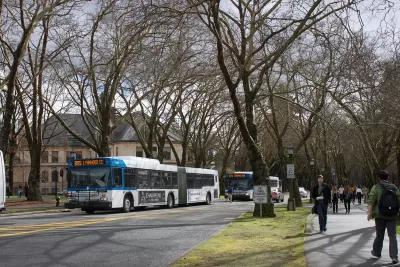
"At a time when colleges are increasingly focused on how to get and keep students enrolled and on a path to a degree, some of the most surprising challenges are not academic but logistical," writes Charlotte West. One of these challenges: affordable, reliable transportation.
With the majority of U.S. college students commuting to class, transportation can make a crucial difference for millions who cannot access or afford transit services. One study found that "Hispanic students were 19 percent more likely to report transportation problems as creating a barrier to college completion than non-Hispanics." Lack of access to transportation can lead students to miss classes and fall behind, while expensive car repairs and transportation costs can put students in even deeper debt.
In response, some colleges and cities have launched programs that provide low-cost or free transit passes and bring education closer to students with satellite campuses located near transit, sometimes funded with COVID-19 relief funds.
Rural students face their own set of challenges as they're often reliant on personal transportation in regions with sparse public transportation services. In these cases, colleges can help students by providing their own shuttle services or grants to help students pay for car repairs. According to research cited in the article, supporting effective and affordable transportation for students can have a positive impact on students' chances to stay enrolled and graduate, while advocates of fare-free transit argue that eliminating fares would increase equity and bring more people closer to economic opportunities and urban amenities.
FULL STORY: A surprising reason preventing some students from finishing college: Lack of transportation

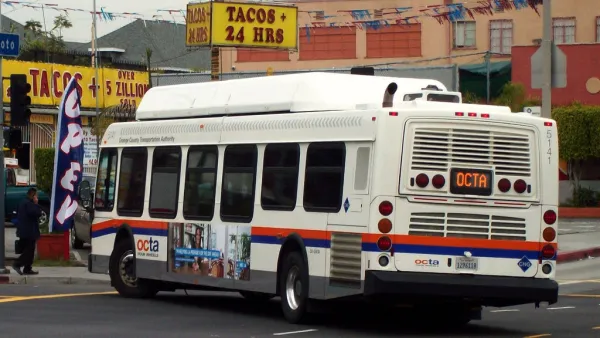
Free Student Transit Now Permanent in Orange County
After a successful pilot program, the OCTA will permanently offer free bus rides to youth ages 6 to 18.
Opinion: To Increase Equity, Make Buses Free
With buses as a dominant transport mode for low-income households and "essential workers," free fares would increase access to economic opportunities and free up limited income for cash-strapped commuters.
Opinion: Free Transit Opposition Is Tone Deaf
Critics of free transit programs argue that free fares may not decrease driving or fight climate change. Dr. Destiny Thomas explains why that argument ‘misses the point.’

Planetizen Federal Action Tracker
A weekly monitor of how Trump’s orders and actions are impacting planners and planning in America.

The state-sanctioned urbicide of Austin
People don’t kill cities. Freeways do.

US to reduce Colorado River water deliveries to Mexico
A new Colorado Treaty amendment reduces Mexico’s Colorado River water allocation by 250,000 acre feet.

Mamdani overhauls NYC's Vision Zero plan with 100 new policy goals
The overhaul aims to reduce traffic deaths and make streets safer for pedestrians, cyclists and drivers through lower speed limits, new safety infrastructure and more.

Amtrak not solely to blame for New Jersey commuter rail's unreliability, report finds
A new study from the Garden State Initiative found that NJ Transit’s budget grew 20% across a 4 year period, but reliability declined significantly over the same period.

EPA erases limits on planet-warming pollution from power plants
Under Monday’s plan, power plants would still have some limits on how much mercury, arsenic and other contaminants they can emit.

FREE Course: Walkable City 1: Why Walkability?
After describing his path towards focusing on walkability as the essence of good planning, Jeff Speck marches through his five principal reasons for making more walkable places.
Reinventing Malls: Planning Alchemy—Turning Gray Fields Into Gold
The course focuses on the opportunities and imperatives that shape reinvention of mall sites.


Eagle County Government
Harvard University Graduate School of Design
Nashville Planning Department
The Architects Foundation
University of Cincinnati Online
The Pocatello Development Authority
The Urban Renewal Agency of the City of Pocatello
Journal of the American Planning Association