Critics of free transit programs argue that free fares may not decrease driving or fight climate change. Dr. Destiny Thomas explains why that argument ‘misses the point.’


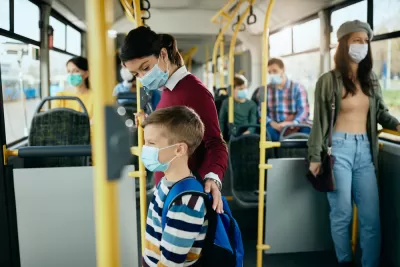
In an excerpt from a conversation for Streetsblog’s The Brake podcast, Kea Wilson and Dr. Destiny Thomas discuss why the arguments frequently made against free transit programs are “missing the point.”
Thomas addresses the claim that free transit may not reduce driving or emissions, calling the construction of free transit as a climate change solution “a construct of inequity in and of itself.” According to Thomas, “We need free transit because people can’t afford it, because of how our societies have become rooted in capitalism and the monetization of basic needs and commodities. And that’s a very different point of juncture.”
For Thomas, “putting the burden of resolving our climate change crisis on people who are already suffering and struggling — I think that is morally disastrous.” Free transit may not be a silver bullet, Thomas says, but “You have to be willing to take approaches that are reparative for a small number of people who are just suffering, and we have to be okay with those measures not benefiting everyone at the same time.”
Hear the full conversation on The Brake.
Read the full story: Why Arguments Against ‘Free Transit’ Are Missing the Point

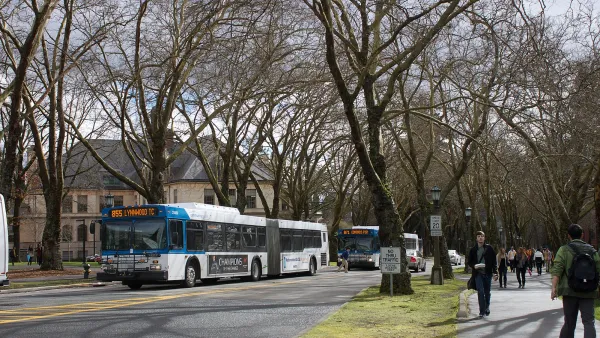
How Inadequate Transit Harms College Students
A lack of access to affordable and reliable transit is being cited as a major reason why many college students don't finish school.
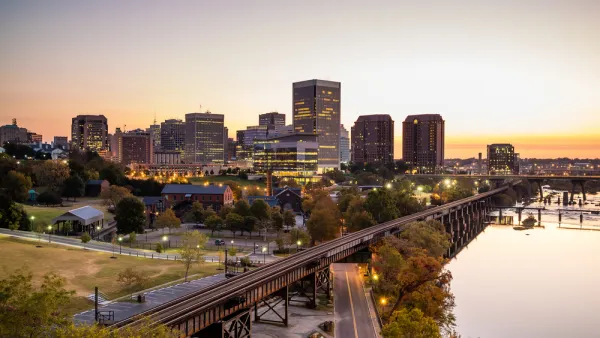
Opinion: To Increase Equity, Make Buses Free
With buses as a dominant transport mode for low-income households and "essential workers," free fares would increase access to economic opportunities and free up limited income for cash-strapped commuters.
MPO Boards Don’t Reflect Their Constituencies
Metropolitan planning organizations make important transportation planning decisions, but their memberships often don’t reflect their region’s demographics.

Planetizen Federal Action Tracker
A weekly monitor of how Trump’s orders and actions are impacting planners and planning in America.

California plans to bury El Niño’s downpour
If the state plays its cards right, it may be able to store a billion acre-feet of El Niño’s water in aquifers.

Chicago breaks ground on $3 billion megadevelopment
The new neighborhood, titled Foundry Park, will one day host 3,700 residences.

Satanic Place Names
From streams and lakes to valleys and canyons, I mapped more than 1,000 places named after the Devil.

California High-Speed Rail Authority CEO resigns after $600,000 scandal
Under Ian Choudri, the authority used taxpayer dollars to fund first class flights and trips to nightclubs.

Want to study the Missouri River? Soon, you may need unanimous approval from 10 states
Legislation would require 10 governors’ permission to study or build projects moving water outside the basin.

FREE Course: Walkable City 1: Why Walkability?
After describing his path towards focusing on walkability as the essence of good planning, Jeff Speck marches through his five principal reasons for making more walkable places.
Reinventing Malls: Planning Alchemy—Turning Gray Fields Into Gold
The course focuses on the opportunities and imperatives that shape reinvention of mall sites.

City of Rosemead
Rutgers University, Edward J. Bloustein School of Planning and Public Policy
One Hundred Miles
Hunter College, City University of New York (CUNY)
The Architects Foundation
University of Cincinnati Online
City of Cambridge
Montrose County
The Pocatello Development Authority