College Campuses
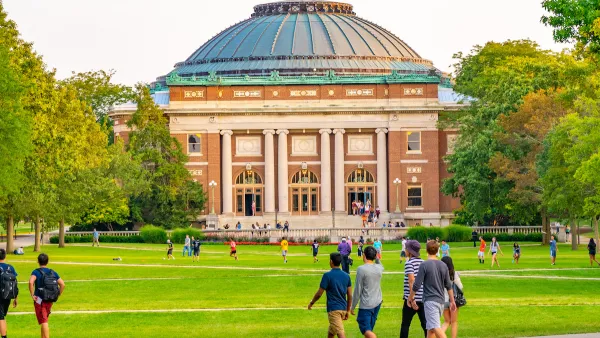
Why College Campuses Make Ideal Models for Cities
College campuses serve as ideal models for cities, with their integrated infrastructure, vibrant communities, sustainability initiatives, and innovation hubs inspiring urban planning and development for a brighter future.

How College Campuses Fulfill an Urbanist Dream
Most college campuses in the United States are inherently walkable, mixing various uses with diverse housing options and transit networks.
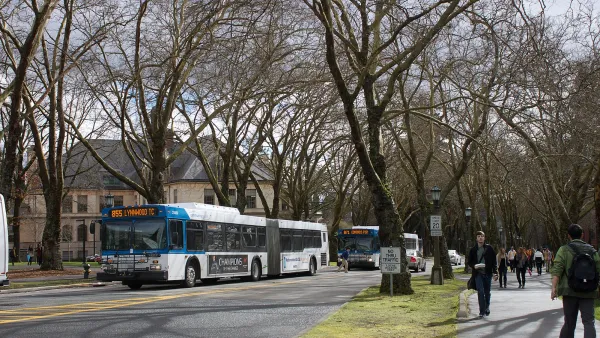
How Inadequate Transit Harms College Students
A lack of access to affordable and reliable transit is being cited as a major reason why many college students don't finish school.
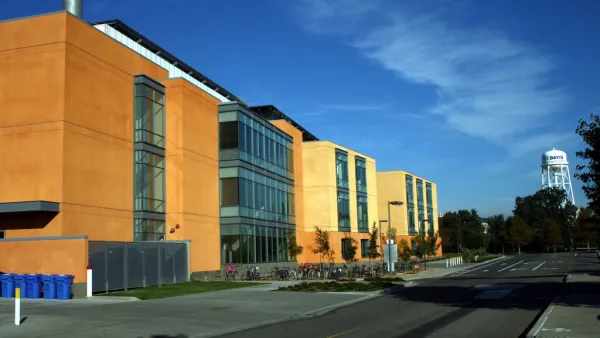
Nation's Largest Student Housing Project Breaks Ground
Located at the University of California, Davis, The Green at West Village is set to house nearly 3,300 students. The development includes nine four-story buildings, community space, and recreational fields.
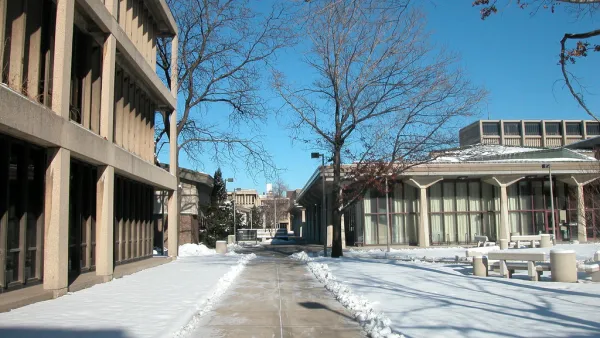
University of Illinois-Chicago Campus to Receive Makeover
UIC has laid out a master plan to rework "nearly every corner" of its campus. The goal is to accommodate more students and enhance the school's pride and identity.

FREE Course: Walkable City 1: Why Walkability?
After describing his path towards focusing on walkability as the essence of good planning, Jeff Speck marches through his five principal reasons for making more walkable places.
Reinventing Malls: Planning Alchemy—Turning Gray Fields Into Gold
The course focuses on the opportunities and imperatives that shape reinvention of mall sites.

City of Charlotte
City of Rosemead
Rutgers University, Edward J. Bloustein School of Planning and Public Policy
University of Michigan School for Environment and Sustainability (SEAS)
Hunter College, City University of New York (CUNY)
The Architects Foundation
University District Partnership









